
The same bun every day gets old fast. Wanting more variety is not vanity. It is just the natural next step once you settle into your loc journey.
Knowing where to start is the hard part. Most updo tutorials skip past the basics and assume a length or maturity your locs might not have yet. These styles are organized by loc stage for exactly that reason, starting with the simplest options and building from there.
Why Your Loc Length and Stage Matter More Than the Style You Choose
Picking a style before knowing your loc stage is the single reason most beginner updos fail.
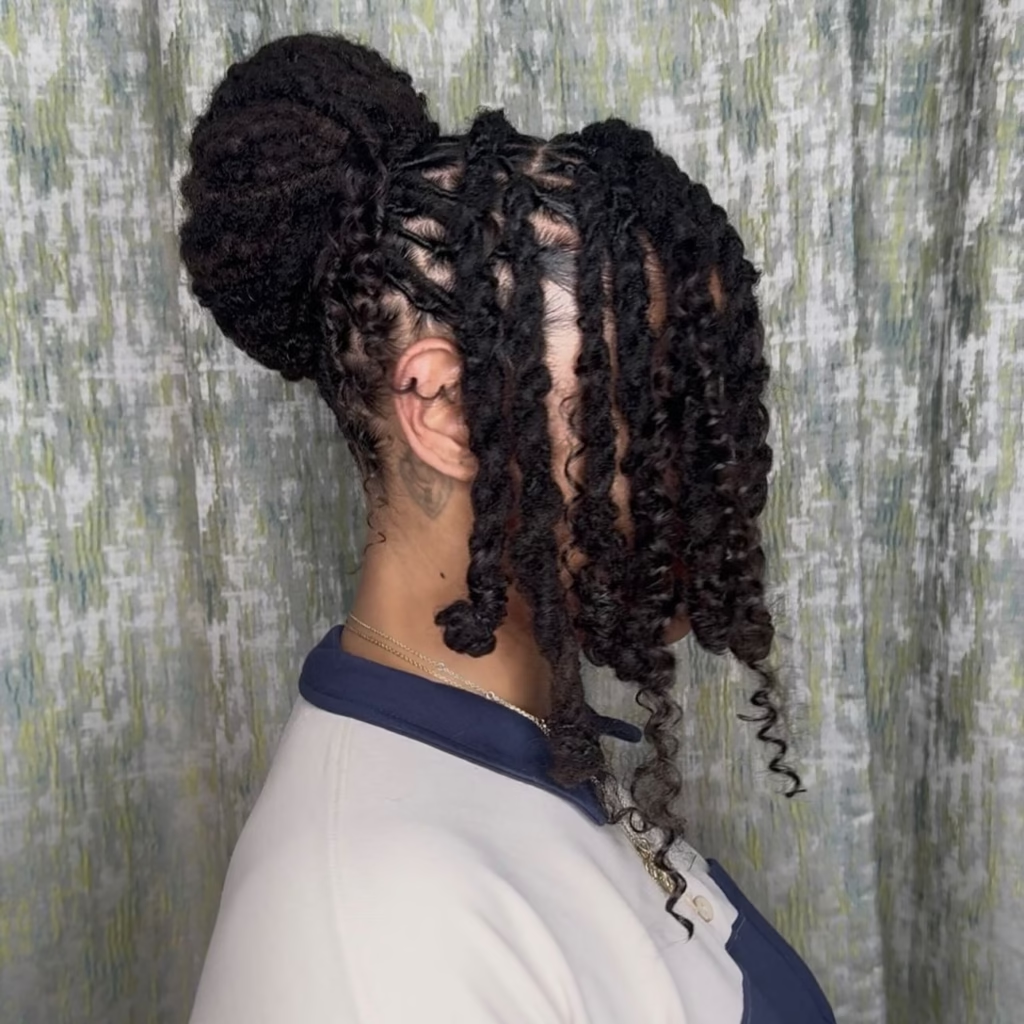
Starter locs, meaning locs in the first six to twelve months, have not fully locked yet. The internal structure is still forming. Pulling them into an updo too tightly or too often during this stage can unravel the loc from the root, which sets the whole journey back. Short length also limits what is physically possible regardless of how skilled you are.
Teenage locs, roughly month six through year two depending on your hair texture, are locked but fragile at the ends and unpredictable in terms of thickness and weight. Styles that work on mature locs will look uneven or feel unstable at this stage.
Mature locs have fully locked from root to tip, hold their shape under tension, and can support more complex styles without risk of damage. Length varies, but the internal structure is what makes the difference.
Every style in this article is labeled by which stage it works for. Match your locs to the right section first, then choose your style.
The One Thing Beginners Get Wrong Before They Even Start Styling
Dry locs snap. That is not an exaggeration.
Manipulating locs when they are dry, meaning no moisture has been added recently, puts stress on the weakest points of each loc, which are the root and the tip. Roots can thin and loosen under that tension. Tips can fray or unravel, especially on locs that are still in earlier stages of locking.
Before attempting any updo, your locs need moisture. Water is the base. A light water-based leave-in applied to the locs and worked in from mid-shaft to tip gives them the flexibility to bend, wrap, and hold a style without resistance.
Trying to manipulate locs that feel brittle or rough to the touch is the fastest way to cause damage that takes months to recover from.
You do not need to drench them. Locs that are too wet will not hold a style either and may develop mildew if wrapped or pinned while soaking.
Damp, not wet. Moisturized, not coated.
Save for later: Short Starter Loc Styles: 10 Cute Ways To Rock Your Locs Early On
The Easiest Updo for Starter Locs: The Single Puff
Position matters more than technique here. A puff placed too low sits flat and loses its shape within an hour. Placed at the crown, meaning the highest point of the head, it holds its volume and stays visible from the front.
Gather all your locs toward the crown using your hands, not a comb. Combing starter locs pulls at the roots and causes frizz that a puff cannot hide.
Once gathered, secure with a satin-covered hair tie or a soft fabric band. Rubber bands and regular elastic ties grip the loc surface and cause breakage over time, especially on locs that are still forming.
Shorter starter locs will not all reach the tie. Some will fall out at the nape and sides. Leave them. Forcing every loc into the puff by pulling too tight is what causes thinning at the roots.
Edges that will not lay down respond to a small amount of edge control applied with a soft brush or your fingertip, worked in the direction of the hair growth. Do not apply it to the locs themselves, only the hairline.
Frizz on top of the puff is normal. Light smoothing with a damp hand is enough.
Recommended post: Elegant Locs Hairstyles for Women: 20 Looks for Any Occasion
When Your Locs Are Long Enough for a Bun: How to Do It Without Stressing the Roots
Root tension is the silent cause of most loc thinning, and beginners almost never realize it is happening until the damage is already done.
A bun becomes safe when your locs are fully mature and long enough to wrap around a hair tie without the tie sitting directly against the scalp. That is usually somewhere between shoulder length and collarbone length depending on your loc thickness.
Trying to force shorter locs into a bun means the tie has to grip much closer to the root, which creates constant pulling pressure on the follicle every time you wear it.
Building the bun correctly starts with gathering locs loosely, not pulling them taut. Hold the gathered locs at the base and wrap the hair tie around them with just enough tension to hold, not enough to feel tight against your scalp. Two fingers between the tie and your scalp is a reliable way to check the tension.
Once secured, wrap the loose loc ends around the base of the tie rather than pulling everything through like a standard bun. Locs do not bend the same way loose hair does, and forcing them through a tight loop repeatedly weakens the loc at that bend point.
Wearing a bun in the same position every single day also causes tension lines. Rotate the placement slightly, crown one day, slightly back the next, to distribute the stress across different areas of the scalp.
Read also: 10 Loc Styles That Stay in Place Through Your Entire Workout (No Bobby Pins Required)
Two-Strand Twist Updo: The Style That Looks Hard But Takes Ten Minutes
Most people see this style and assume it takes skill. It takes sections. Getting those right is the entire job.
Divide your locs into two equal sections, left and right, parted down the center from front to back. Each section gets twisted. Take the left section and twist it away from your face, rolling the locs over each other in a consistent direction until you reach the ends.
Repeat on the right side, twisting in the opposite direction so both twists mirror each other. Symmetry is what makes this look intentional rather than random.
Pin each twist at the back of the head using bobby pins or hair pins that match your loc color. Crossing two pins in an X over the twist holds it flat and secure without bulging. Single pins shift and the twist falls within a few hours.
Loose ends at the nape that did not make it into the twists can be tucked under the pinned sections or left out deliberately as face-framing pieces. Tucking them in makes the style look cleaner. Leaving two out softens the look if the pinned style feels too severe.
Locs need to be at least mid-neck length for this style to work. Shorter locs will not have enough length to twist and still reach the back for pinning.
Pin this post: Pinned-Up Locs Styles: 16 Ways to Pin Your Locs for a Polished Look
What to Use to Hold Loc Updos in Place Without Damaging Your Locs
Rubber bands will damage your locs. That answer is not debated.
The exposed elastic grips the loc surface when you put it on and again when you remove it, pulling at the outer layer of the loc each time and causing frizz, thinning, and breakage at whatever point it sits. Starter locs are the most vulnerable, but mature locs are not immune.
Satin-covered hair ties are the safest option for puffs and gathered styles because the smooth surface does not grip or snag. Soft fabric scrunchies work the same way.
Bobby pins and hair pins are safe for pinned styles as long as they are not forced through a loc at a sharp angle, which can split the loc at that point over time.
Spiral hair coils, the soft plastic type, work well for securing buns on mature locs because they hold without gripping a fixed point. Large claw clips are safe for loose, low-tension styles on medium to long mature locs.
Avoid anything with metal clasps that close directly onto the loc.
How to Make Any Updo Last More Than One Day
Most updos fail overnight because of friction, not because the style was wrong.
Cotton pillowcases pull moisture from locs and create surface frizz that cannot be smoothed back without redoing the style entirely.
Switching to a satin pillowcase or wearing a satin bonnet before bed is the single change that extends any updo by two to three days without any other adjustment.
For the single puff, loosen the hair tie slightly before sleeping and retighten in the morning. Sleeping with a tight puff puts hours of root tension on your locs while you move in bed.
Pinned styles like the two-strand twist updo need the pins checked each morning. One shifted pin causes the whole section to loosen and the style starts looking undone by midday. Taking thirty seconds to press each pin back flat keeps the style looking fresh.
Refreshing an updo mid-week takes less than five minutes. Lightly mist the hairline and any frizzy sections with water, smooth the edges, re-secure any loose sections, and go.
Redoing the full style every day defeats the purpose of an updo entirely
You may enjoy reading: Office-Ready Locs Hairstyles for Women: 12 Professional Styles to Try
The Updo Your Locs Are Not Ready For Yet (And What to Do Instead)
The styles that get the most saves on Pinterest almost always require locs that are at least two to three years old and well past shoulder length. Trying to recreate them earlier does not just look off. It can cause real damage.
Large stacked buns require enough loc length to wrap around a base multiple times, which typically means locs past the collarbone. Attempting a stacked bun on shorter locs forces the tie to sit right against the scalp and holds all the weight of the locs at a single point.
The alternative at an earlier stage is a single flat bun, where you gather the locs and tuck the ends under without stacking, which creates a similar silhouette with far less root tension.
Intricate updos with multiple pinned sections require locs that are long enough to cross over each other and hold their position without springing back. Shorter or teenage locs do not have the weight to stay pinned.
The alternative is a two-section style, one pinned twist on each side meeting at the back, which reads as intentional and structured without requiring the length.
Feed-in updo styles that show clean scalp parting in elaborate patterns require mature locs with consistent thickness throughout. Uneven teenage locs will not lie flat enough to show the parts cleanly.