

Your locs are thriving. But your edges are telling a different story.
You love your locs. They are part of who you are. But lately, you have been noticing something. The hair along your temples looks thinner. Your hairline seems to be pulling back. Or maybe you feel tension every time you retwist.
Here is what no one tells you at the start of your loc journey. Locs can damage your edges if you are not careful. The good news? You can protect them. This article will show you exactly how.
You will learn why your edges are at risk, what warning signs to watch for, and what to do every single day to keep your hairline strong. You will also find out what to do if the damage has already started.
Let’s get into it.
Locs Hairline Tension Auditor
Measure your current styling routine stress levels before roots weaken
Your Edges Are Shielded!
Your daily maintenance techniques keep mechanical stress at a safe baseline.
Tailored Hairstyle Action Plan
Why Locs Put Your Edges at Risk
Picture this. You are six months into your loc journey. Your locs look full and beautiful. But one morning, you look in the mirror and notice it. Your edges are thinner than they used to be. You do not know why.
This is more common than you think. And it has a name: traction alopecia.
Traction alopecia is hair loss caused by repeated pulling and tension on the hair follicles. It happens when styles put too much stress on your scalp over time. According to Dermatology Advisor, traction alopecia affects approximately one-third of Black women. A 2018 study confirmed the same finding — styling practices are the leading cause of edge loss in women of African descent.
Locs are one of the styles that can contribute to this problem. Here is why.
You may enjoy reading Locs Hairstyles 2026: Styles, Types & Care Guide
First, the installation process involves tightly twisting sections of hair close to the scalp. That tension, especially at the hairline, puts pressure on fragile follicles from day one.
Second, as your locs mature and grow longer, they get heavier. That weight pulls down on your hairline constantly.
Third, tight updos and ponytails with locs add even more strain to edges that are already under pressure.
The hardest part is that the damage builds slowly. Most women do not notice it until months of harm have already been done.
The good news is this kind of damage is preventable. Here is what you need to do.
Signs Your Edges Are Under Too Much Stress
Your edges will tell you when something is wrong. You just have to know what to listen for.
Signs Your Edges Are Under Too Much Stress
Your hairline speaks. Learn what to listen for.
1. Hairline Miniature Shifts
Watch out for gradual thinning along your temples, forehead, or the outer sides of your hairline boundary.
2. Follicle Aggravation
Spotting small bumps or redness directly near the perimeter base signals hidden scalp irritation.
3. Post-Styling Sensitivity
Experiencing constant itching or deep tenderness in targeted zones points straight to high systemic tension.
4. Structural Recession
Noticing broken hairs combined with a shifting, visibly receding hairline map means the roots are giving up hold.
5. Retwist Distress
Feeling actual pain during or after styling sessions is an emergency signal that should never be normal.
Here are the early warning signs to watch for:
- Gradual thinning along your temples, forehead, or the sides of your hairline
- Small bumps or redness on your scalp near the hairline, which signals follicle irritation
- Itching or tenderness in the same areas, especially after styling
- Broken hairs and a visibly receding hairline at the forehead and sides
- Pain during or after retwisting — this is never normal and should not be ignored
There is also a more advanced sign called the fringe sign. This is when you can see fine, wispy hairs still clinging to the very edge of your original hairline. According to Aglow Dermatology, this often means some permanent scarring has already started beneath the scalp.
Two more things to look out for. White dots or flaking near the hairline often signal stressed follicles. Asymmetrical thinning, where one side is worse than the other, is often linked to your sleeping position or a habit of styling your locs to one side.
Early stage damage looks like mild thinning and slight tenderness. Late stage looks like a visibly receding hairline with no new growth. The earlier you catch it, the better your options are.
Catching this early changes everything.
You may enjoy reading Locs Crown Braid Updos: 12 Regal Looks That Celebrate Natural Hair
How to Install Locs Without Damaging Your Edges
Most people think the damage happens during styling. But a lot of it starts at installation.
The moment your loctician creates your locs is one of the most critical moments for your edges. And it is also a moment most women hand over completely without asking questions.
Here is what to do differently.
1. Speak up before the session starts. Tell your loctician directly: "Please go lighter at my temples and hairline." Most skilled locticians will adjust when asked. But they may not do it automatically. You have to ask.
2. Pain means stop. According to Dermatology Advisor, if a hairstyle causes pain or redness, it is too tight and needs to be loosened. Do not sit through a painful installation hoping it will loosen later. It usually does not.
3. Request lighter density at the hairline. Placing too many locs close together near the edges adds weight in the most fragile zone. Ask for fewer, lighter locs along the perimeter.
4. Tell your stylist if you have had relaxers. This matters more than most people know. A PubMed study found that the risk of traction alopecia is 3.47 times higher when tension is added to chemically processed hair compared to natural hair. Even if your relaxer was years ago, your stylist needs to know your history.
5. Check in after your installation is done. If you feel tightness, soreness, or throbbing at your temples in the hours after leaving the salon, reach out. A good loctician will work with you.
Getting the installation right is step one. Protecting your edges every day after that is step two.
Bookmark this post too Locs Styles for Black Women with Short Hair: 15 Ideas That Actually Work
Daily Habits That Keep Your Edges Healthy
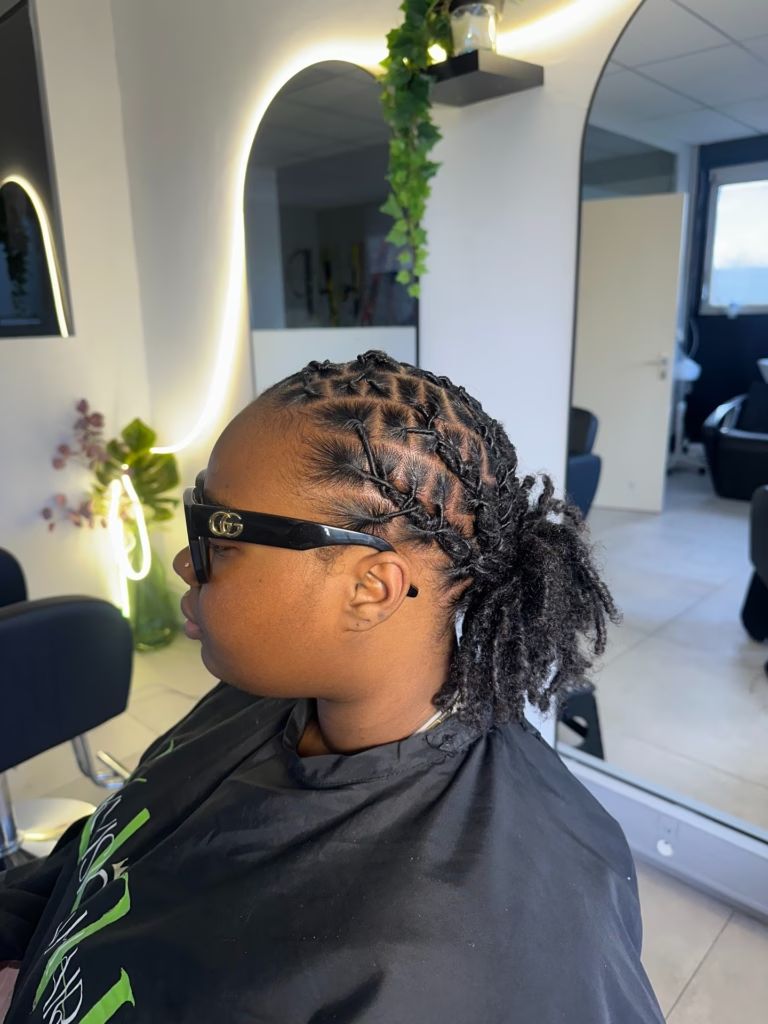
Protecting your edges is not a one-time fix. It is something you do every day.
The small choices you make each morning and night add up fast. Some of them help. Some of them quietly cause damage. Here is what to keep and what to stop.
Sleep on satin, every night. Cotton pillowcases create friction against your edges while you sleep. That friction weakens the already fragile hairs along your hairline. Refinery29 and hair experts consistently recommend satin-lined bonnets or scarves to protect edges and retain moisture overnight. If you hate bonnets, a satin pillowcase works too.
Stop pulling your locs into tight styles every day. Tight ponytails and high buns put the same kind of tension on your edges that started the problem in the first place. Rotate your styles. Give your hairline a break. Try low-tension styles like loose buns or locs worn fully down a few days each week.
Moisturize your edges separately. Your locs and your edges need different care. Edges are delicate and dry out faster. According to Essence, lightweight oils like jojoba, grapeseed, and sweet almond oil are best for the scalp and edges because they soften the hair without clogging the follicle. Heavier oils like castor oil should be used sparingly and only in small amounts.
Apply oil directly to your hairline with your fingertips. Work it in gently. Do not rub aggressively.
Use a trusted edge product. The EWG's Skin Deep Database rates personal care products for ingredient safety. Camille Rose Smoothing and Conditioning Edge Glaze Gel in Lavender is one option that rates as low hazard and is available at Walmart for around $10.50.
Design Essentials Scalp Care Anti-Itch and Tension Relief Scalp Butter is another widely available option that specifically targets scalp tension.
Give your edges at least two rest days per week. These are days when your locs stay loose, nothing is pinned at your hairline, and your edges get to breathe. It sounds small. It makes a real difference.
Pin this for later 15 Romantic Locs Hairstyles for Women Perfect for Date Night
How to Retwist Without Wrecking Your Edges

The damage often does not happen in one session. It builds up over many retwists, one tug at a time.
This section is about the small habits most people overlook during their regular maintenance.
Never retwist on dry hair. Dry hair breaks more easily under tension. Always dampen your hairline before you retwist. A light spritz of water or a water-based leave-in works well. This gives the hair flexibility and reduces breakage at the root.
Do not retwist too often. Every retwist session adds stress to your follicles. Spacing your sessions out allows the scalp to recover between sessions. Johns Hopkins Medicine specifically advises taking breaks between tighter styling sessions to reduce traction alopecia risk.
Use an alcohol-free locking spray. Alcohol dries out the hairline fast. Over time, dry edges become brittle and break more easily. Look for a locking spray that lists no alcohol in the ingredients. Apply it to your hairline before retwisting, not after.
Switch to fabric ties. Rubber bands at the hairline cause friction and breakage at the point of contact. Use satin scrunchies or soft fabric ties instead, especially when securing your locs near your temples or nape.
And most importantly, if your retwist session hurts, stop. Pain is a signal, not something to push through.
For more insight Beautiful Locs Hairstyles for Little Girls: 18 Sweet and Stylish Ideas
What to Do If Your Edges Are Already Thinning

First, take a breath. Many women blame themselves when they notice edge loss. Do not do that.
What matters now is what you do next.
Stop the tension first. This is the single most important step. According to Derrow Dermatology, when traction alopecia is caught early, it can usually be reversed by stopping the tension that caused it. That means avoiding tight styles, skipping the tight ponytails, and giving your edges room to recover.
Track your progress with a clear timeline. Natural Transplants notes that early improvements can often be seen within a few months of stopping the tension.
If you see little to no improvement by the 6 to 9 month mark, the follicles may be moving toward permanent damage. That is your signal to get professional help fast.
Consider proven treatments. Topical minoxidil (sold as Rogaine) has evidence behind it. According to Indiana University's dermatology research, about 40% of users see hair regrowth improvement.
However, do not use it on a scalp that is actively red, sore, or inflamed. Start only after the inflammation has calmed.
Biotin and collagen supplements can also support hair strength from the inside out, according to Derrow Dermatology. These are not miracle cures. But they do support overall hair health during recovery.
See a dermatologist. Soon. This is not optional if you see significant loss. Dr. Akintilo, quoted in Dermatology Advisor in November 2024, states clearly: once hair follicles have scarred down, the hair cannot regrow because the loss becomes permanent. The window matters. Go early.
Look for a board-certified dermatologist with experience treating hair loss in Black women. Ask about clinical options like corticosteroid injections to reduce scalp inflammation, or advanced treatments like Alma TED if your loss is significant.
Edges can be protected. In many cases, they can be restored. But you have to act.
Keep Your Crown Complete
Your locs do not have to come at the cost of your edges. The two can exist together. But only if you make edge protection part of your routine, not an afterthought.
Here is the short version. One in three Black women experience traction alopecia. The risk is real. It starts at installation, builds through daily styling, and compounds over time. But every section of this article gives you a tool to stop that process.
Start tonight. Put on a satin bonnet. Tomorrow, ask yourself if your locs are pulling too tight. Next month, book a check-in with your loctician and ask them directly about your edges.
And if the thinning has already started, do not wait. See a dermatologist before the 9-month mark.
With the right routine and the right people in your corner, you can protect your edges while wearing locs and keep your crown complete.