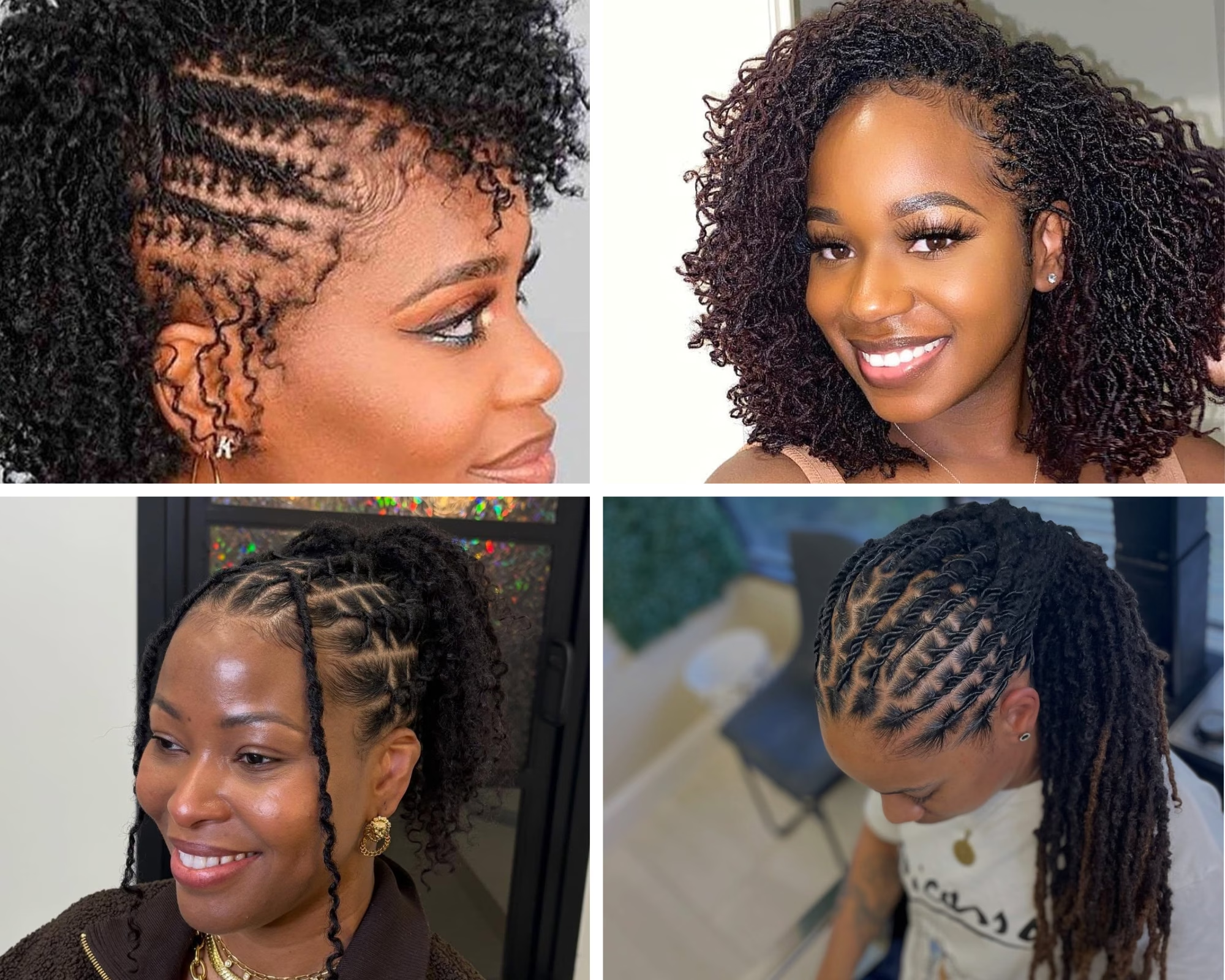
Black women built loc culture. That is not an opinion. It is history.
And in 2026, the styles coming out of that culture are the most creative, celebrated, and varied they have ever been.
Whether you are three weeks into your starter locs or rocking waist-length mature locs you have been growing for five years, there is a style in this guide for you.
But here is the real problem most Black women face when they search for loc inspiration. The articles they find either show the same five looks repeated in different lighting, or they skip the practical side completely.
No mention of hair texture. No mention of face shape. No guidance on what actually works at each stage of the loc journey.
This guide fixes that.
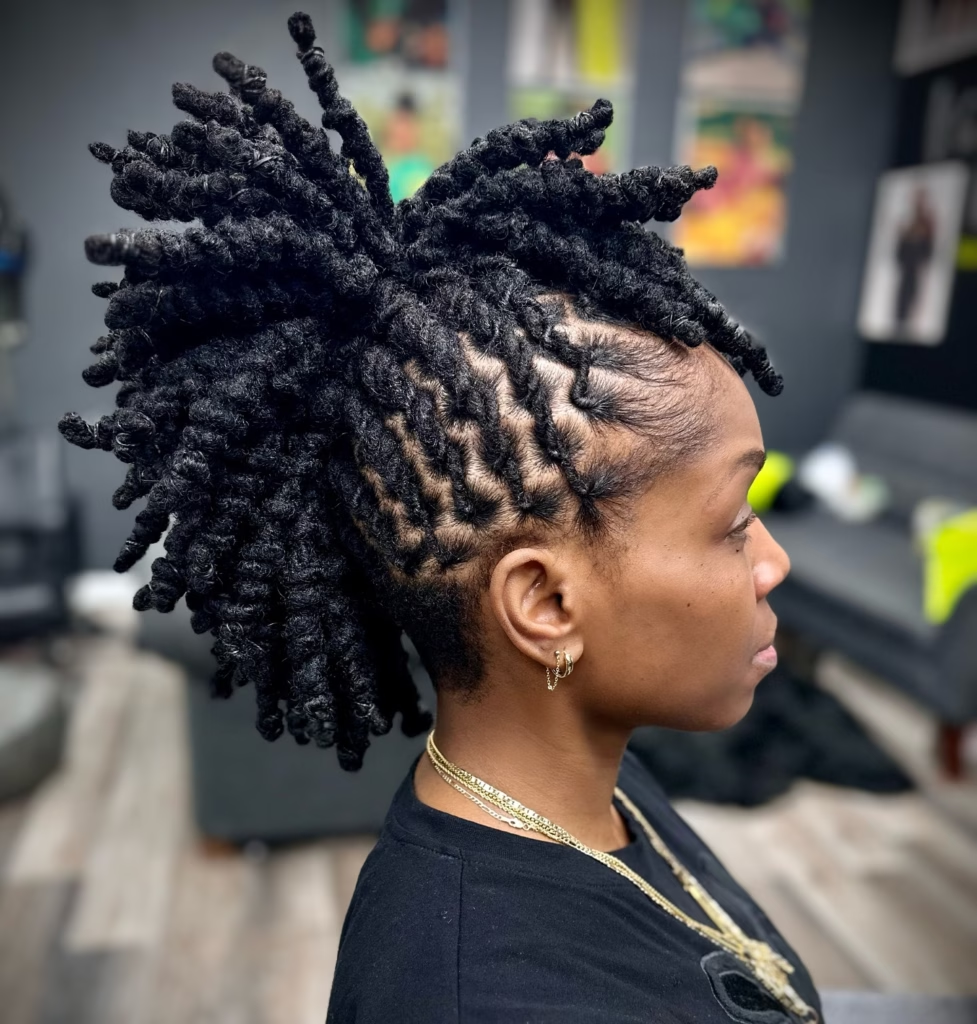
Source @thelocinlo
You will learn which styles are leading in 2026 specifically for Black women. You will find out which type of locs fits your curl pattern.
You will get honest maintenance advice that does not pretend locs take zero effort. And you will walk away with a clear picture of what your next style should be.
The Black hair care market is projected to grow from $8.31 billion in 2025 to $8.81 billion in 2026, according to Grand View Research. Locs are driving a large part of that growth.
The styles are getting bolder every season. And Black women are leading the conversation, as they always have.
Let’s get into it.
Why Locs Are the Go-To Style for Black Women in 2026
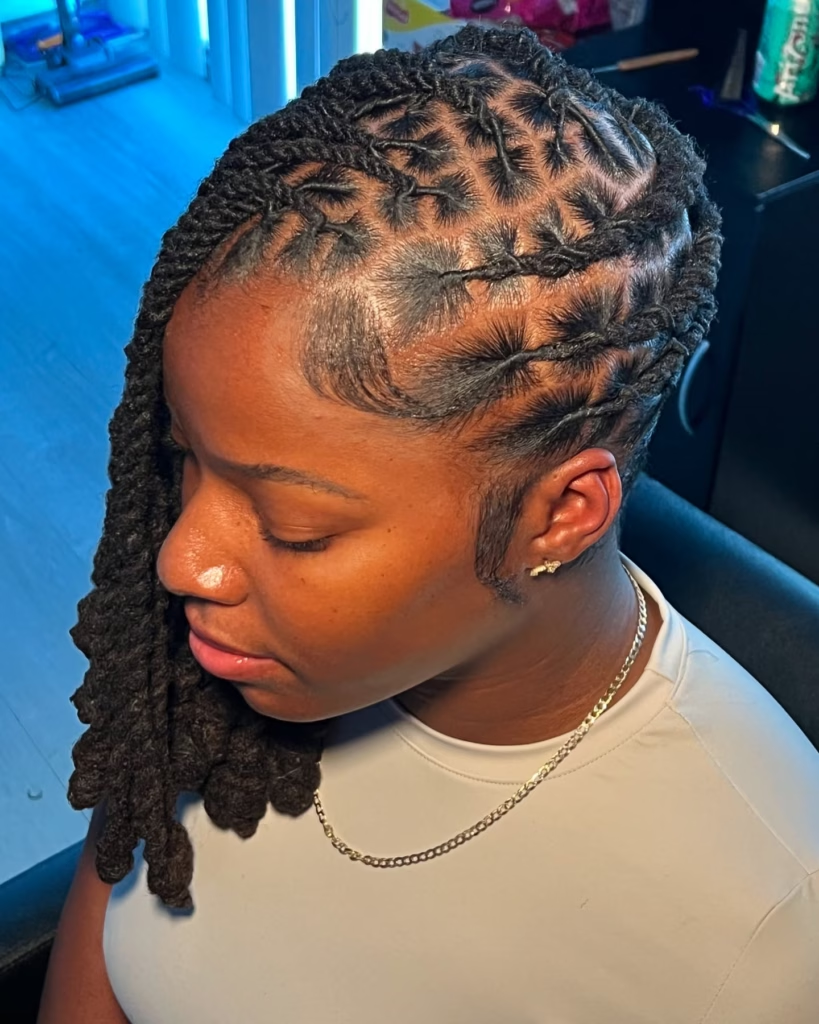
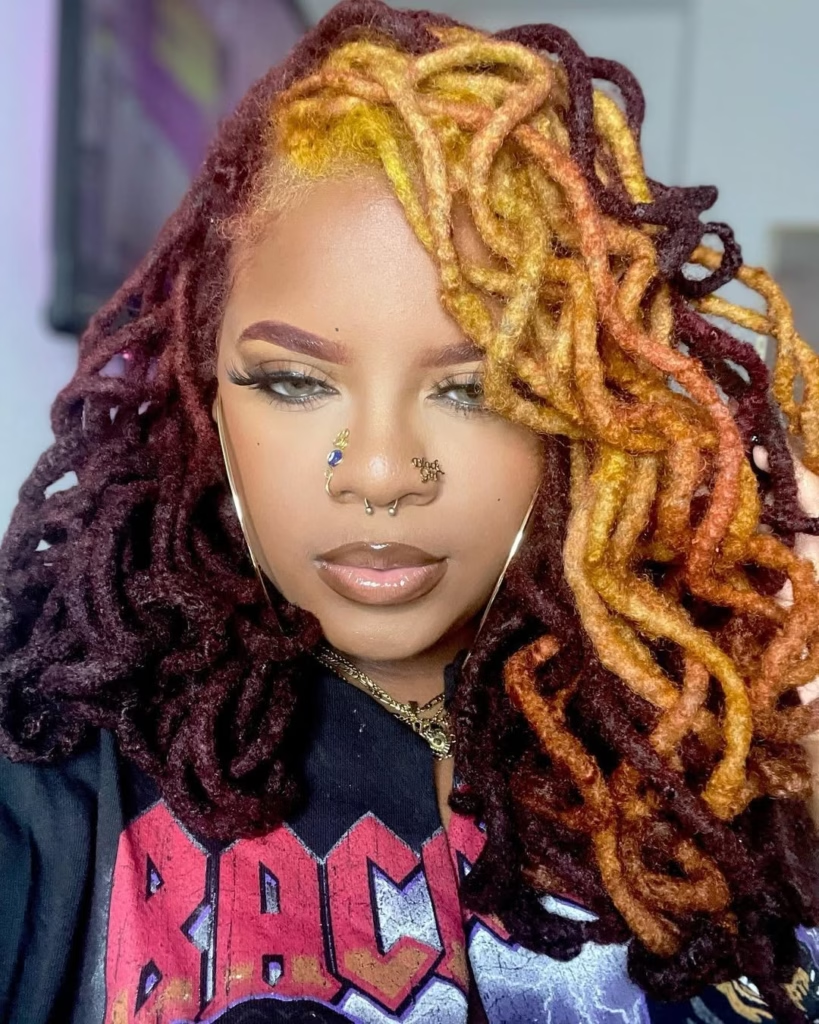
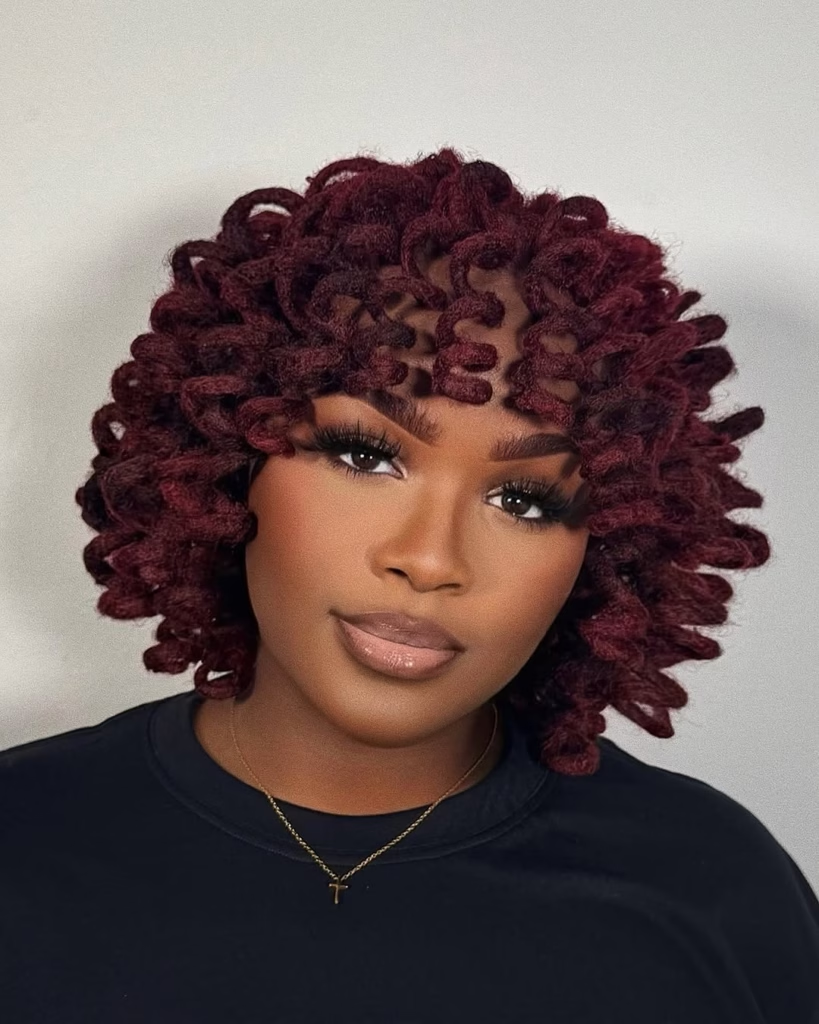
Locs are not a trend. They are a tradition.
For centuries, locs have carried deep meaning across African and African diaspora communities. They represent spiritual connection, cultural pride, and resistance.
The Rastafari movement gave locs global visibility in the 20th century. But long before that, locs existed in multiple African cultures as a sign of identity and strength.
In 2026, that meaning has not disappeared. It has expanded.
Locs are now fully accepted in spaces that once tried to push them out. The CROWN Act, which stands for Creating a Respectful and Open World for Natural Hair, has now been passed in over 20 U.S. states.
That legal shift has changed what Black women feel safe wearing to work, to interviews, and to professional settings.
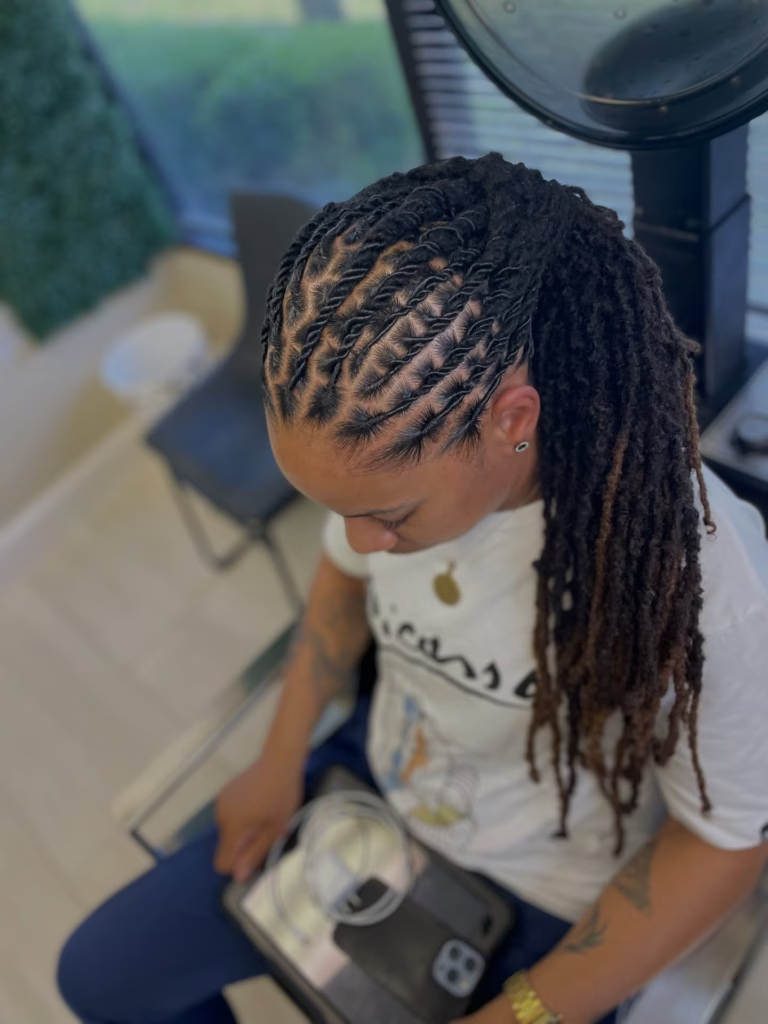
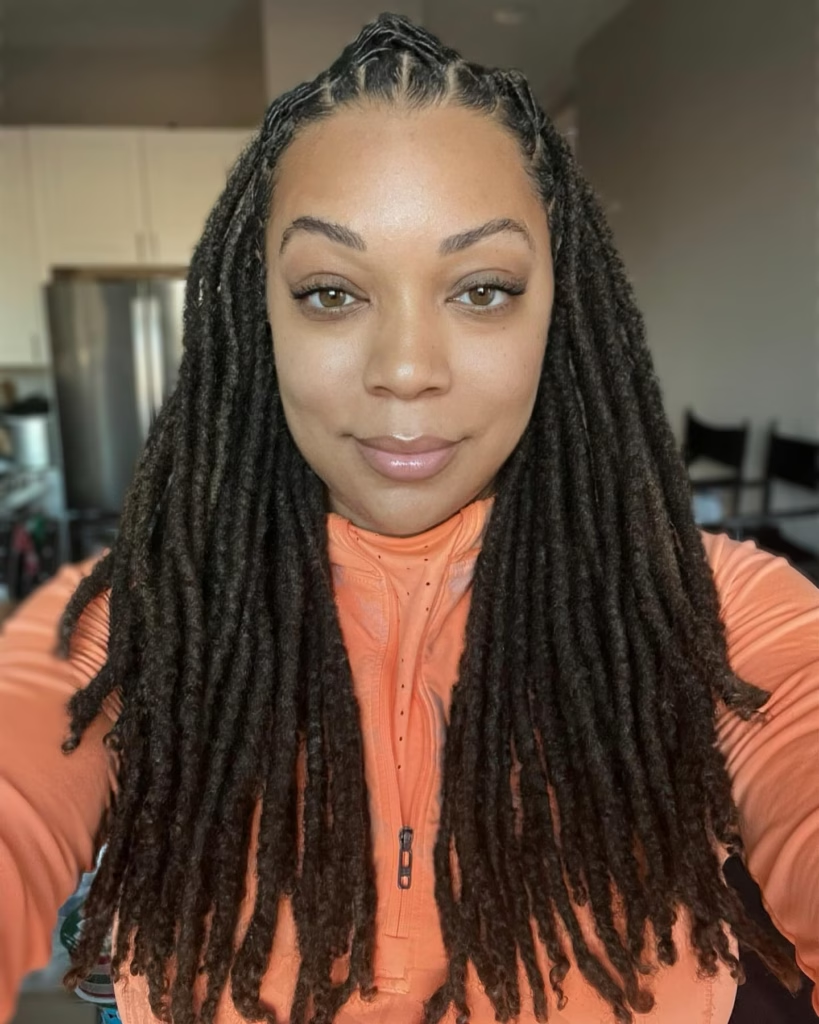
Source @locsbycole
More Black women are choosing locs now because they no longer have to choose between their career and their hair.
Social media has added another layer of visibility. Creators on TikTok and Instagram are sharing real loc journeys from day one to year five, tutorials, maintenance routines, and style ideas that actually reflect Black women’s lives.
The result is a community of millions of people watching, learning, and getting inspired every single day.
The numbers back this up. The percentage of Black women who prefer their natural hair texture rose by 23% between 2017 and 2020, according to The Hair Society. And 54% of Black women now report wearing their natural hair regularly. Locs are at the center of that shift.
Social media influencers and content creators have played a critical role in promoting natural hair care and loc styles, sharing tips and tutorials that resonate deeply with Black audiences, according to research by Hims.
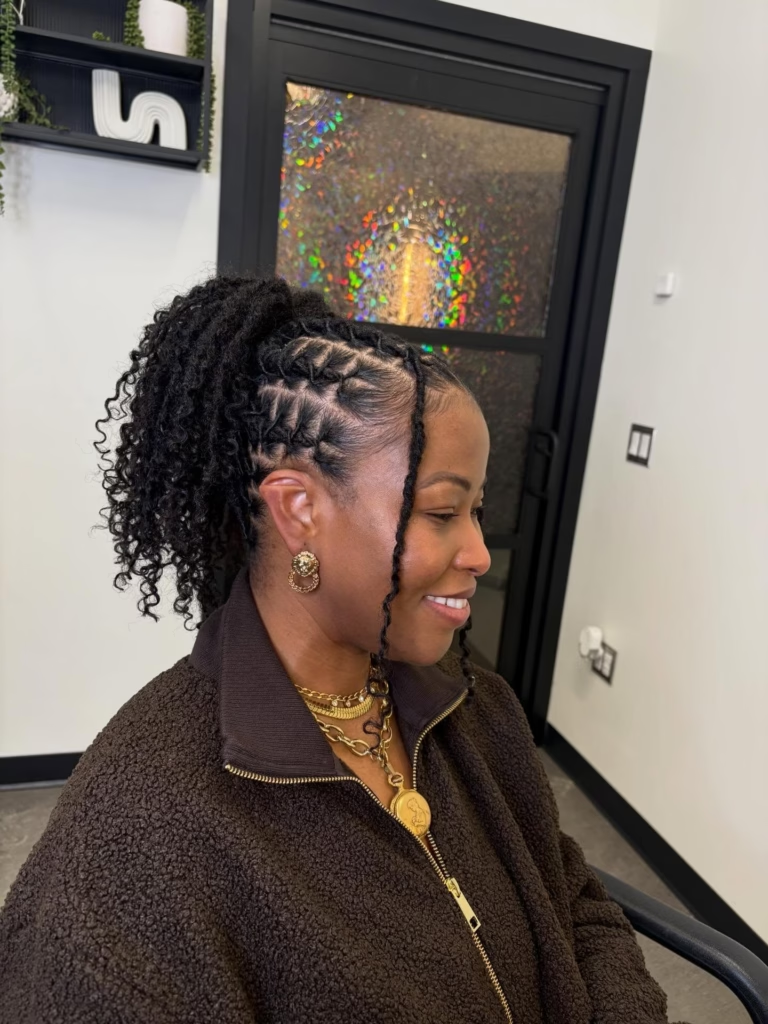
Source @@locsbycole
That visibility matters. When you see someone who looks like you wearing a style that looks like yours, something clicks.
Black women are not following the loc trend. They created it. And in 2026, they are pushing it further than ever before.
Save this for later How to Protect Your Edges While Wearing Locs: Tips for Black Women
8 Types of Locs for Black Women to Know Before You Choose
Not every loc is the same. And choosing the wrong type for your hair can cost you time, money, and frustration.
Here are the eight types you need to know before you book an appointment.
Traditional Locs
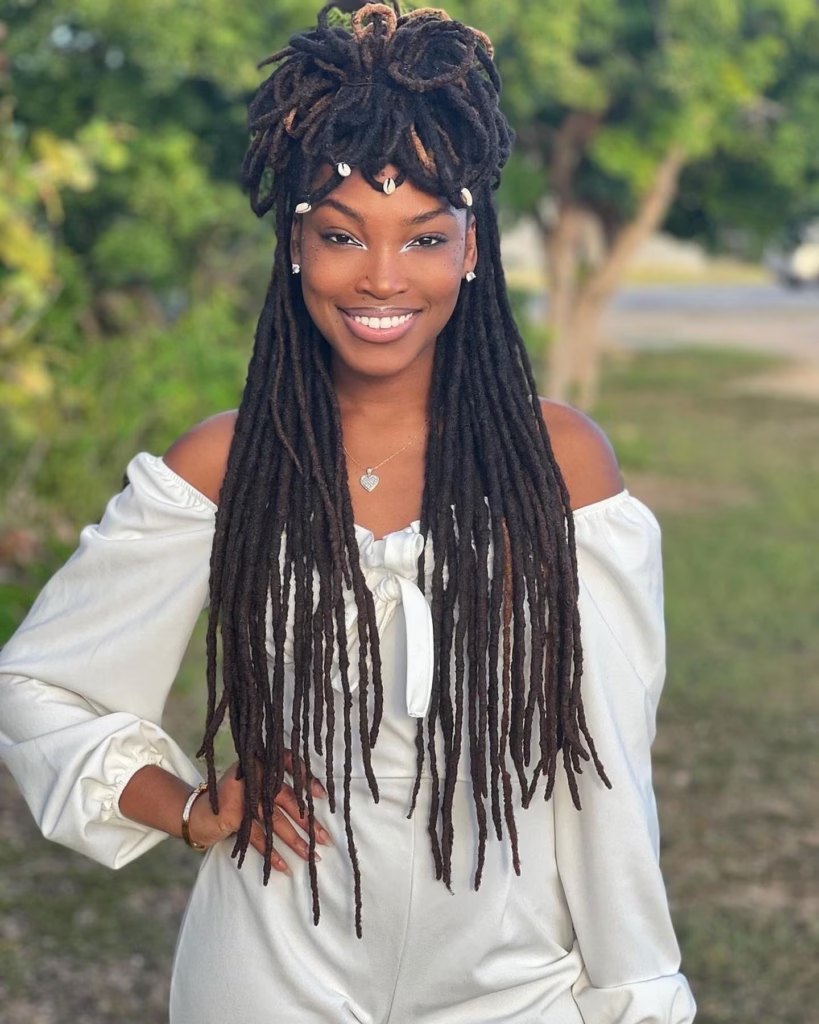
Source @iamlocd
These are the original. Traditional locs are formed using your own natural hair through palm rolling, two-strand twists, or braiding at the base. They work on all textures and are the most versatile long-term option.
Once mature, you can do almost anything with them. Length, size, and thickness depend on how your hair is sectioned at install.
This is the most common starting point for Black women beginning their loc journey.
Sisterlocs
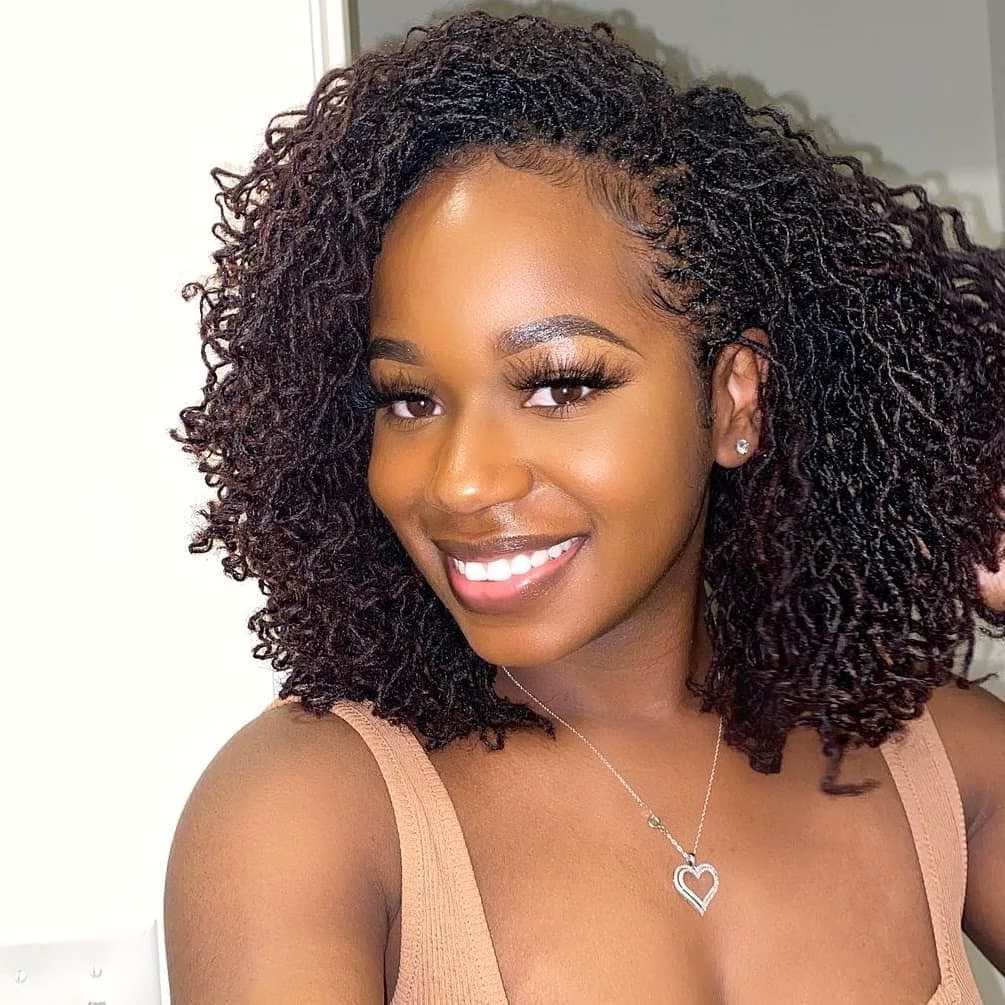
Source @team.microlocs
Sisterlocs are a trademarked microloc system created by Dr. JoAnne Cornwell in 1993. These are extremely small locs installed with a precise grid pattern, typically done by a certified Sisterloc consultant.
They work beautifully on fine to medium 4C hair. The small size gives you more styling options because the locs behave almost like loose natural hair.
Install takes several hours and costs more upfront, but many women say the freedom it gives them is worth every cent.
Save this for later 25 Luxury Bridal Soft Locs That Feel Elegant and Timeless
Soft Locs
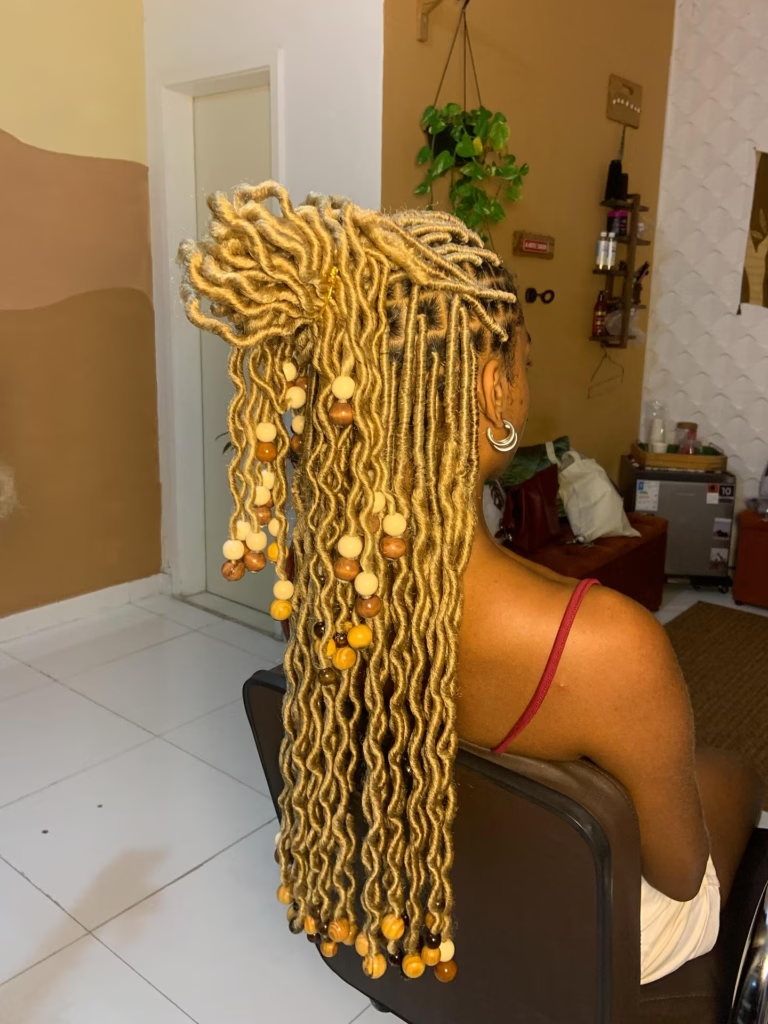
Source @mailihair
Soft locs are an extension-based protective style. They combine braided hair wrapped in passion twist hair or water wave hair to create locs that are lightweight and have a beautiful texture.
They are not permanent. You wear them for six to eight weeks and then take them down.
Soft locs blend protective styling with modern flair and work for weddings, professional settings, casual outings, and everything in between.
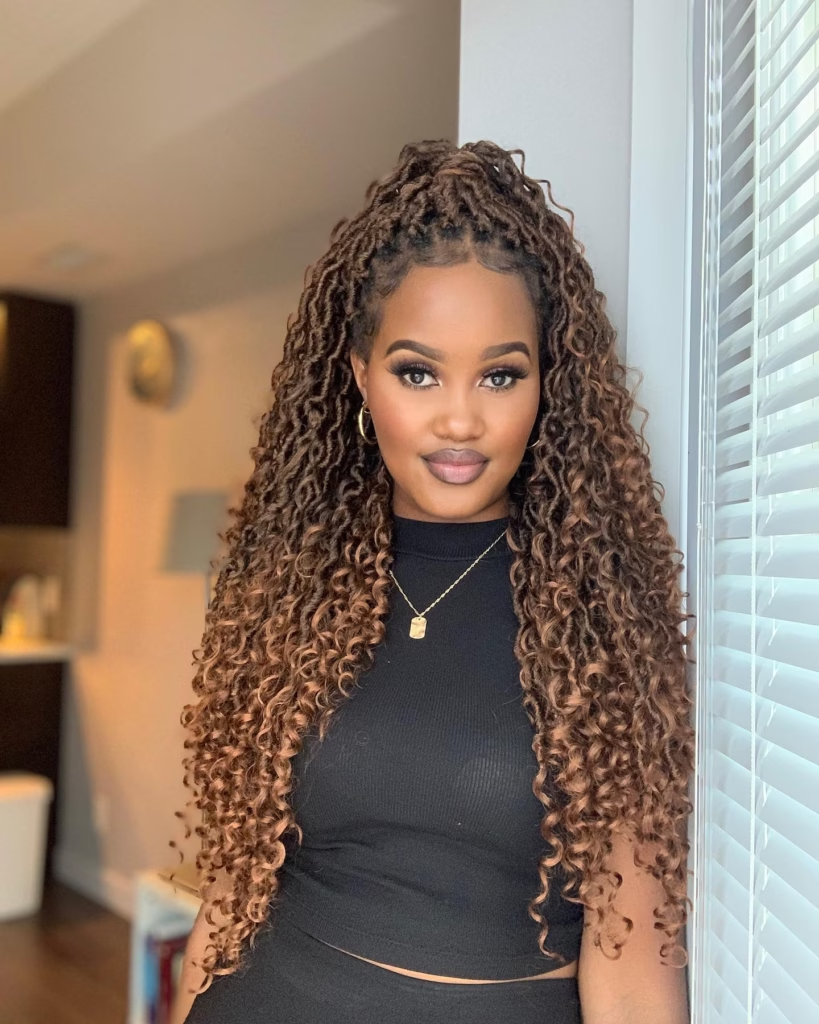
Goddess Locs
Source @mandy_jacobz
Goddess locs have an open, curly end instead of the sealed, tapered tip you see on traditional locs. That curly end gives the style a bohemian, romantic quality.
They are extension-based, like soft locs, which means they are temporary. Women with round or square face shapes often love goddess locs because the curly ends soften the overall look.
Bookmark this post Protective Locs Styles for Kids: 14 Hairstyles That Are Gentle on Young Hair
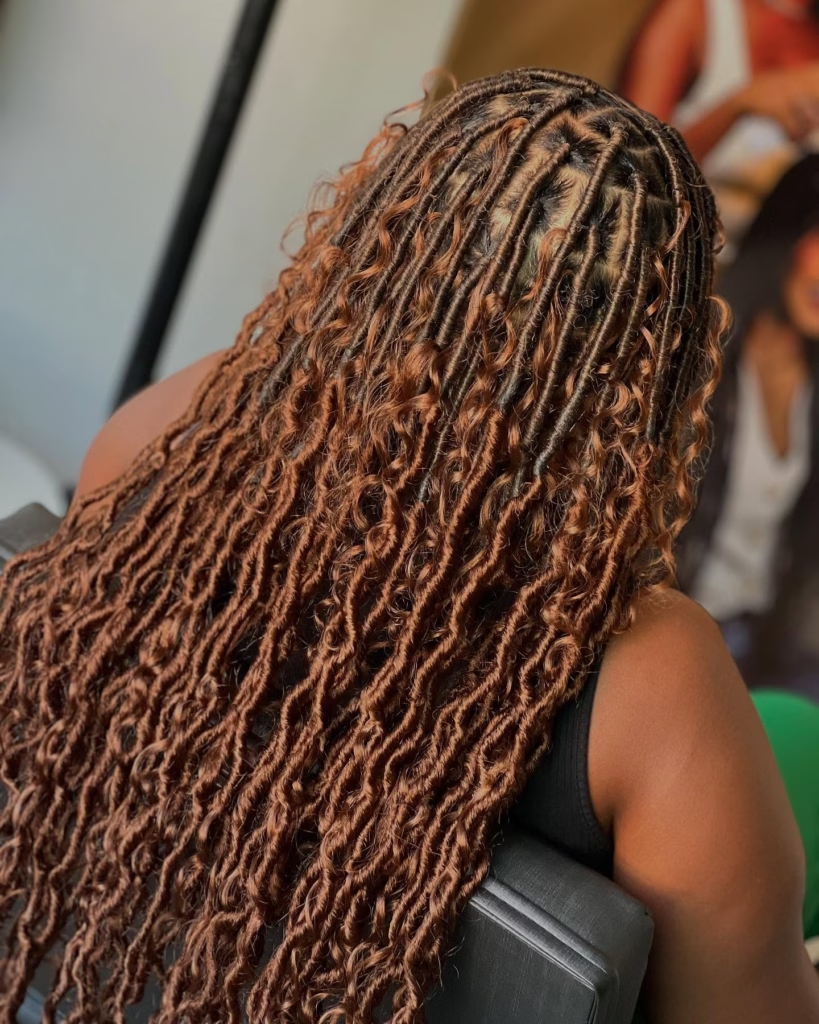
Faux Locs
Source @clis_trancista
Faux locs are exactly what the name says. They look like locs but are not permanent.
They are installed using braiding hair wrapped around your natural hair to simulate the loc look. Faux locs can be installed in different lengths and colors.
They are a great way to test the style before committing to the real thing. Most stylists recommend keeping them in for four to eight weeks, according to Perfect Locks.
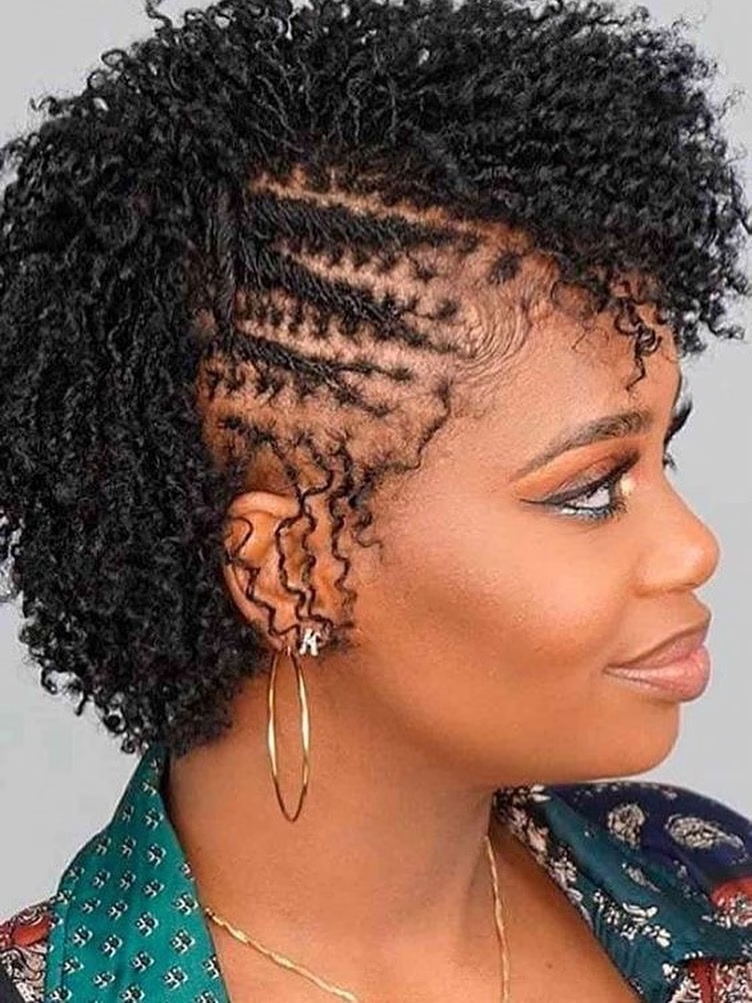
Micro Locs
Source @rwanda_microlocs_sisterlocks
Micro locs are smaller than traditional locs but not as small as Sisterlocs. They are growing fast in popularity in 2026 because they offer more flexibility in styling while still being a permanent loc system.
Micro locs require precision in the parting and consistent maintenance, but the finished result is stunning.
Fine-haired women do well with micro locs because the smaller size prevents fragile strands from looking thin or sparse.
You may be interested in reading 25 Elegant Loc Styles for Women Over 50
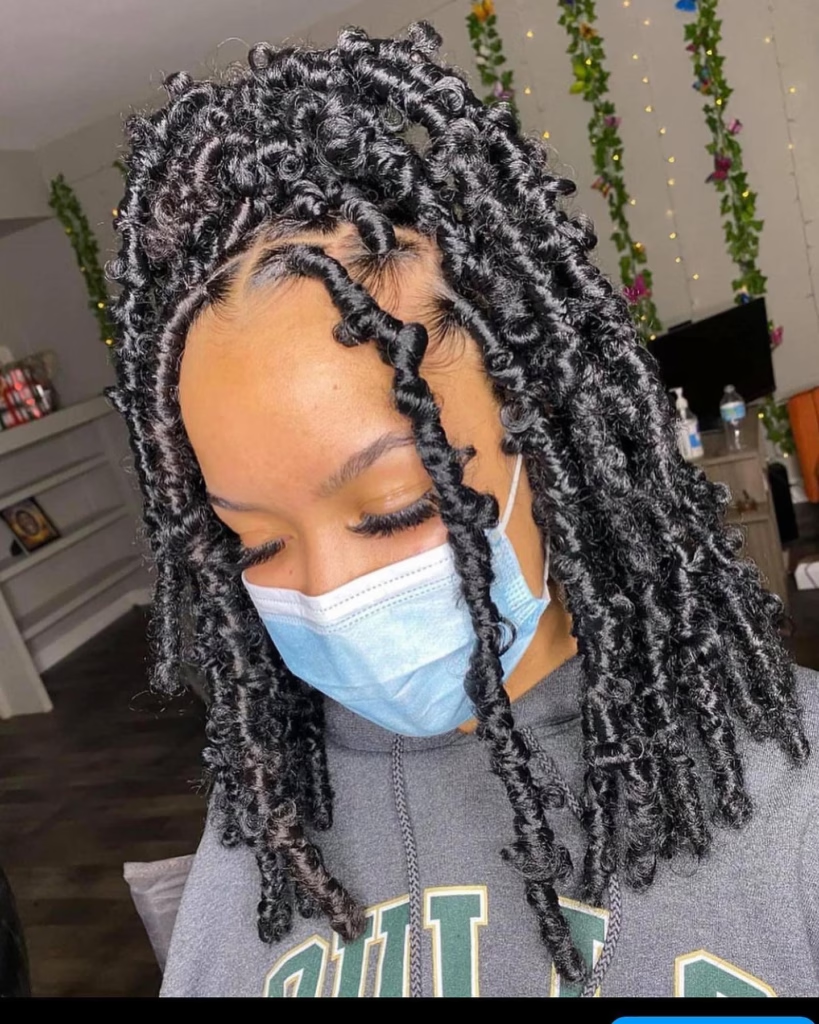
Butterfly Locs
Source @looksbyleeia
Butterfly locs are an extension-based style with a distressed, wavy texture that has taken social media by storm. The looped technique used to install them creates a lighter, more textured look than traditional faux locs.
They are popular for their volume and visual interest. They are temporary, lasting about six to eight weeks with proper care.
Freeform Locs
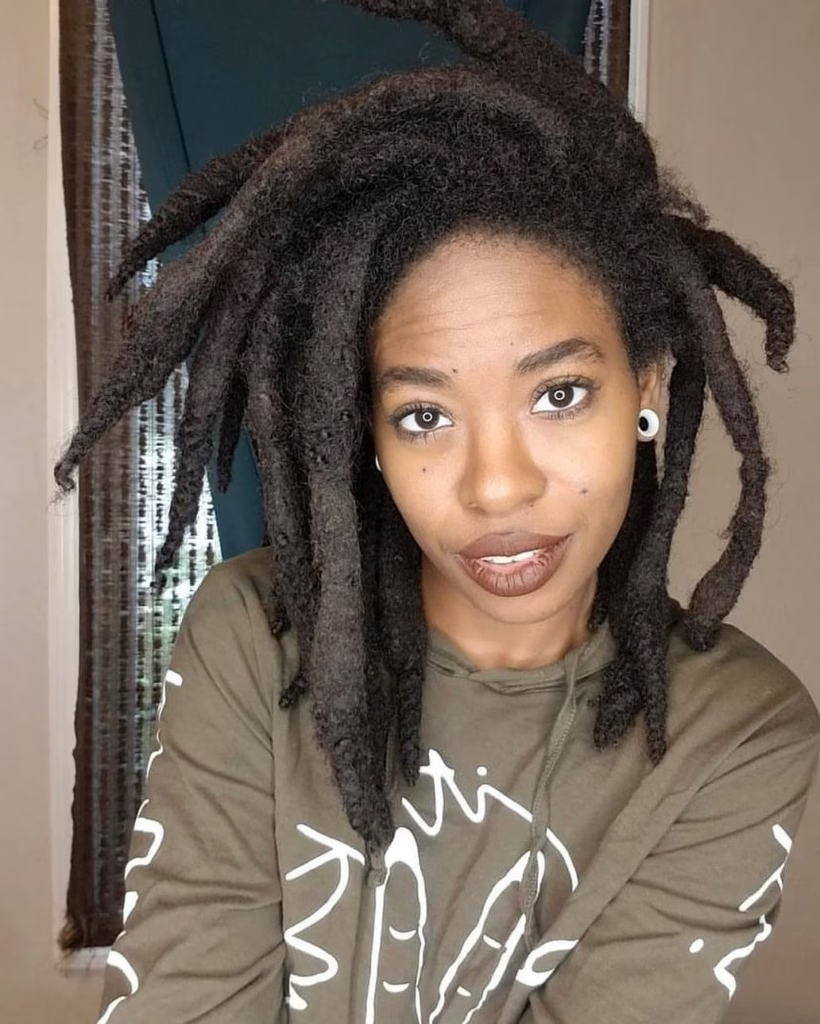
Source @locsburg
Freeform locs grow with minimal manipulation. You do not force a part pattern. You do not retwist frequently.
You let the hair loc naturally on its own. The result is organic, thicker locs that each have their own shape and personality.
Freeform locs are not low effort at the start. You still need to wash and moisturize consistently. But they do require the least styling intervention over time.
Quick Tip: Book a free consultation with a loctician before you decide. Most stylists will assess your hair density, curl pattern, and goals and tell you which type suits you best. That 30-minute conversation can save you months of regret.
Pin this post Loc Styles for the Budding Stage: 12 Looks That Celebrate Your Loc Journey
Top Loc Hairstyle Trends for Black Women in 2026

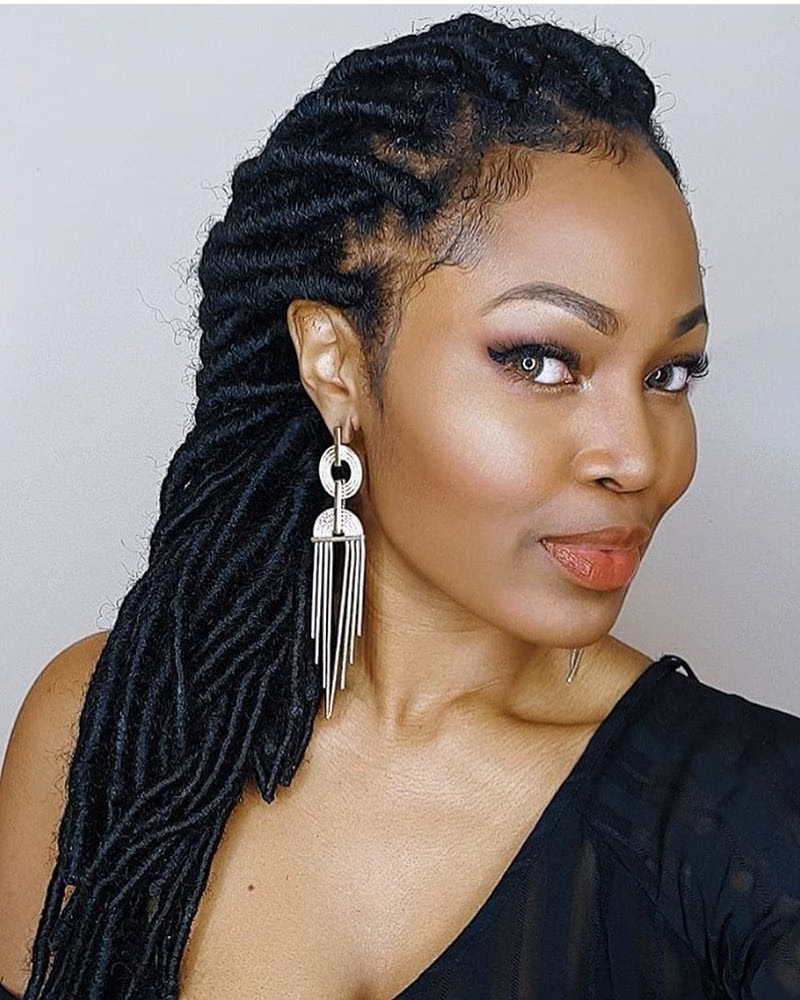

2026 is a defining year for loc style among Black women. The looks are bolder. The colors are richer. And the styling creativity has reached a level that was not common even three years ago.
Here are the trends leading the year.
Long Dramatic Locs Worn Fully Down
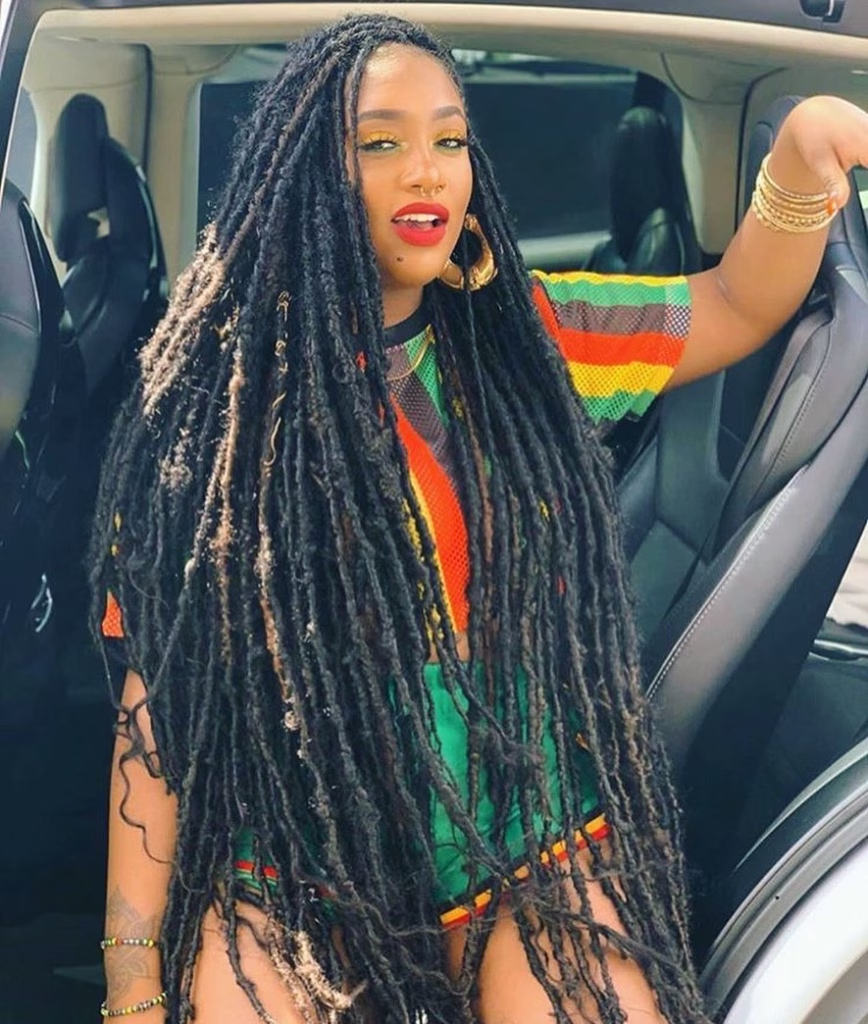
Source @fashionbombhair
Long locs are having a major moment in 2026. Clients are asking for dramatic length, and stylists across the country are reporting that waist-length and hip-length locs are the most-requested style on their books right now. When worn fully down, long locs create a powerful, regal silhouette.
The key to making this look work is definition. Locs should be well moisturized, retwisted consistently, and separated at the roots to prevent them from merging.
Sleek High Buns and Ponytails with Loc Crown
Sleek crowns with high buns and ponytails are taking social media by storm in 2026. This look creates a polished, pulled-together appearance that works in any professional setting and photographs beautifully for events.
The contrast between the smooth crown and the cascading length of the locs is what makes it work.
Use a small amount of edge control and a soft brush to lay the crown flat before gathering locs into the bun or ponytail.
The Tapered Loc Bob
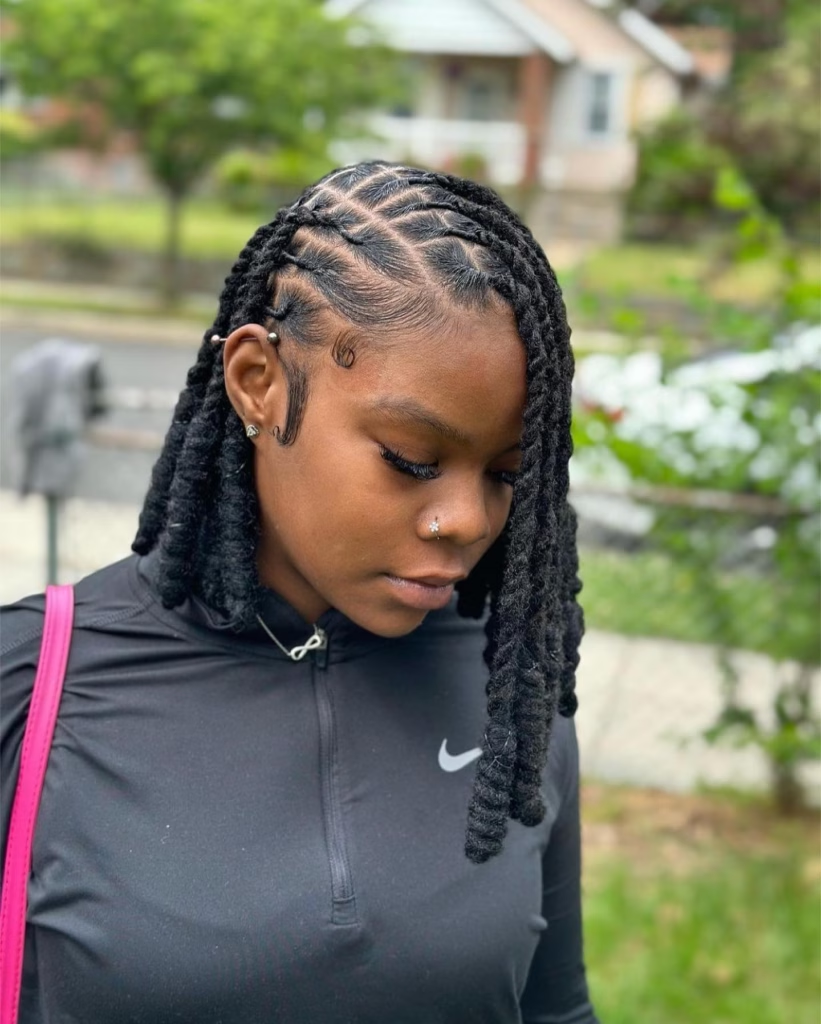
Source @loc.lady
The tapered loc bob has emerged as 2026’s answer to sophisticated professionalism without sacrificing creativity. The style features slender, well-maintained locs cut into a precise bob that frames the face.
It is especially popular among women in corporate environments who want to look sharp without giving up their locs.
The taper creates gradual length from the nape upward, giving the cut structure and movement at the same time.
Goddess Locs with Open Curly Ends
The boho goddess loc look is everywhere in 2026. Open curly ends add softness and romance to the style, and they work beautifully on all skin tones.
Women are choosing this style for weddings, vacations, and everyday wear. The light texture of goddess locs makes them comfortable for long-term wear compared to heavier loc styles.
You may enjoy reading 25 Gorgeous Locs Hairstyles for Women That Are Trending Right Now
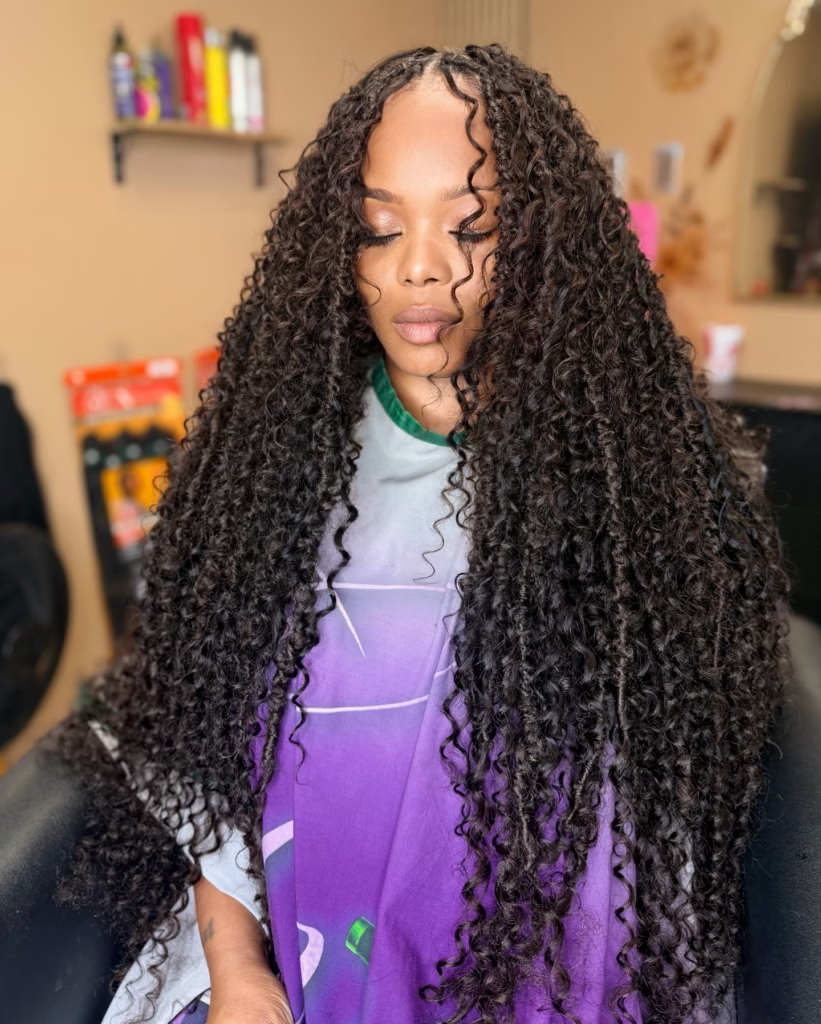
Source @iam_cynthe_braidslayer
Colored Accent Locs in Warm Tones
Color is one of the biggest loc trends of 2026. Specifically, warm tones. Honey blonde, copper, burnt orange, and burgundy are all over Instagram and Pinterest right now.
These shades pair stunningly with deeper skin tones, especially in sunlight. Many women are adding colored extension locs or using pre-colored hair to protect their natural strands from chemical damage.
Others are choosing semi-permanent dyes, glosses, and herbal tints like henna to add color while maintaining hair health and elasticity.
Micro Loc Petal Buns
The petal bun is a style that uses micro locs to create a layered, flower-like bun at the crown of the head. This is the kind of style that gets immediate attention.
It takes skill to execute well, so this is one to request from an experienced stylist rather than attempt at home the first time.
Wavy and Distressed Butterfly Locs
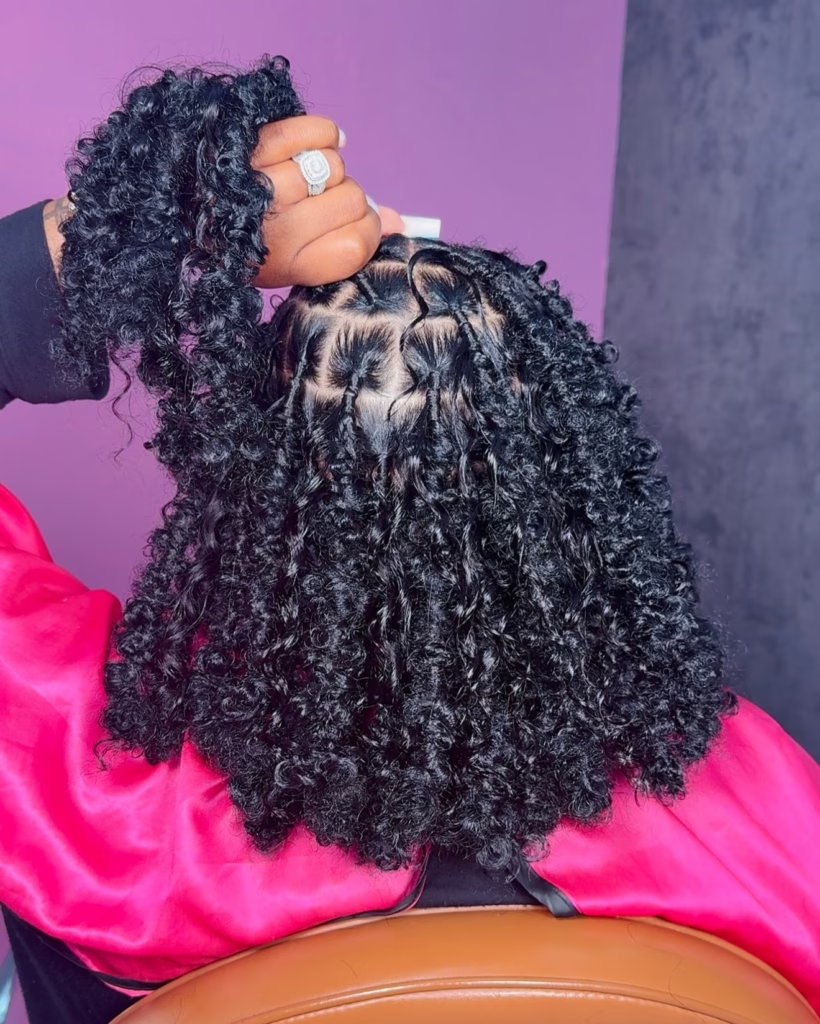
Source @x.tensionz
Butterfly locs with their wavy, distressed texture are a staple trend in 2026. They add volume, movement, and personality.
They work on almost every face shape because the texture breaks up the line of the head in a flattering way.
Women with round faces find that the volume at the crown and length at the sides creates a more balanced look.
Save the styles that speak to you on Pinterest before your next appointment. Walking in with a saved folder of reference images gives your stylist a clear picture of what you want and reduces the chance of miscommunication.
Best Loc Styles for Black Women by Hair Texture
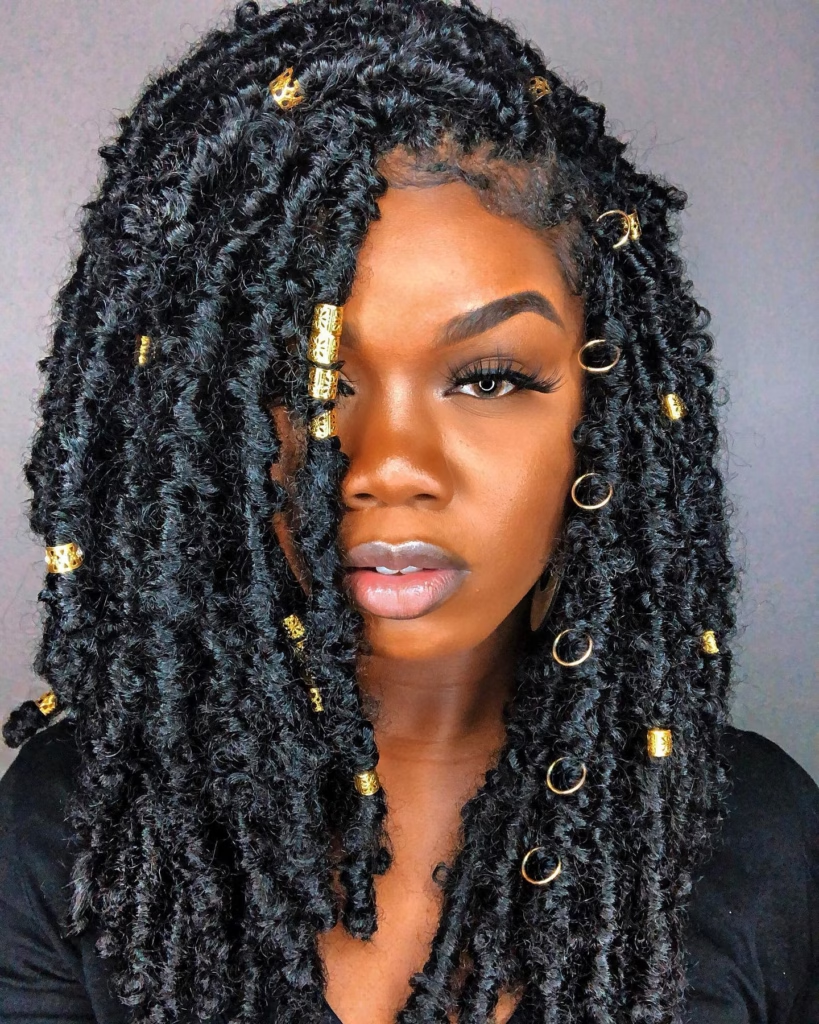
Source @harrisjanaeofficial
Your hair texture is your biggest advantage. Not your limitation.
Black hair textures naturally lend themselves to beautiful locs. The tighter the curl pattern, the faster the locking process.
Type 4 coils lock quickly and hold tightly because the natural curl structure creates friction between the strands.
That friction is what causes the hair to mat and lock into shape. It is not a problem. It is an asset.
Type 4C Hair
4C hair has the tightest curl pattern and the most shrinkage. It locks faster than any other hair type. Traditional locs, micro locs, and Sisterlocs all work exceptionally well on 4C hair. Sections stay defined because the coils grip each other naturally.
The main thing to watch is moisture. 4C hair is the most prone to dryness, so your moisturizing routine is especially important during the locking process.
Type 4A and 4B Hair
4A and 4B hair have visible curl definition with less shrinkage than 4C. Locs form reliably on both types. 4A hair can sometimes take slightly longer to fully loc because the curl pattern is a little looser, but the difference is not dramatic.
Women with 4B hair often get beautifully defined locs with good volume. Medium-sized traditional locs tend to suit this hair type very well.
Type 3 Hair
Type 3 hair has an S-shaped curl pattern and can be trickier to loc because the looser curl creates less natural friction.
This does not mean locs will not work. It means the starting method matters more. Comb coils or interlocking at the root can help type 3 hair loc more reliably.
Some women with type 3 hair find that freeform locs actually work better than repeatedly retwisting because letting the hair mat naturally is more effective than forcing a shape the curl pattern resists.
Fine Hair vs. Thick Hair
Hair density affects your best loc size more than anything else. If your hair is fine with low density, large locs will look sparse and thin.
Micro locs or Sisterlocs are a much better fit because the smaller size means each loc has enough hair to look full. If your hair is thick and dense, you have more freedom.
Medium to large traditional locs will give you the dramatic, full-bodied look that photographs beautifully.
Short Hair as a Starting Point
You can start locs with short hair. The realistic expectation is that locs in the early months on short hair will look short and neat, not dramatic.
Most locticians recommend at least two to three inches of hair as a starting point. Below that length, the locs can be difficult to form and hold.
Give your hair time to grow if you are starting very short, and use that time to learn about moisture routines and maintenance.
Quick Tip: Density matters as much as curl type. Two women with 4C hair can have completely different loc journeys if one has thin strands and the other has thick, dense hair. Tell your loctician about both your curl pattern and your density when you consult.
You may enjoy reading Elegant Locs Hairstyles for Women: 20 Looks for Any Occasion
Loc Hairstyles for Black Women at Every Stage of the Journey
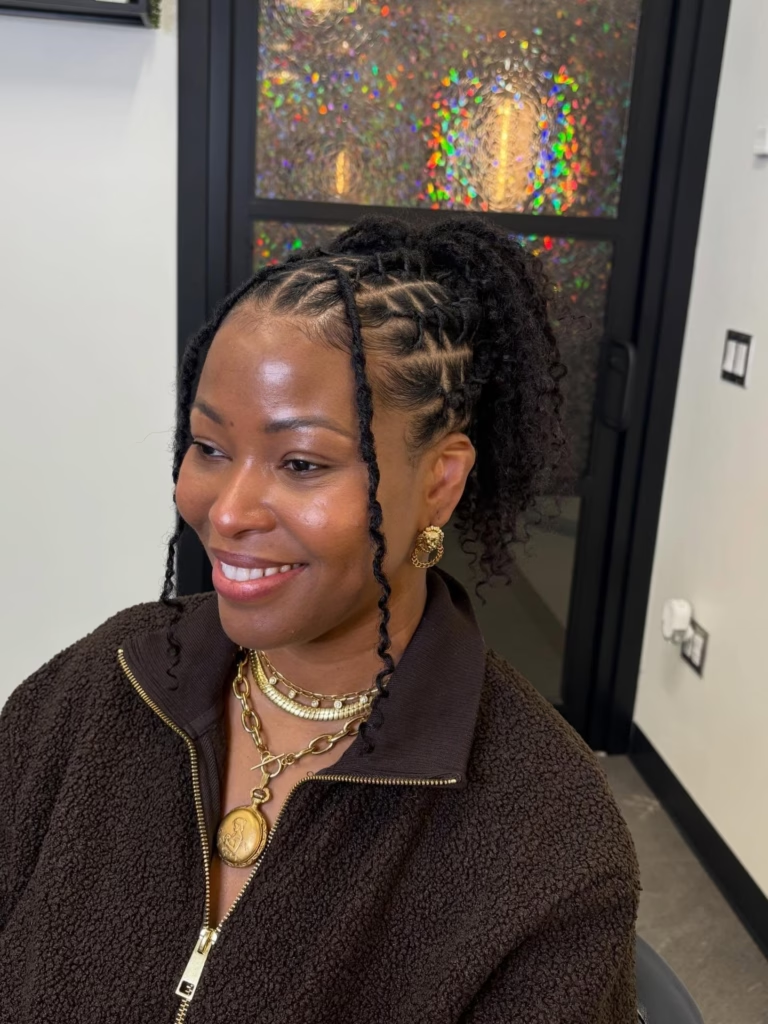
Source @@locsbycole
No stage of the loc journey has to look unfinished.
That is the truth most articles skip. People show you year-three locs and call it an inspiration post.
But what about month two when your locs are doing something unidentifiable and you are not sure if you made a mistake? That stage is real. And there are ways to look good through every bit of it.
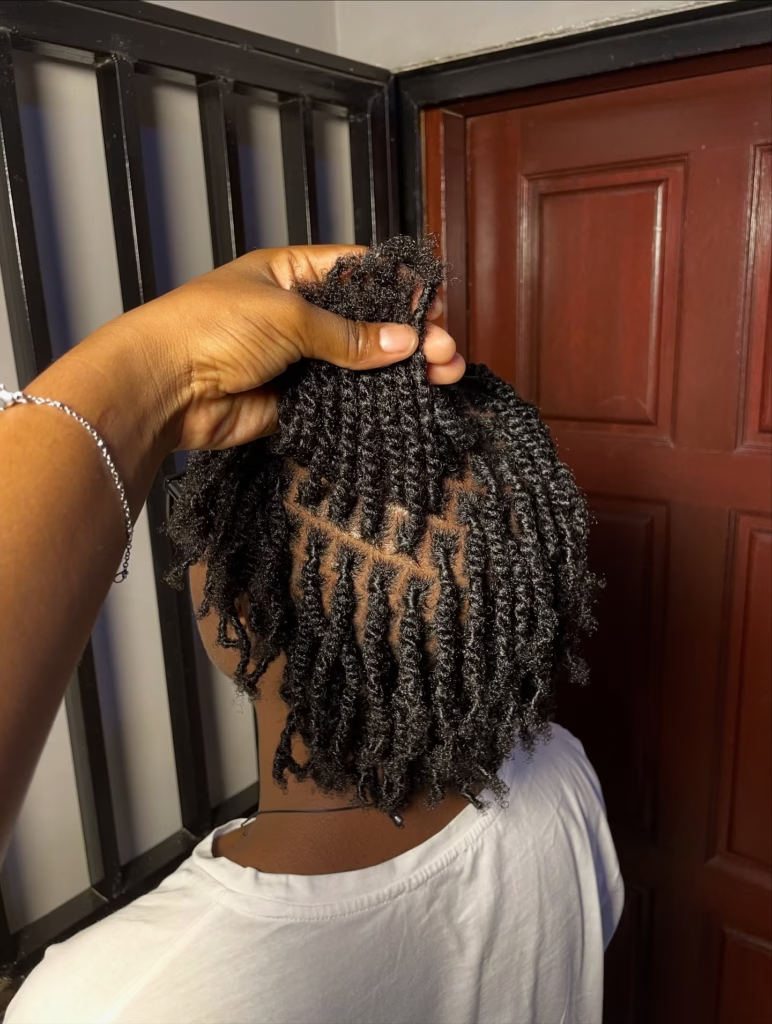
Starter Locs: Months 0 to 6
This is the stage where most people panic. Your locs are freshly installed and look neat. Then week three arrives, and they look fuzzy.
Week six brings the dreaded “budding” stage where the hair starts to swell and some parts lose their shape temporarily. This is normal. This is the hair locking.
The styles that work best at the starter stage are ones that embrace and hide the fuzz at the same time.
Cornrow-style tops with the loc ends left out work beautifully. Half-up puffs or half-up loc ponytails keep the crown looking intentional.
Geometric parts at install give your starter locs a clean, architectural look even before they fully lock. Headbands and hair wraps are also your best friend at this stage.
Keep your satin bonnet on at night. Every night. No exceptions. Friction from cotton pillowcases causes frizz and can disturb the locking process.
Source @done_by_summer
Teenage Locs: Months 6 to 12
By six months, most of your locs have budded and are starting to firm up. Some are fully locked. Some are still in the process.
The length is beginning to grow past the starter stage, and you have more styling options than you did three months ago.
This is a good time to experiment with simple buns, two-strand twist-outs on unlocked sections, and loose half-up styles.
Your locs are not mature enough for complex updos that require tight pulling or heavy products yet. Keep manipulation low. Let them lock.
Mature Locs: 12 Months and Beyond
Full styling freedom starts here. By twelve months, most women with traditional locs have mature, firm locs that can hold almost any style.
You can do high buns, braids with locs, updos, ponytails, goddess additions, and color. The work you put in during the first year pays off completely at this stage.
Long mature locs, especially those past shoulder length, open up a completely different world of styling. Half-up half-down looks, crown wraps, loc braids, and pinned updos all become accessible.
The weight of mature locs also makes them easier to style into sleek looks because they sit and behave more predictably than young locs.
Every loc you have ever admired passed through exactly what you are in right now. Every single one.
How to Choose the Right Loc Style for Your Face Shape
Source @locnationtm
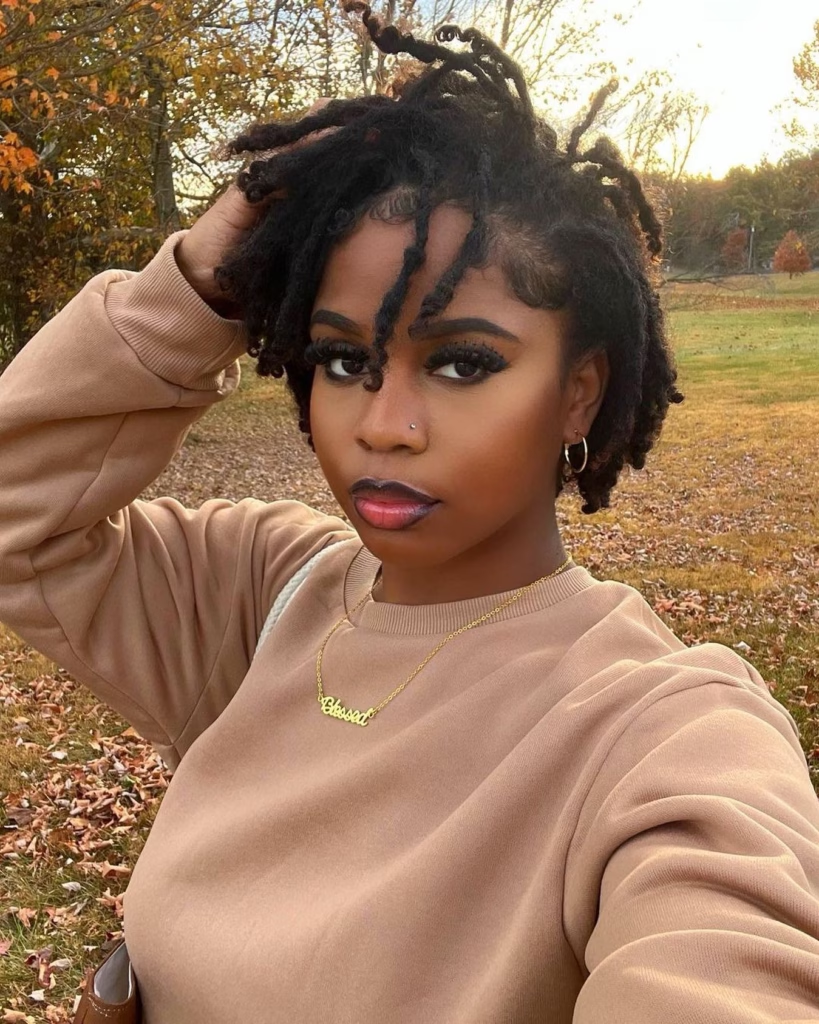
Choosing a loc style without thinking about your face shape is like buying jeans without checking the fit. The right cut makes the difference between “okay” and “exactly right.”
Here is a simple guide.
Oval Face Shape
Oval faces are balanced, with a slightly wider forehead than chin and a gently rounded jaw. Almost every loc style works on an oval face.
Long dramatic locs, tapered loc bobs, goddess locs, updos, and micro loc buns all suit this shape well. If you have an oval face, the main thing to think about is not what to avoid but what you love most.
Round Face Shape
Round faces have similar width and length with soft, curved edges. Length is your friend. Styles that fall past the collarbone add vertical line and help elongate the face.
Avoid wide, voluminous styles that add width at the cheekbones. A textured loc bob that falls just below the chin enhances the features of a round face well. Side-swept locs work beautifully here too.
Heart Face Shape
Heart-shaped faces are wider at the forehead and narrow toward the chin. You want to add volume toward the ends of your locs to balance the wider top.
Goddess locs with curly ends are ideal because the texture at the bottom visually widens the lower half of the face. Avoid heavy volume at the crown.
Square Face Shape
Square faces have a strong, angular jaw and a fairly even width across the forehead, cheekbones, and jaw. The goal with square faces is softness.
Goddess locs and soft locs both work well because the texture at the ends counters the sharp jaw angle. Avoid styles that sit flat against the face or that cut off at the jaw line, as these can make the face look more boxed in.
Oblong or Long Face Shape
Long faces have more length than width. Width and fullness are your best tools. Buns and updos that sit wide on the sides of the head add dimension.
Voluminous butterfly locs or wide, full styles with horizontal spread are flattering. Avoid long, straight-down styles that continue the vertical line of the face.
Quick Tip: A skilled loctician factors your face shape into the loc size, placement, and parting pattern automatically. This is another reason a consultation is worth the time. You do not have to figure this out alone.
Loc Maintenance Tips That Actually Work for Black Women
Source @locmajesty
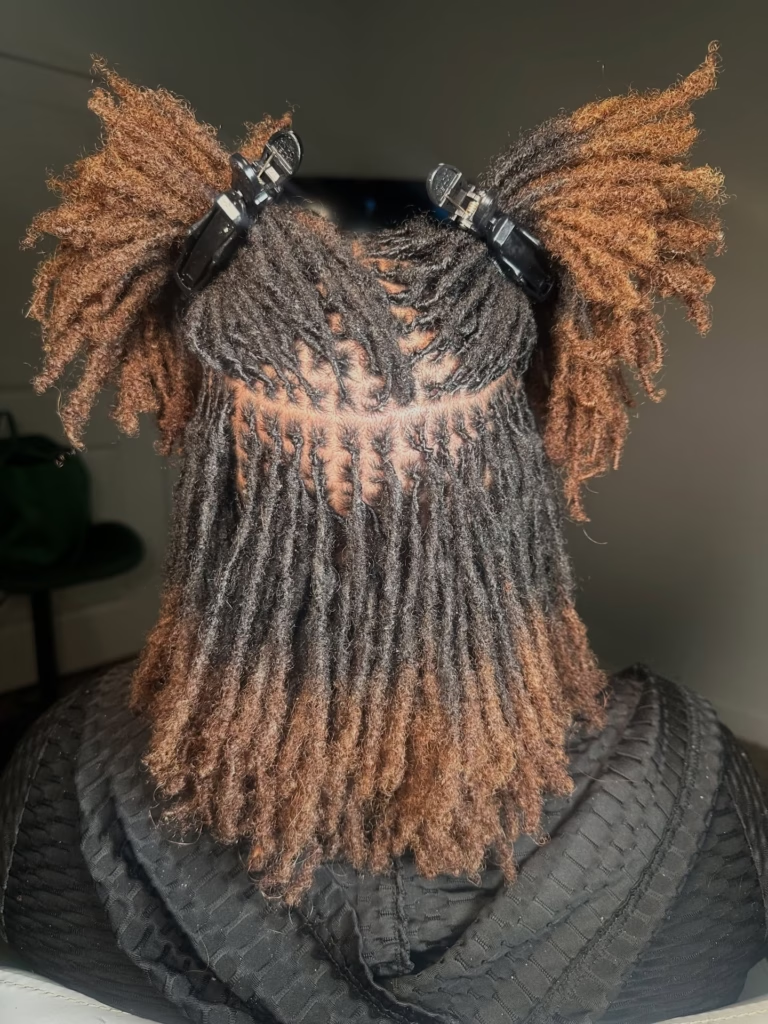
Here is the myth that needs to go away right now. Locs are not low maintenance. At least not at the beginning.
Locs require consistent care, especially in the first year. Once they mature, the routine gets simpler.
But there is no version of healthy locs that involves ignoring your hair for months at a time. Clean scalp. Moisturized locs. Regular retwisting. These are not optional.
Here is what a real maintenance routine looks like.
Scalp Care Is Everything
Healthy locs start with a healthy scalp. A clean scalp prevents buildup, odor, and thinning at the roots. Wash your locs every one to two weeks with a sulfate-free shampoo.
Sulfate-free formulas clean without stripping the natural oils your scalp produces. SheaMoisture, Camille Rose Naturals, Mielle Organics, and Briogeo all make shampoos specifically formulated for Black hair textures.
Do not use regular bar soap or dish soap on your locs. This strips moisture and causes buildup that is incredibly difficult to remove once it sets.
Moisture Is a Routine, Not an Event
Water is moisture. Oil is a sealant. These two things work together.
First, lightly spritz your locs with water or an aloe vera spray to introduce moisture directly into the strand.
Then apply a lightweight oil, such as Jamaican black castor oil or jojoba oil, to seal that moisture in and prevent it from evaporating. Do this two to three times per week, more often if you live in a dry climate or wash frequently.
76.1% of African American consumers prefer hair care products free from mineral oils and synthetic fragrances, according to Cognitive Market Research. And 78.3% of Black consumers prefer chemical-free products due to scalp sensitivity and long-term hair health concerns.
Plant-based products, which accounted for three out of five new product launches in U.S. beauty retail in 2025, are your best choice here.
Retwisting: Less Is Sometimes More
Retwisting too often can weaken the roots and cause traction alopecia, which is hair loss caused by repeated tension.
Most locticians recommend retwisting every four to six weeks during the first year and less often as locs mature. Let the new growth get to a manageable length before you manipulate the roots again.
Nighttime Protection Is Non-Negotiable
A satin bonnet or satin pillowcase is the simplest thing you can do to protect your locs while you sleep.
Cotton absorbs moisture and creates friction that disturbs the locking process and causes frizz. Satin creates a smooth surface that your locs glide against.
A good satin bonnet costs between $8 and $15. It is one of the most valuable things in your hair care routine.
When to See a Loctician vs. DIY
You can handle daily moisture, washing, and nighttime protection at home. Retwisting is something many women learn to do themselves over time.
But if you are starting your locs for the first time, experiencing thinning at the roots, noticing unusual breakage, or wanting a major style change, see a professional.
African American women invest an average of $54.14 monthly on hair care products according to The Hair Society, spending nine times more than other ethnic groups.
That investment is worth protecting with professional guidance when it counts.
5-Step Weekly Maintenance Checklist:
- Moisturize with water and oil two to three times this week
- Wear your satin bonnet every night without exception
- Check roots for any locs that are starting to merge and gently separate them
- Assess scalp for dryness, buildup, or irritation
- Wash every one to two weeks with a sulfate-free shampoo
Loc Hairstyles for Black Women: Your Questions Answered
How long does it take for locs to fully mature?
Most traditional locs take twelve to eighteen months to fully mature. Hair texture plays a role. Type 4C hair typically locks faster than type 3 hair because the tighter curl pattern creates more natural friction between strands.
Can you start locs with short hair?
Yes. Most locticians recommend at least two to three inches of hair as a starting point. Below that length, the sections are harder to form and hold during the locking process.
How much does it cost to get locs installed?
Costs vary widely depending on your location, the type of locs, and the stylist’s experience. Traditional loc installs typically range from $150 to $400 or more. Sisterlocs installs often cost $400 to $800 and require a certified consultant. Soft locs and goddess locs as extension styles range from $150 to $350 depending on hair length.
Can I color my locs without damaging them?
Yes, but the method matters. Semi-permanent color, glosses, and herbal tints like henna are the safest options for maintaining loc health. Permanent color is possible but should be applied by a professional with loc experience to minimize dryness and breakage.
Are locs a professional hairstyle?
Yes. The CROWN Act protects natural hair in workplaces and schools across more than 20 U.S. states. Locs are professional, beautiful, and fully legitimate in any setting. Styles like the tapered loc bob and sleek high bun make locs especially versatile for corporate environments.
The Bottom Line
Loc hairstyles for Black women in 2026 are bolder, more versatile, and more celebrated than ever before.
From fresh starter locs to dramatic waist-length styles, the options match every texture, lifestyle, and personality.
Choosing the right type of locs for your curl pattern and face shape is the most important decision you will make at the start. After that, consistent care keeps everything healthy and on track.
The key takeaways are simple. Choose a type that fits your actual hair. Commit to a real moisture routine. Protect your locs at night.
Get professional help when it counts. And own every stage of the process, including the awkward middle parts.
Your best loc era is ahead of you. Save this guide, screenshot the looks that speak to you, and book a consultation with a certified loctician before your next appointment. Your hair is ready. The only question is which style you are starting with.