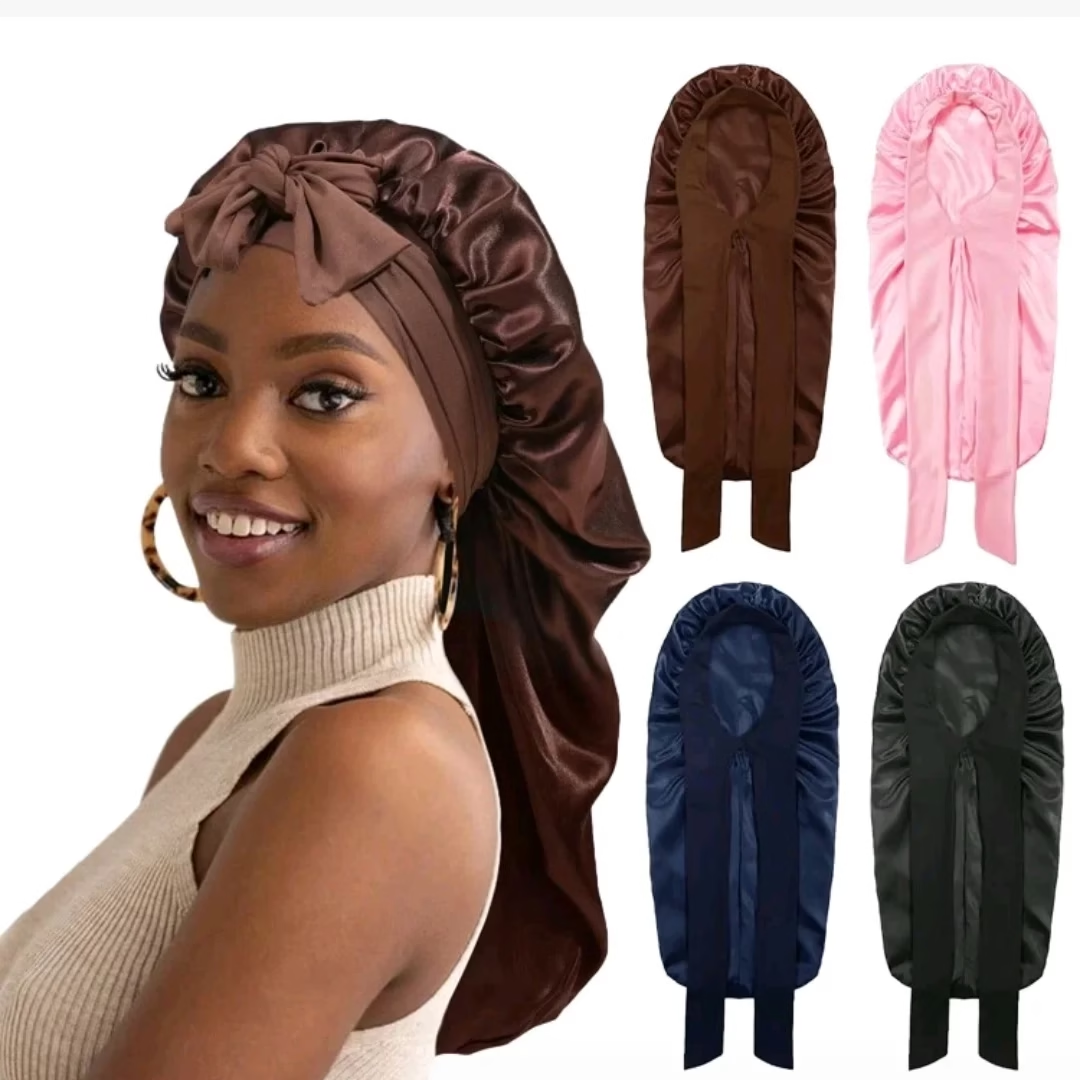
Most people are told any satin or silk bonnet will protect locs, but that is not true once your hair has length, weight, or thick roots. A small bonnet may cover your head, yet still fold your locs, squeeze your edges, and leave the ends dry by morning.
That is where many loc wearers get frustrated. You buy a bonnet, sleep in it, and still wake up with frizz, lint, bent locs, or a band mark across your forehead. I have seen this happen often, and the problem is usually not your hair. It is the fit, fabric, shape, or how the locs are placed inside.
Long locs need room. Thick locs need depth. Sensitive edges need a soft band that does not press into the hairline.
Before choosing a silk bonnet, you need to know what your locs actually need at night: less friction, light moisture, enough space, and no tension. This guide will help you choose a bonnet that protects your locs while you sleep.
Save for later How to Style Long Locs in 15 Minutes: Quick Looks for Busy Mornings
Choose a Bonnet Based on Loc Length, Not Just Head Size
Most people choose a bonnet by head size, but locs need space for length, volume, and weight. That advice falls short because locs can bend, fold, and press against the band when the cap is too shallow.
Short locs can usually sit in a standard bonnet if the crown has enough room. Medium locs need extra depth so the ends are not forced into one tight ball. Long locs need an oversized or tube-shaped bonnet that lets the hair lie in one direction instead of folding back on itself.
Thick locs need width and depth because crowding creates dents, traps heat, and makes the bonnet shift while you sleep.
Before buying, check these details:
- Depth: Choose enough fabric so your locs can sit loosely, not packed like a bun.
- Opening size: Pick a band that stretches over your locs without scraping your hairline.
- Interior space: Leave room for the ends, because dry ends frizz first when they rub all night.
A bonnet that only fits your head can still fail your hair. Better fit protects your loc shape, keeps the ends smoother, and stops the bonnet from turning into a tight bag around your hair.
Bookmark this post Wedding Loc Updo Styles for Black Brides That Look Elegant, Secure, and Beautiful
The Bonnet That Slips Off Is Usually the Wrong Fit, Not Your Fault
You may think your bonnet slips because you move too much at night, but the real problem is usually the band, shape, or fabric. Many women keep buying bigger bonnets when what they need is a better grip and a softer fit.
Loose elastic slides because it cannot stay anchored around your head once the locs shift. Tight elastic stays on by squeezing your edges, which can leave pressure marks, headaches, or stress around the hairline. Neither option works well for locs.
Wrong fabric also matters. A bonnet with a slick outer layer and weak elastic can move every time your pillow rubs against it.
Check these before blaming your sleep:
- Adjustable band: Choose one you can loosen or tighten without pulling your edges.
- Wide edge band: Pick a wider band because it spreads pressure better than a thin elastic strip.
- Deep crown: Give your locs room so they do not push the bonnet upward while you sleep.
- Secure back fit: Make sure the nape sits flat, because slipping often starts at the back.
A bonnet should stay on without pain. Good fit holds the fabric in place while giving your locs room to move.
Check out Bob Locs for Women in Their 30s: Polished Styles That Feel Grown, Soft, and Intentional
Silk vs Satin for Locs: What Actually Changes While You Sleep
You may have been told silk and satin are the same, but they are not. Silk is a natural fiber, while satin is a weave that can be made from different materials like polyester or silk. That difference affects feel, price, heat, and how your locs glide while you sleep.
Friction is the issue. Locs rub against fabric all night, especially around the ends, nape, and hairline. Smooth fabric helps reduce that rubbing, so your locs wake up with less frizz and fewer rough spots.
Silk often feels softer and more breathable, which can help if your scalp gets hot or sweaty at night. Satin can still work well if the inside is smooth, but cheap satin may feel slippery, hot, or rough after washing.
Choose based on your hair and budget:
- Pick silk if your scalp gets hot.
Breathable fabric helps reduce trapped heat around thick or long locs. - Pick satin if you need a lower-cost option.
A smooth satin lining still protects better than cotton. - Check the inside fabric.
Your locs touch the inside, not the label. - Avoid rough seams.
Raised seams can rub the same locs every night.
A bonnet works when your locs can glide without drying, snagging, or being squeezed into one hard shape.
See now 15 Mature Locs Styles for Women Over 40 That Exude Confidence
Pick the Right Bonnet Shape for Long Locs, Thick Locs, and Starter Locs
Best Bonnet Styles for Different Loc Needs
The right bonnet is not always the biggest one. Your loc length, thickness, edges, curls, heat level, and sleep style should decide the shape.
Short Locs Need a Deep Round Bonnet
Short and chin-length locs need enough crown room to sit loose, so they are not pressed flat overnight.
Thick Mature Locs Need Oversized Space
Bigger bonnets help thick locs spread out, which reduces crowding, heat, frizz, lint, and bent ends.
Long Locs Need a Tube Bonnet
A tube shape lets long locs lie in one direction, so the ends are not folded into the same crease.
Sensitive Edges Need Adjustability
Adjustable bands hold without squeezing, which helps prevent forehead marks, headaches, and edge pressure.
Hot Sleepers Need Breathable Fabric
Roomy silk or smooth satin can help reduce trapped warmth around dense locs and the scalp.
Curled Locs Need Extra Depth
Curled locs need space above and around the curl pattern, so the hair is covered without being packed down flat.
Travel Bonnets Need Easy Care
Overnight trips need a bonnet that folds, washes, and stores cleanly, so hotel lint does not get rubbed into your locs.
Microlocs Need Less Empty Fabric
Smaller bonnets can work better for microlocs and sisterlocks because extra fabric can twist, slide, and tangle.
Most people buy a round bonnet and hope it works, but locs need a shape that matches their stage. Round bonnets can be fine for short locs, but long or thick locs often need more length, more depth, or a different cut.
Shape matters more. A bonnet that is wide but shallow will still press your locs flat. Thick locs need room to stack loosely, while long locs need space to stretch downward instead of folding at the ends.
Starter locs need gentle protection, not heavy compression. If your locs are new, choose a soft bonnet that does not rub the parts or pull at the roots. Tight bands can disturb the front and make fresh parts rough faster.
Use this simple match:
- Short locs: Choose a standard deep bonnet.
It gives enough room without extra fabric sliding around. - Medium locs: Choose an oversized bonnet.
Extra depth keeps the ends from rubbing against the band. - Long locs: Choose a tube bonnet.
Length lets the locs lie in one direction instead of folding. - Thick locs: Choose a wide, deep bonnet.
Crowding traps heat and pushes the bonnet off. - Starter locs: Choose soft lining and gentle hold.
New roots need less pulling while they settle.
Better shape means less morning fixing. Your bonnet should hold your hair, not fight it.
Check out How to Start Locs for Beginners Step by Step: A Simple Guide for Your First 90 Days
Avoid Bands That Protect the Locs but Damage the Edges
You may have been told a tight bonnet is better because it stays on, but tight hold can punish your edges while your locs sleep safely inside. That trade-off is not worth it. A bonnet should protect the hair without pressing hard into your hairline, temples, or nape.
Thin elastic is one of the biggest problems. Pressure sits in one narrow line, so the band can dig into your skin and rub the same edge hairs every night.
A wide band spreads pressure over more space, which makes it safer for loc wearers who already deal with tension from retwists, ponytails, buns, or headwraps.
Check the band before buying:
- Press the band against your wrist first.
Skin marks after a few minutes usually mean your forehead will feel that same pressure overnight. - Choose adjustable bands when possible.
Adjustment lets you fit the bonnet around your head without squeezing your edges just to keep it on. - Avoid rough stitching near the hairline.
Raised seams can rub your edges while you turn in your sleep, especially if your locs push the bonnet forward. - Pick soft, flat bands for starter locs.
Fresh roots need gentle contact because rough bands can disturb neat parts and cause frizz around the front. - Watch the nape area.
Long or thick locs can pull the bonnet backward, making the band press hard at the back of your head.
Look for comfort before cuteness. A pretty bonnet that leaves a red line, headache, or sore edges is not helping your loc journey.
If the bonnet slides unless you pull it tight, the shape is wrong. Get more depth or a different band style instead of forcing a bad fit. Your edges should feel calm when you wake up.
Here’s a guide on Loc Styles for the Budding Stage: 12 Looks That Celebrate Your Loc Journey
Match Your Bonnet to How You Sleep at Night
Most people buy a bonnet based on hair length, but your sleep style matters just as much. A bonnet that works for a still back sleeper may slide off a restless sleeper by midnight.
Your locs need protection that fits how you actually sleep, not how you wish you slept.
Side sleepers need a smooth outer feel and a secure band because the bonnet rubs against the pillow all night. A wide adjustable band works better than thin elastic because it holds without cutting into the temple area.
Long locs should be placed toward the back or inside a tube bonnet so they do not bunch under one cheek.
Back sleepers should focus on bonnet depth. Thick locs can create a lump behind the head if the bonnet is too shallow, and that pressure can bend the locs overnight. A deep bonnet lets the hair spread instead of pressing into one hard mound.
Hot sleepers need breathable fabric and a loose crown. Silk can feel cooler for many people, while smooth satin can still work if the bonnet is not packed tight with hair. Crowded locs trap heat, and trapped heat can make the scalp sweaty or itchy by morning.
Restless sleepers need grip without pain. Choose an adjustable bonnet, a wide band, or a bonnet-and-pillowcase combo if your cap always disappears. The pillowcase gives backup protection when the bonnet slips.
Use this match:
- Side sleeper: wide band, smooth outside, extra room near the sides.
- Back sleeper: deep crown, soft back area, no bulky knot.
- Hot sleeper: breathable fabric, loose fit, fewer packed locs.
- Restless sleeper: adjustable band plus silk or satin pillowcase.
- Long-loc sleeper: tube bonnet or oversized bonnet with the ends laid flat.
Test the bonnet for three nights. Morning frizz, edge marks, slipping, or bent locs tell you what needs to change.
Continue reading Sisterlocks for Black Women Over 40: 20 Looks That Celebrate Every Year
Keep Locs From Bending, Flattening, or Folding Inside the Bonnet
Keep Locs From Bending, Flattening, or Folding
Covering your locs is not enough. The way you place them inside the bonnet decides whether they wake up smooth, bent, flat, or crushed.
Short Bob Locs: Let Them Fall Naturally
Pull the bonnet over the bob shape instead of forcing the ends upward, so your locs do not stick out by morning.
Shoulder-Length Locs: Guide Them Back
Gather the locs loosely toward the back because this keeps the front from getting pressed flat while you sleep.
Waist-Length Locs: Use Length, Not Force
A tube or long bonnet lets your locs stretch downward, so the ends are not folded into the same crease.
Thick Mature Locs: Split the Weight
Divide thick locs into two loose sections before covering, because crowding all the weight in one spot can push the bonnet off.
Curled Locs: Keep the Curls Loose
Place curled locs upward with space around them, since tight packing can crush the curl pattern faster.
You may have been told to just tuck all your locs into the bonnet, but stuffing them in any direction is how bends and flat spots happen. That method covers the hair, but it does not protect the shape.
Long locs need direction. Folding them in half every night can leave a crease near the same area, especially if the bonnet is shallow. Lay them in one smooth curve instead of pushing them into a tight ball.
Use this placement guide:
- Short bob locs: Let them fall naturally before pulling the bonnet over.
Forcing them upward can make the ends stick out by morning. - Shoulder-length locs: Gather them loosely toward the back.
This keeps the front from flattening while you sleep. - Waist-length locs: Use a tube bonnet or long bonnet.
Extra length lets the locs stretch downward instead of folding. - Thick mature locs: Split the locs into two loose sections before covering.
Crowding all the weight in one spot can push the bonnet off. - Curled locs: Place curls upward and loose.
Tight packing crushes the curl pattern faster.
Before bed, shake your locs gently so they are not stuck together with product or sweat. A bonnet should hold the hair softly, not compress it like a bag.
See also 40 Cute Short Starter Loc Styles for Every Stage of Your Loc Journey
Stop Morning Frizz by Fixing Your Night Routine Before Blaming the Bonnet
You may think the bonnet is the problem every time you wake up frizzy, but dry locs, dirty fabric, and rough bedtime habits often cause the real damage. A good bonnet cannot fix hair that goes to bed thirsty, coated, or tangled.
Moisture timing matters. Spritz dry locs lightly with water or rosewater, then seal with a small amount of light oil right away. Waiting too long lets the water evaporate before your locs get the benefit.
Try this before buying another bonnet:
- Remove lint before bed.
Lint trapped under a bonnet can rub into locs while you sleep. - Use light moisture only.
Heavy creams can make locs sticky, and sticky locs collect more fuzz. - Clean your bonnet weekly.
Oil, sweat, and product on the fabric can transfer back to your hair. - Smooth the front gently.
Use your fingers, not a brush, so you do not rough up your roots. - Protect the pillow too.
A silk or satin pillowcase gives backup when the bonnet slips.
Morning frizz is often a routine problem, not a bonnet failure. Fix the dryness, friction, and buildup first, then judge whether the bonnet is actually doing its job.
What to Look for Before Buying a Silk Bonnet for Locs
You may think “silk bonnet” on the label means it will protect your locs, but the label is not enough. The fit, lining, band, depth, and seam placement decide whether your hair wakes up smooth or stressed.
Cheap bonnets can look pretty online. Poor fit shows at night. Your locs will tell the truth by morning.
- Check the inside fabric first.
Your locs touch the lining all night, so the inside must feel smooth from edge to crown. Rough lining can rub the same locs while you sleep, which leads to frizz, lint, and dry-looking ends. - Choose enough depth for your loc volume.
A bonnet can fit your head and still be too shallow for your hair. Thick locs need space to sit loosely because crowding traps heat, flattens roots, and pushes the bonnet upward. - Look for a soft adjustable band.
Fixed elastic often gives you two bad choices: too loose or too tight. An adjustable band lets you hold the bonnet in place without squeezing your edges or leaving marks across your forehead. - Avoid rough seams around the hairline.
Seams that sit near your edges can rub while you turn on your pillow. Loc wearers already deal with tension from retwists, buns, clips, and headwraps, so the bonnet should not add more stress. - Pick the right shape for your loc length.
Short locs can work in a deep round bonnet, but long locs need an oversized or tube bonnet so the ends do not fold all night. Folded ends can wake up bent, dry, or rough. - Check if the bonnet can handle your sleep style.
Side sleepers need a secure band and smooth outer feel because the bonnet rubs against the pillow. Restless sleepers should pair a good bonnet with a silk or satin pillowcase for backup protection. - Think about heat before buying.
Thick locs can trap warmth inside a tight bonnet. Breathable silk or a roomy satin bonnet helps your scalp feel less sweaty because air has more space to move around the hair. - Choose easy wash care.
Bonnets collect oil, sweat, lint, and product from your locs. A bonnet that is hard to clean will stop protecting your hair well because dirty fabric transfers buildup back onto your locs. - Test the band before sleeping in it.
Wear the bonnet for ten minutes before bed. Pressure marks, slipping, itching, or a tight feeling at the temples mean the fit will likely bother you overnight. - Skip bonnets that flatten your style.
A good bonnet should hold your locs without crushing curls, bending bob locs, or pressing thick roots into one hard shape. Your hair should have room to rest, not fight the fabric.
Pretty is not enough. Buy for your loc length, scalp comfort, and real sleep habits. A bonnet that protects your hair should feel gentle, stay on, and leave your locs easier to refresh in the morning.
Read also Office-Ready Locs Hairstyles for Women: 12 Professional Styles to Try
Best Silk Bonnet Styles for Different Loc Needs
Best Bonnet Styles for Different Loc Needs
The right bonnet is not always the biggest one. Your loc length, thickness, edges, curls, heat level, and sleep style should decide the shape.
Short Locs Need a Deep Round Bonnet
Short and chin-length locs need enough crown room to sit loose, so they are not pressed flat overnight.
Thick Mature Locs Need Oversized Space
Bigger bonnets help thick locs spread out, which reduces crowding, heat, frizz, lint, and bent ends.
Long Locs Need a Tube Bonnet
A tube shape lets long locs lie in one direction, so the ends are not folded into the same crease.
Sensitive Edges Need Adjustability
Adjustable bands hold without squeezing, which helps prevent forehead marks, headaches, and edge pressure.
Hot Sleepers Need Breathable Fabric
Roomy silk or smooth satin can help reduce trapped warmth around dense locs and the scalp.
Curled Locs Need Extra Depth
Curled locs need space above and around the curl pattern, so the hair is covered without being packed down flat.
Travel Bonnets Need Easy Care
Overnight trips need a bonnet that folds, washes, and stores cleanly, so hotel lint does not get rubbed into your locs.
Microlocs Need Less Empty Fabric
Smaller bonnets can work better for microlocs and sisterlocks because extra fabric can twist, slide, and tangle.
You may think the best silk bonnet is simply the biggest one you can find, but extra space without the right shape can still leave your locs bent, hot, or flattened. That is why the best bonnet style depends on your loc length, thickness, scalp comfort, and how you sleep.
- Deep round bonnet for short locs
Round bonnets work well when your locs are short, chin-length, or still in the early stage. Choose one with enough crown depth so your locs can sit loosely instead of being pressed flat against your scalp. - Oversized bonnet for thick mature locs
Oversized bonnets give thick locs room to spread, which helps reduce crowding and heat. Crowding makes locs rub together all night, and that can lead to frizz, lint, and bent ends by morning. - Tube bonnet for long locs
Long locs need length more than width. Tube bonnets let the hair lie in one direction, so your ends are not folded into the same crease every night. - Adjustable bonnet for sensitive edges
Adjustable bonnets are better when fixed elastic gives you headaches or forehead marks. Fixed bands often grip by squeezing, while an adjustable band lets you find a hold that stays on without pulling your edges. - Soft wide-band bonnet for starter locs
Starter locs need gentle contact because the parts, roots, and ends are still settling. Soft wide bands spread pressure better than thin elastic, so they are less likely to rough up the front or disturb fresh parts. - Breathable silk bonnet for hot sleepers
Hot sleepers need a bonnet that does not trap too much warmth around the scalp. Breathable silk can feel cooler than thick synthetic satin, especially when your locs are long or dense. - Satin-lined silk-style bonnet for budget buyers
Budget matters, and a smooth satin-lined bonnet can still protect better than sleeping on cotton. Check the inside with your fingers first, because your locs touch the lining all night, not the product name. - Low-profile bonnet for bob locs
Bob locs do not always need a huge bonnet. Low-profile bonnets with enough depth help keep the bob shape from flipping upward while avoiding extra fabric that slips around as you sleep. - Extra-deep bonnet for curled locs
Curled locs need space above and around the curl pattern. Loose placement inside an extra-deep bonnet helps curls keep their shape because the hair is covered without being packed down. - Travel bonnet for overnight trips
Travel bonnets should be easy to fold, easy to wash, and secure enough for hotel pillows that may feel rougher than what you use at home. A matching silk or satin pouch also keeps lint and dust away before bedtime. - Bonnet and pillowcase combo for restless sleepers
Restless sleepers need backup. Pair a secure bonnet with a silk or satin pillowcase so your locs are still protected if the bonnet slides off during the night. - Small bonnet for microlocs or sisterlocks
Microlocs and sisterlocks often do not need the same space as thick traditional locs. Smaller bonnets can work better because too much empty fabric can twist, slide, and tangle around the hair while you sleep.
Before buying, match the bonnet to the problem you actually have. Good choices solve one clear issue: slipping, edge pressure, dry ends, heat, folding, frizz, or lack of space. Your bonnet should make morning refresh easier, not give you another thing to fix.
See more 12 Loc Styles With Bangs That Frame Your Face Perfectly
How to Put Long or Thick Locs Into a Bonnet Without Creating Tension
You may have been told to gather your locs into a loose bun before putting on a bonnet, but that can pull at the nape, crown, and edges while you sleep. Long or thick locs need gentle placement, not a tight bedtime style.
That pull adds up. Most people only notice the problem when the hairline feels sore or the bonnet keeps sliding backward.
Start by letting your locs fall in their natural direction. Then guide them into the bonnet with your hands instead of twisting them into one heavy knot. This works because locs already carry weight, and forcing all that weight into one point can strain the roots.
Use this method:
- Lean forward slightly.
This lets long locs fall away from your scalp, so you can gather them without dragging the roots. - Place the bonnet over the ends first.
Covering the ends first helps stop them from folding, rubbing, or drying out overnight. - Guide the rest in slowly.
Use both hands to place the locs inside instead of stuffing them upward. - Spread the weight.
Thick locs should sit in a loose curve or soft pile, not one hard ball at the crown. - Check the edges last.
The band should sit flat without pulling your hairline backward.
Pain means the placement is wrong. Better placement keeps your locs covered, your ends smoother, and your roots calm by morning.
Wash and Care for Your Bonnet So It Keeps Protecting Your Locs
You may think your bonnet is clean because you only wear it at night, but it collects oil, sweat, lint, scalp flakes, and product every time you sleep. That dirty fabric can rub buildup back onto your locs.
Dirty bonnets cause problems. Oils transfer. Lint sticks.
Wash your bonnet often enough that the inside still feels smooth and fresh against your hair. For many loc wearers, weekly washing works well, especially if you use oils, gels, sprays, edge control, or sweat at night.
This helps because clean fabric glides better and does not carry old product back into your locs.
Follow this simple care routine:
- Turn the bonnet inside out.
The inside touches your locs, so clean that part first. - Use mild soap or gentle detergent.
Strong products can leave residue that may irritate your scalp. - Wash by hand when possible.
Hand washing protects soft bands, seams, and silk fabric from rough machine movement. - Rinse until the water runs clear.
Leftover soap can dry on the fabric and transfer to your hair. - Air dry fully before wearing.
A damp bonnet can make your scalp feel clammy and may hold odor.
Avoid tossing your bonnet on dusty shelves, bathroom counters, or the floor. Store it in a clean drawer, pouch, or basket. A clean bonnet protects better because it reduces friction without adding dirt back into your locs.
When a Silk Pillowcase Works Better Than a Bonnet
You may have been told a bonnet is the only way to protect locs at night, but that is not always true. Bonnets work well when they fit, stay on, and give your locs enough room. A silk pillowcase can work better when the bonnet causes pressure, heat, slipping, or bent locs.
Pressure matters. Heat matters too. Comfort changes everything.
Some loc wearers wake up with forehead marks because the band is too tight. Others remove the bonnet in their sleep because it feels hot or heavy. A silk pillowcase gives your locs a smooth surface without putting anything around your edges.
Choose a pillowcase instead of a bonnet when:
- Your bonnet gives you headaches.
Tight bands can press into the temples and hairline, especially if your locs are thick and pushing against the fabric. - Your edges feel sore by morning.
A pillowcase removes band pressure, so the hairline gets a break from rubbing and squeezing. - Your locs are too long for every bonnet you try.
Long locs can spread across the pillow instead of being folded inside a cap that is too short. - You sleep hot.
Thick locs packed inside a bonnet can trap heat around the scalp, while a pillowcase allows more open air. - Your bonnet keeps slipping off.
Silk pillowcases give backup protection when a bonnet does not stay put through the night.
Still, a pillowcase will not hold your hair in place. Long locs may move around more, and curled locs can lose shape faster without a bonnet. Use both if needed: bonnet for hold, pillowcase for backup.
Better sleep protection is the one you will actually use every night without pain. That is the essence of this guide on best silk bonnets for women with locs.
Build a Simple Night Routine for Softer Locs by Morning
You may think buying a better bonnet will fix dry locs overnight, but the bonnet only protects what you put inside it. Dry hair under silk is still dry hair. The routine before the bonnet is what makes your locs feel softer by morning.
Start with your scalp and ends. If your locs feel dry, spritz lightly with water, rosewater, or a water-based mist. Seal that moisture with a small amount of light oil right away, because waiting too long lets the water dry on the surface before your locs get much benefit.
Less product works better. Heavy creams can coat locs, attract lint, and make the bonnet dirty faster. A light routine keeps the hair soft without leaving it sticky.
Use this simple night routine:
- Check for lint first.
Remove visible lint or fuzz before covering your hair, because the bonnet can press it deeper into your locs overnight. - Mist only when your hair feels dry.
Do not soak your locs every night, since damp locs packed under fabric can feel musty or heavy by morning. - Oil the scalp only where needed.
Place a few drops on dry areas instead of pouring oil through the whole head. - Lay your locs in one direction.
Long locs should curve softly inside the bonnet or tube cap, not fold into a tight ball. - Protect the edges gently.
Place the band behind the hairline if that feels better, and avoid pulling the front tight just to keep the bonnet on. - Use a silk or satin pillowcase for backup.
Restless sleepers need protection even if the bonnet slides off.
Morning care should stay simple too. Shake your locs loose, place the front with your fingers, and refresh only the dry sections. Brushing, over-oiling, and constant twisting can create more frizz than they fix.
Healthy night care should feel light. Your locs should wake up softer, your scalp should feel calm, and your bonnet should not leave you with marks, heat, or flattened roots.