
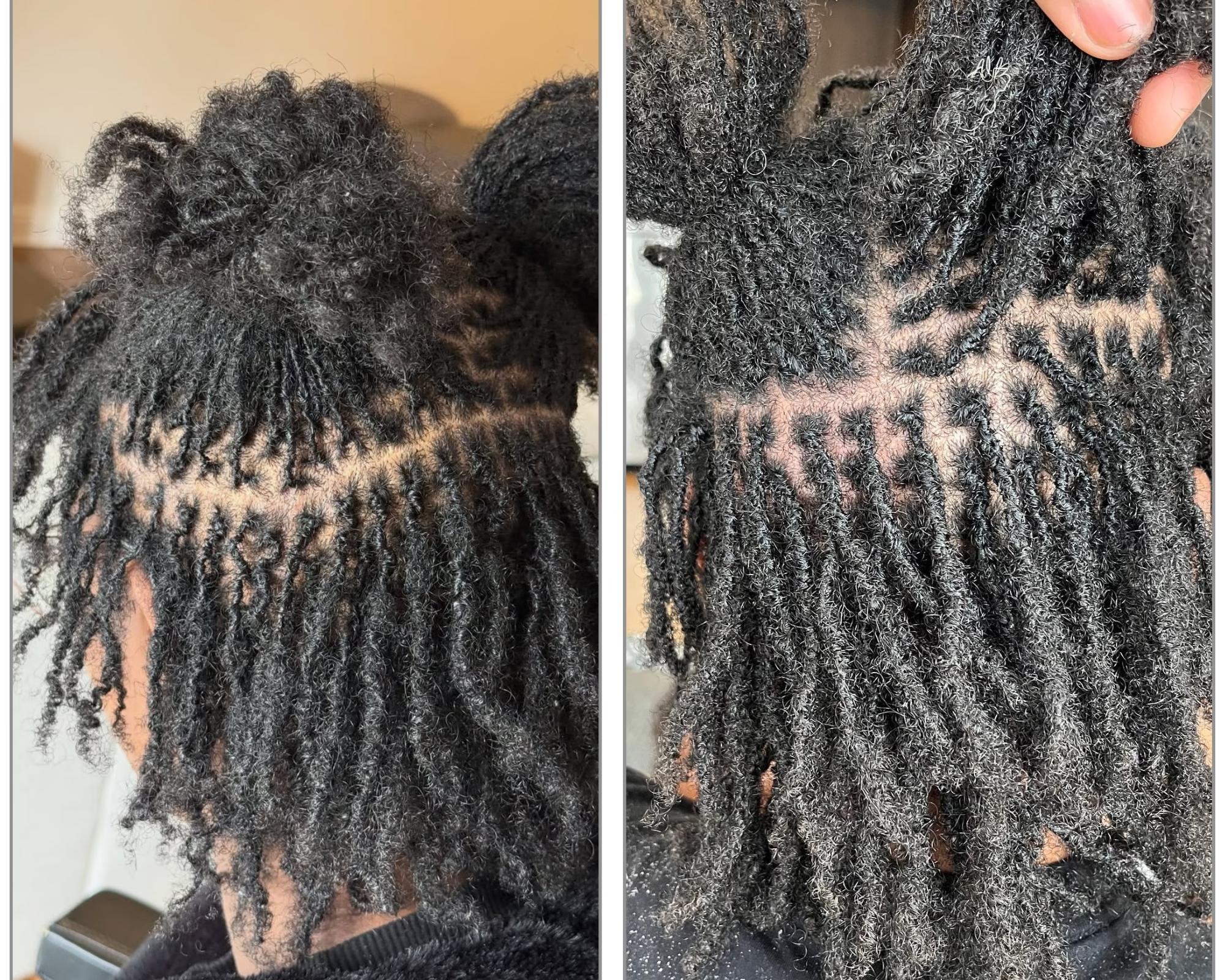
Unraveling does not always mean your starter locs are failing. Some loosening, puffiness, and frizz can happen while your hair is learning to hold its shape, especially in the first few months. Do not panic.
The real problem starts when the same locs keep opening fully, your ends will not stay together, or you keep twisting loose pieces every day to “fix” them. Frizz is normal. Constant touching is not.
You need to know when to leave your hair alone, when to change your routine, and when to ask a loctician for help. Hands can make it worse.
This guide will show you seven practical ways to protect your starter locs, reduce unraveling, and stop small problems from turning into bigger ones.

Understand What Unraveling Really Means Before You Panic
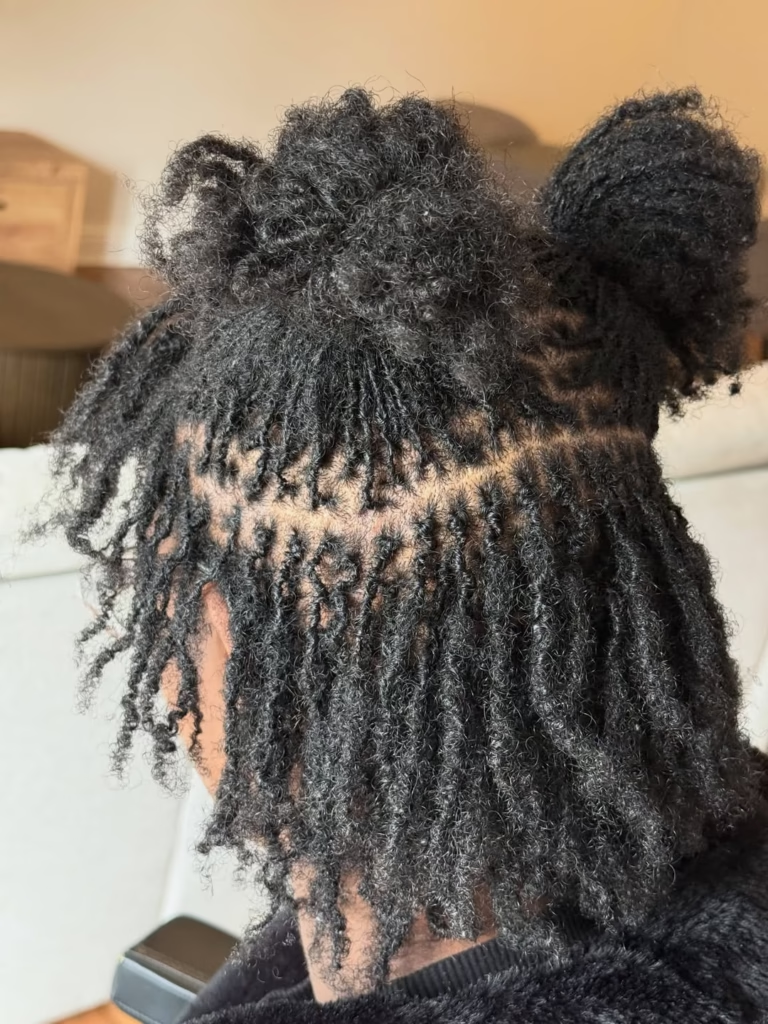

Unraveling is not always a sign that your starter locs are ruined.
Sometimes your hair is only loosening, swelling, or frizzing as it begins to form into locs, which are sections of hair that slowly mat and hold together over time.
Here’s a full guide on 6 Mistakes Parents Make When Starting Their Child’s Locs (And How to Avoid Them)
1. Loose ends are common in the starter stage
Loose ends happen often, especially with comb coils, two-strand twists, or soft hair textures.
Ends may open a little after sleeping, washing, sweating, or styling.
That does not mean your whole loc journey is failing.
2. Frizz is not the same as unraveling
Frizz is loose hair around the loc.
Unraveling means the loc pattern is actually opening or coming apart.
Many beginners try to “fix” frizz by twisting it every day, but that can disturb the hair more than leaving it alone.
3. Soft textures may loosen faster than tighter textures
Softer curls or looser textures may take longer to hold a starter pattern.
Your hair may puff, swell, or open at the ends faster than someone with tighter coils.
Comparison makes this stage harder than it needs to be.
4. Repeated full unraveling needs attention
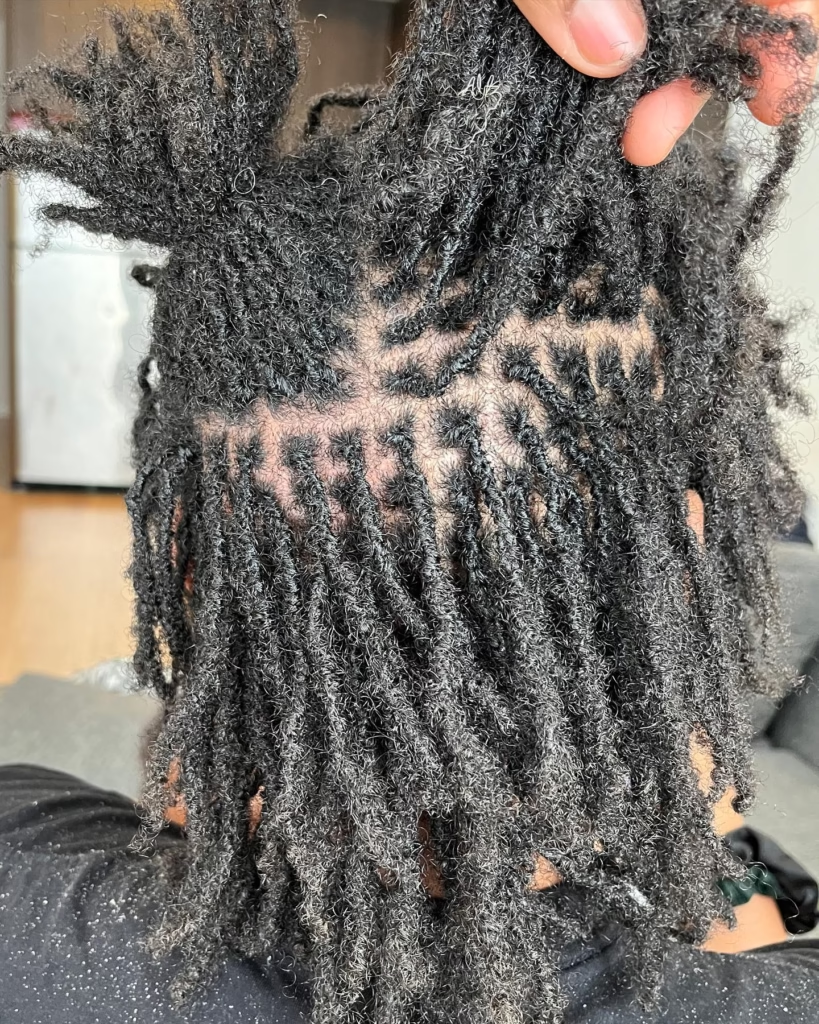
One loose end is usually not a crisis.
The same loc opening fully again and again needs a closer look.
A loctician may need to check the part size, starter method, product use, or how the section is being washed and handled.
5. The goal is progress, not perfect coils or twists every day
Perfect starter locs are not the goal.
Progress looks like hair slowly staying together more over time, even if the roots get puffy and the ends are not smooth.
Let your hair change without trying to control every loose strand.
Pin this post Long Locs Styles for Fall and Winter: 12 Cozy, Protective Looks for Cold Weather
Why Starter Locs Unravel Even When You Think You Are Doing Everything Right
Starter locs can unravel even when you are trying hard, because the early stage is fragile and the hair has not fully locked yet.
Most problems come from method, washing, touching, product use, or expecting the ends to stay perfect too soon.
1. Your starter method may not match your hair texture
Comb coils can look neat at first, but they may loosen faster on soft or looser curl patterns.
Two-strand twists may hold better for some people, while braids or interlocking may work better for others who sweat, wash often, or have very soft hair.
Wrong method does not mean wrong hair.
2. Washing too roughly can loosen the pattern
Washing is not the enemy. Rough washing is.
Scrubbing the full length of each starter loc can undo the coil, twist, or braid pattern before the hair has had time to settle.
Focus on your scalp, use light pressure, and let the shampoo rinse down the locs.
3. Too much touching can disturb new locs
Hands can quietly cause trouble.
Checking the same loose end all day, twisting it while watching TV, or pulling at puffy roots can make the section open more.
Starter locs need time to sit without constant fixing.
4. Heavy products can soften the hold instead of helping it
Thick creams, waxy products, and too much gel may make your hair feel coated instead of secure.
Some products can also leave buildup, which makes locs harder to clean later.
Light mist and simple scalp care usually work better than piling on product every time you see frizz.
5. Loose ends may need time, not constant repair
Some ends take longer to close.
Repeatedly twisting or palm-rolling the same end can make it weaker, especially if you do it when the hair is dry.
Watch the pattern over a few weeks, take photos, and only repair what is truly opening instead of touching every loose piece.
Check out 45 Half Up Half Down Locs Styles for Black Women That Give You the Best of Both Worlds
Tip 1: Choose a Starter Loc Method That Matches Your Hair Texture
Method matters more than most beginners realize.
You can follow every care rule and still see unraveling if your starter method does not match how your hair behaves after washing, sweating, sleeping, and daily movement.
1. Comb coils may loosen faster on softer or looser curls
Comb coils look neat at the beginning because each section is shaped into a small coil.
Softer curls may not hold that round pattern for long, especially near the ends.
After a wash or sweaty day, the coil can puff, stretch, or open because the hair has not started holding together yet.
That does not mean comb coils are bad.
Still, you may need extra patience, gentle washing, and fewer hands in your hair if your coils loosen easily.
2. Two-strand twists can hold better for some textures but may still puff
Two-strand twists often stay together better than coils for some hair types because two sections are wrapped around each other.
That wrapped shape can give your starter locs more structure while they begin to settle.
Puffiness can still happen.
Expect the twists to swell, frizz, and look less “fresh” as the hair starts changing.
Avoid retwisting every loose strand, because that can disturb the twist pattern and create more frizz.
3. Braids can reduce unraveling for very soft or active hair
Braids may help if your hair is very soft, if you work out often, or if your starter locs keep opening after every wash.
The braid pattern can hold the section together better than a coil on some textures.
However, braid starter locs may keep a visible braid pattern for a while before the hair fully matures.
Choose this method if hold matters more to you than having a smooth loc shape right away.
4. Interlocking may help if you wash often or sweat a lot
Interlocking means the end of the loc is passed through the root area to create a tighter base.
This method may help people who sweat often, wash more often, or have hair that slips out of coils and twists.
Care still matters.
Interlocking should not feel painful, and it should not be done too tightly at the scalp.A trained loctician can help you avoid holes, weak spots, or too much tension.
5. Ask a loctician before switching methods too early
Pause before switching.
Some unraveling is normal during the starter stage, so changing methods too fast can create more confusion than progress.
Show your loctician photos of what happens after sleep, washing, workouts, and a full week of wear.
Clear photos help them see whether your hair needs a different method, smaller sections, better drying, or simply more time.
Read also How to Do a Locs Updo at Home: Step-by-Step Guide for Beginners
Tip 2: Wash Starter Locs Gently Without Scrubbing the Locs Loose
Washing is not the enemy.
Dirty roots can itch, smell, and collect buildup, so avoiding water for too long can create more problems than it solves.
Gentle washing keeps your scalp clean while protecting the starter pattern your loctician created, especially when your coils, twists, or braids are still new.
1. Focus shampoo on the scalp, not the full length of each loc
Scalp care comes first.
Place the shampoo on your scalp and work it between the parts instead of rubbing each starter loc from root to end.
Your scalp is where sweat, oil, flakes, and product sit, so cleaning that area matters more than scrubbing the full length hard.
2. Use your fingertips with light pressure
Fingertips give better control than nails.
Press lightly in small circles around the scalp, then move to the next section.
Nails can scratch the scalp and disturb the roots, especially when your starter locs are still trying to hold their shape.
3. Let water run down the locs instead of rubbing them hard
Water can clean without you forcing it.
Let the shampoo rinse down the locs while you squeeze gently with your hands.
Rough rubbing opens sections.
This helps remove shampoo without pulling apart the coil, twist, or braid pattern.
4. Use a stocking cap or mesh cap if your locs unravel easily
A cap can give extra support on wash day.
Place a clean stocking cap or mesh cap over your starter locs before washing if your ends open quickly.
After that, apply diluted shampoo through the cap and massage the scalp gently with your fingertips.
The cap helps hold the starter locs in place while still letting water and shampoo reach the scalp.
5. Dry your locs fully so they do not stay soft and weak
Damp starter locs can loosen faster when they stay wet for too long.
Squeeze out extra water with a towel that does not leave lint, then let your hair dry fully before covering it with a bonnet or scarf.
Air drying works when you have enough time, but thicker starter locs may need more drying time than you expect.
Never sleep with wet starter locs. Freshly washed locs may look puffier at first, but clean hair can still be healthy hair.
Handle it gently, dry it well, and leave the loose pieces alone unless they are truly opening.
Save for later Best Silk Bonnets for Women with Locs: Protect Your Hair While You Sleep
Tip 3: Stop Retwisting Loose Pieces Every Time You See Frizz
Frizz is not a repair job every time it appears.
Many beginners see loose hair around the roots and start twisting it right away, but constant retwisting can put stress on the same small area before the loc has time to form.
Daily twisting can thin the base over time
Retwisting means turning the new growth at the root so the loc looks neater.
Doing that every day can make the base weaker because the same hairs keep getting pulled and moved.
Leave it alone.
Your loc does not need to look fresh every morning to be growing the right way.
Loose hair around the root is normal between retwists
New growth will not stay perfectly wrapped all the time.
That soft, puffy hair near the scalp is part of the process, especially after sleeping, washing, sweating, or wearing a bonnet.
Loose roots can look messy, but they do not always mean the loc is unraveling.
Watch the whole loc, not only the root.
Retwist only on a healthy schedule for your scalp
A good retwist schedule depends on your hair texture, scalp comfort, lifestyle, and how fast your hair grows.
Some people need maintenance sooner, while others can wait longer without problems.
Ask your loctician what timing makes sense for your hair, then avoid retwisting every time one section looks rough.
Too much maintenance can create more tension than progress.
Use clips carefully if you are maintaining at home
Clips can help hold a retwist in place, but they should not pinch, scratch, or pull the scalp.
Place each clip lightly near the root after twisting, then remove it once the hair has set.
Never sleep in tight clips.
Sharp pressure from clips can make your scalp sore and may disturb nearby starter locs.
Leave small frizz alone when it is not causing true unraveling
Small frizz is often harmless.
True unraveling means the starter pattern is opening and the loc is coming apart.
If the loc still holds its basic shape, let the frizz stay until your next wash day or maintenance visit.
Patience helps.
Over-fixing can turn one loose area into a bigger problem because your hands keep disturbing hair that needs time to settle.
Continue reading How to Start Locs for Beginners Step by Step: A Simple Guide for Your First 90 Days
Tip 4: Protect Your Starter Locs at Night So They Do Not Rub Open
Night rubbing can loosen starter locs faster than you think.
Cotton pillowcases, tight caps, and rough sleeping can pull at your ends while you are not awake to notice.
Friction matters.
Your goal is to cover your hair in a way that reduces rubbing without squeezing the starter pattern flat.
1. Sleep with a satin or silk bonnet that fits your loc length
Choose a bonnet with enough room for your starter locs to rest without being crushed.
A bonnet that is too small can press the ends together, bend the locs, and make soft sections open faster by morning.
Satin or silk helps because the smooth surface creates less rubbing than cotton.
2. Avoid stuffing starter locs into a tight cap
Stuffing your locs into a small cap may cover them, but it can also bend the ends and disturb the roots.
Give them space.
Place your locs gently before pulling the bonnet on, especially around the front, sides, and nape.
3. Use a silk or satin pillowcase as backup
A pillowcase gives extra protection if your bonnet slips off at night.
Restless sleepers need backup.
This helps because your locs will still touch a smooth surface instead of rubbing against cotton until morning.
4. Keep locs flat and loose before covering them
Lay your starter locs in the direction they naturally fall.
Forcing them upward or folding them tightly can make the ends open, especially if your hair is soft or newly started.
Use your fingers to place the hair softly, then cover it without pressing everything into one lump.
5. Check the front and nape in the morning before touching everything
Look at the front and nape first because those areas rub the most while you sleep.
Do not twist every loose piece right away.
Pat the locs into place with your fingers, then leave small frizz alone if the starter pattern is still holding.
See more How to Start Locs for Beginners Step by Step: A Simple Guide for Your First 90 Days
Tip 5: Use Light Moisture Instead of Heavy Products That Soften the Hold
Too much product can make starter locs harder to hold, not stronger.
Many beginners reach for thick cream, gel, butter, or wax because they think heavy product will keep the hair together, but those products can soften the pattern, attract lint, and leave buildup inside the locs.
Less works better.
Your starter locs need light moisture and a clean scalp, not layers of product every time you see frizz.
1. Water-based mist is usually better than thick cream
Use a light water-based mist when your locs feel dry.
Spray lightly from a distance so the hair feels refreshed, not wet.
Thick creams can sit on the outside of the loc instead of helping the hair settle, especially during the early stage.
2. Oil the scalp only where it feels dry
Place a few drops of light oil only on dry or itchy spots.
Your scalp does not need to be soaked for your starter locs to stay together.
Too much oil can make the hair slippery, and slippery hair may loosen faster around the ends.
3. Avoid waxy products that sit inside starter locs
Wax may look like it gives hold at first, but it can be hard to wash out.
Buildup becomes a problem.
Once product sits inside starter locs, the hair can feel coated, dull, or sticky instead of clean and light.
4. Heavy gel can make locs sticky and harder to clean
Gel can smooth the roots for a short time, but using too much can create flakes or buildup.
Apply it carefully if you use it at all.
A soft scarf can help lay the front down after a light mist, which gives a neater look without packing product into your locs.
5. Apply less product near the ends if they unravel easily
Loose ends do not always need more product.
Adding cream or gel to ends that already open can make them softer and easier to pull apart.
Try using less near the ends, protect them at night, and ask your loctician if the same sections keep unraveling after every wash.
Bookmark this post How to Style Long Locs in 15 Minutes: Quick Looks for Busy Mornings
Tip 6: Keep Your Hands Out of Your Starter Locs During the Day
Your hands can loosen starter locs faster than your pillow, bonnet, or wash day.
Nervous touching feels harmless because you are only checking one loose piece, but that same pulling, twisting, and rubbing can disturb hair that is trying to settle.
Leave them alone.
1. Finger-twisting can undo the starter pattern
Finger-twisting seems like a small fix when one loc looks loose.
Repeated twisting can open the coil, twist, or braid pattern because you are moving the same section again and again.
Stop fixing every strand.
Use your fingers only to place the loc gently, not to keep turning it all day.
2. Checking the same loc all day can make it looser
Constant checking creates friction.
Each time you pull the loc forward, rub the end, or separate it from nearby hair, you make it harder for that section to stay together.
Choose one time in the morning and one time at night to look at problem areas instead of touching them every hour.
3. Style less during the early stage
Starter locs need time to sit.
Changing styles daily can pull at the roots, bend the ends, and disturb sections that have not started holding well yet.
Simple is safer.
Wear your hair in low-stress styles while it is still forming, especially after a fresh install, wash day, or retwist.
4. Wear simple low-tension looks when you need control
Low-tension styles help you feel put together without pulling your starter locs too much.
Try a loose side part, soft headband, light clip, or gentle half-up look if your hair is in your face.
Avoid tight buns, small rubber bands, and styles that force short locs to stretch in a direction they do not naturally go.
5. Take weekly photos instead of touching to track progress
Photos help you see change without bothering your hair.
Take pictures of the front, sides, back, and any locs that keep loosening.
Weekly photos show whether the same sections are truly unraveling or simply becoming frizzy as they start to mature.
That habit gives you proof to show your loctician without making the problem worse with your hands.
You may enjoy reading 15 Mature Locs Styles for Women Over 40 That Exude Confidence
Tip 7: Book a Loc Check-In When the Same Locs Keep Opening

One loose end is not always a reason to panic, but the same loc opening again and again deserves attention.
Home care can help, yet some unraveling needs a loctician’s eyes because the issue may be the method, part size, texture, or maintenance schedule.
Do not wait too long.
1. Repeated unraveling may mean the section is too large or too soft
Large sections can take longer to hold, especially if your hair is soft or loose in texture.
Very soft hair may also slip out of comb coils or twists faster than tighter hair.
Ask your loctician to check whether that section needs a smaller part, a different starter method, or more time before changing anything.
2. A loctician can repair without overtwisting the root
Good repair should not feel painful.
A loctician can recoil, retwist, braid, interlock, or reshape only the problem area without disturbing every loc on your head.
That matters because overtwisting the root just to fix the end can create tension where you do not need it.
3. Ask whether your method, size, or maintenance schedule should change
Clear questions get better answers.
Ask if your starter method is right for your texture, if your locs are too large for the look you want, or if your retwist schedule is too soon or too far apart.
Mention your real routine too, including workouts, sweating, washing, hats, scarves, and how you sleep.
4. Bring photos of how the locs look after washing and sleeping
Pictures show what happens when your hair is not freshly styled.
Bring photos from wash day, morning after sleeping, and a few days before your appointment.
Those images help your loctician see the pattern instead of guessing from hair that has already been fixed.
5. Do not wait until several locs are fully undone
Early help is easier than major repair.
If one or two locs keep opening fully, book a check-in before more sections start doing the same thing.
Waiting can make the appointment longer, cost more, and leave you more frustrated than needed.
A calm check-in can save your starter locs from weeks of nervous twisting.
Read also 18 Cute Locs Styles for Women Who Love Effortless Everyday Looks
Your Lifestyle Can Decide How Much Unraveling You Get
Your daily routine can affect unraveling just as much as your starter method.
Many beginners blame their hair texture when the real issue is sweat, hats, scarves, workwear, weather, or how often the hair gets rubbed during the day.
Lifestyle matters.
A starter loc that holds well for someone who works indoors may loosen faster on someone who sweats at the gym, wears a helmet, or ties a scarf every shift.
1. Sweat can soften new coils and twists faster
Sweat can make starter locs puff, swell, or loosen because the hair is still learning to hold its shape.
After workouts, do not twist every loose piece right away.
Gently blot your scalp with a clean towel, let the hair dry fully, and only fix sections that are truly opening.
Regular exercise is fine, but your wash and drying routine may need to be more careful.
2. Helmets, hats, and scarves can rub the nape and edges
Headwear can disturb starter locs because it creates pressure and friction in the same areas every day.
Hard helmets may rub the crown and sides.
Tight scarves can pull at the front, while rough hat linings can loosen the nape.
Choose smoother linings when possible, keep headwear clean, and avoid tying scarves so tight that your starter locs are pressed flat for hours.
3. Frequent swimming needs a different maintenance plan
Swimming can loosen starter locs faster because water, movement, and drying time all affect the pattern.
Before swimming often, ask your loctician how to protect your starter locs based on your method and texture.
Chlorine or salt water should be rinsed out properly, and your hair needs to dry fully afterward.
Skipping that care can leave your locs soft, rough, or more likely to open.
4. Very humid weather can make starter locs swell and loosen
Humidity can make your hair puff even when you did nothing wrong.
That swollen look may feel messy, but it does not always mean your locs are failing.
Use lighter products in humid weather because heavy creams can make the hair feel coated and harder to keep clean.
Patience helps here.
5. Your starter method should match your real week, not just your desired look
Pretty starter locs in a photo may not match your real life.
If you work out daily, wear uniforms, sweat often, cover your hair for work, or wash more than average, tell your loctician before choosing a method.
That honest detail can change the recommendation.
Comb coils may look soft and neat at first, but braids, twists, or interlocking may hold better for some lifestyles and textures.
Choose what your hair can live with, not only what looks best on day one.
See now Bridal Loc Hairstyles for Black Women: 20 Stunning Ideas for Your Wedding Day
What to Do When One Starter Loc Unravels Completely
One fully loose starter loc does not mean your whole head is ruined.
Pause first.
A single section can open after washing, sleeping, sweating, or touching, especially if your hair is soft or the loc is still very new.
1. Do not pull neighboring locs apart trying to fix one section
Pulling nearby locs apart can create a bigger problem than the one you started with.
Focus only on the loc that opened.
Neighboring starter locs may look messy around it, but leave them alone if they are still holding their shape.
2. Retwist, recoil, or braid only that section if you know what you are doing
Repair one section only.
If the starter loc began as a coil, you may gently recoil it in the same direction.
When the loc began as a two-strand twist or braid, try to follow that same pattern instead of creating a new one.
Stop if the root feels tight.
A repair should hold the hair together, not pull your scalp.
3. Use a clip to hold the repair without making it tight
Clips can help the repaired section stay in place while it dries or settles.
Place the clip near the root, but do not press it so hard that your scalp feels pinched.
Remove it once the section feels set.
Leaving clips in too long can make the area sore or leave the loc bent.
4. Ask your loctician if the same loc keeps failing
Repeated unraveling is a sign to get help.
Show your loctician which loc keeps opening and explain when it happens, such as after washing, workouts, sleep, or bonnet use.
That pattern can help them decide whether the section needs a different method, smaller part, better drying, or a simple repair.
5. Avoid cutting loose hair unless a professional advises it
Loose hair can look annoying, but cutting it can create uneven spots or make the loc harder to form.
Scissors are not a quick fix.
Let a trained loctician look at the section before removing hair, especially if the loose piece is near the root or connected to nearby locs.
A Simple Weekly Routine to Help Starter Locs Stay Together
A routine works better than panic-fixing every loose piece you see.
Starter locs need steady habits, not constant changes, because too much touching, product, and styling can disturb the pattern before it has time to settle.
1. Nightly: cover your locs without squeezing them
Cover your starter locs with a satin or silk bonnet that has enough room.
Tight caps can bend the ends and press soft sections open while you sleep.
Lay your locs gently before covering them, especially around the front and nape.
2. Morning: place loose areas with your fingers only
Morning frizz does not need a full repair.
Use your fingers to place loose sections softly, then stop. Twisting every rough piece can make the same locs weaker over time.
Leave small frizz alone if the loc is still holding its basic shape.
3. Wash day: protect the starter pattern and dry fully
Wash your scalp gently and let the shampoo rinse through the locs.
Rubbing the full length of each starter loc can loosen the coil, twist, or braid pattern.
Dry fully before covering your hair, because damp starter locs can stay soft and open more easily.
4. Midweek: mist lightly only if the hair feels dry
Moisture should be light.
Spray a small amount of water-based mist only when your locs feel dry or stiff.
Too much moisture can soften the ends, and too much oil can make the hair slippery.
5. Appointment week: write down which locs keep unraveling
Notes help more than guessing.
Write down which locs open, when they open, and what you were doing before it happened.
Bring those notes or photos to your loctician so they can see the real pattern, not just the fresh retwist.
6. Monthly: adjust your routine based on what your hair is showing you
Your starter locs will change from month to month.
Some weeks may bring more frizz, puffiness, or loose ends.
Watch what your hair does after washing, sleeping, sweating, and styling, then adjust one habit at a time instead of changing everything at once.
That calm approach gives your starter locs room to form without constant stress.