
Stop Buying Natural Hair Tools and Expecting Them to Work on Your Locs
The natural hair aisle was not built for you. Every tool on those shelves, from wide tooth combs to curl defining brushes to detangling rakes, was designed to do one of two things: separate strands or define a curl pattern.
Your locs do not need either of those things. Buying those tools and then wondering why your styling routine feels wrong is not a skill problem. It is a product mismatch.
Most short loc wearers start their journey coming from loose natural hair, which means they bring their entire tool kit with them. That wide tooth comb that worked beautifully on wash day before now catches on forming locs and pulls them apart.
Diffuser attachments designed to scrunch and define curls have nothing useful to do on hair that is intentionally locking together. Using them does not help and in some cases actively disrupts the matting process that makes locs form correctly.
Locs need tools built around three things: precise sectioning, controlled moisture application, and secure grip during retwisting. None of those needs overlap with what loose natural hair requires.
Once you understand that your hair has different needs now, the tool list becomes much shorter, much cheaper, and far more effective. Everything covered below was chosen specifically because it serves one of those three functions for short locs. Nothing else made the cut.
The Minimalist Loc Kit
Streamline your routine by removing styling gear designed exclusively for loose natural hair profiles.
Wide Tooth Combs Pull Matting
Short locs never require detangling. Mechanical combing forces pull apart essential matting fibers, setting back your locking journey by weeks.
Diffusers Squeeze and Distort
Short stages possess no curl pattern to define. The mechanical squeezing of a diffuser disturbs fragile perimeter structures instead of drying cleanly.
Smoothing Brushes Lift Frizz
With no loose strands to redirect, running dense styling brushes over young locks lifts delicate surface fibers upward and generates unwanted frizz.
Applicators Overload Heavy Products
Dense cosmetic brushes push excessive creams into spaces. Young configurations need less product, and fingertip placement blocks internal buildup best.
The Rattail Comb: Non-Negotiable for Short Locs and Here Is Exactly Why
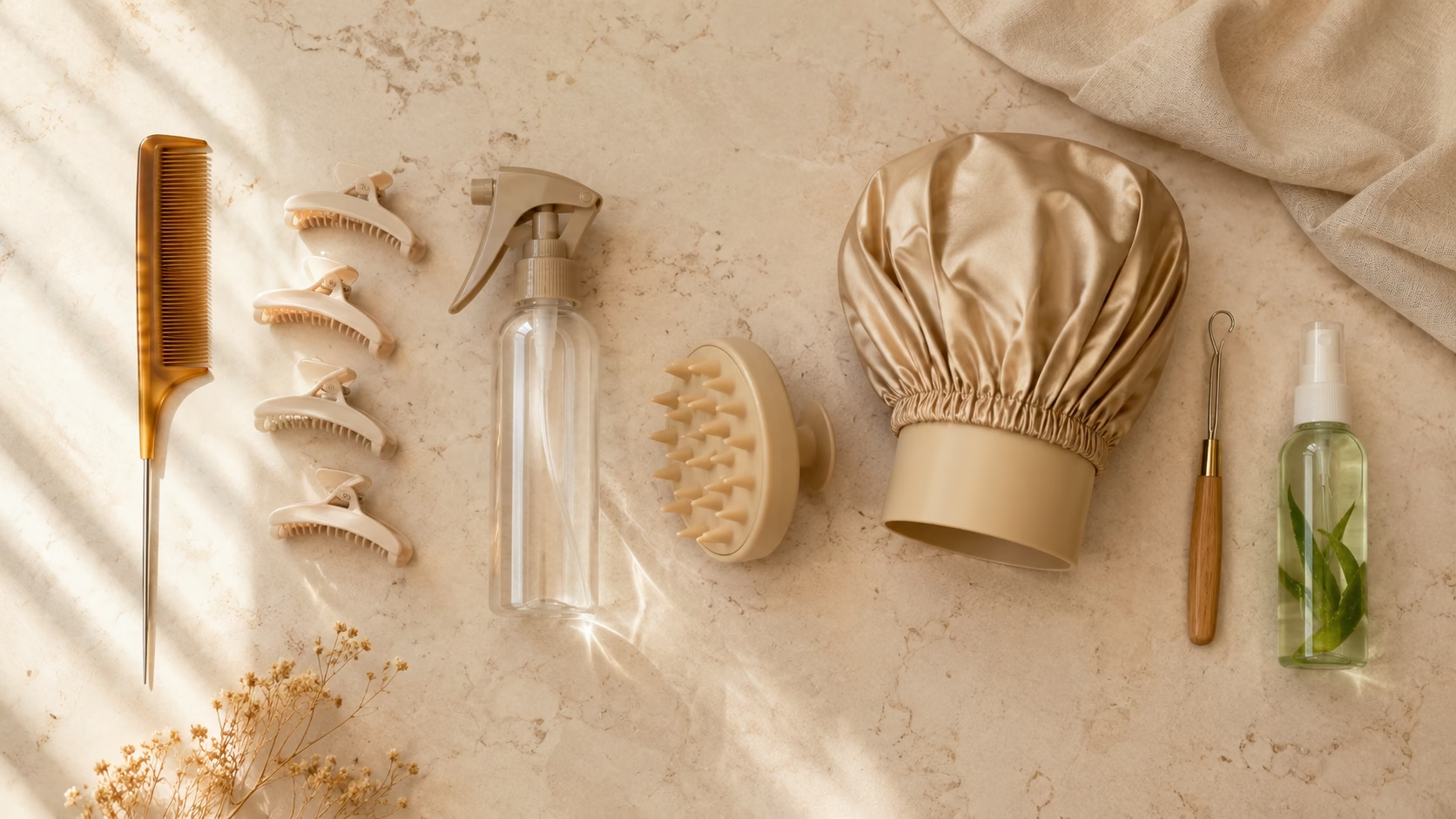
Most people think a rattail comb is just a regular comb with a pointy end. That pointed tail is actually the entire reason this tool belongs in every short loc kit, and the teeth are almost beside the point.
Save this for later Elegant Locs Hairstyles for Women: 20 Looks for Any Occasion
Short locs need clean, precise parts more than any other loc stage. During a retwist, the section you create determines exactly where that loc sits on the scalp for potentially months. A part made with a finger or the edge of a regular comb is approximate at best.
The metal or hard plastic tail of a rattail comb creates a part line so clean and straight that each loc section is identical in size and placement, which is what gives a fresh retwist that neat, uniform look that holds its shape as the locs mature.
Separating new growth is the second job this tool does that nothing else handles as well. New growth at the short stage is fragile and still forming. Pulling it apart with fingers creates frizz and disrupts the matting process.
Sliding the tail gently through new growth separates it cleanly without the friction that finger separation causes.
The Rattail Tool Essential
Why this specific design handles the two most critical steps in delicate short loc staging layouts.
Precise Scalp Grid Mapping
Short stages demand ultra clean parting matrices because your grid layout sets exactly how your sections align for several months.
Uniform Matting Development
Using structural tails helps create completely identical sections across your layout, providing a clean, fresh, balanced profile aesthetic.
Frictionless Root Separation
Sliding the tail through new growth avoids disruptive finger friction, preventing premature fraying or structural loc damage.
Wide Protective Tooth Glide
Selecting wide set tooth patterns lets the tool glide without snagging delicate hair fibers as the mature locking shapes settle.
Teeth width matters here. Fine teeth catch on forming locs and drag. Wide teeth glide through without disturbing anything.
Choose a rattail comb with wide-set teeth and a long, firm tail and this one tool handles two of the most delicate tasks in short loc maintenance.
The Clip That Actually Holds Short Locs in Place While You Style
Duck bill clips slip on short locs. Every time. The reason is simple, duck bill clips were designed to hold flat, wide sections of loose hair in place by clamping across a broad surface.
Short locs are round and cylindrical, not flat, so the clip makes contact at two small points and has nothing to grip across. One small movement and the section drops.
Sectioning clips with a jaw mechanism work better because they close around the loc rather than clamping down on top of it.
The teeth inside a jaw clip create friction against the cylindrical surface of the loc from multiple directions simultaneously, which is what actually holds it in place while both hands are free to work on another section.
You may enjoy reading 20 Bold and Beautiful Locs Looks for Black Women Who Love to Stand Out
Size matters as much as style. Clips that are too large cannot close tightly enough around short locs to create that grip. Look for small to medium jaw clips, sometimes sold as styling clips or butterfly clips, with teeth that come close to fully meeting when closed.
Metal clips with spring tension hold more securely than plastic ones on short locs because the spring force is stronger and maintains pressure even when the loc shifts slightly during styling.
Plastic clips lose tension faster and are the most common reason short loc sections fall mid-retwist.
Your Spray Bottle Is Probably Set Up Wrong for Short Locs
Chances are the spray bottle you already own is making your short locs frizz more than they need to. The bottle itself is not the problem. How it is set up and how far away you hold it when you spray are both working against you.
Most spray bottles sold for natural hair produce a wide, heavy mist that dumps too much water onto the hair at once. Short locs at the forming stage absorb that water quickly and swell, which loosens the matting process happening inside the loc.
Over-wetting is one of the most common reasons short locs feel soft, undefined, and slow to form and most people blame their hair type instead of their application method.
Switch to a fine mist nozzle. Fine mist nozzles atomize the water into smaller droplets that coat the surface of the loc without saturating it. Hold the bottle at least eight inches away from the hair rather than pressing it close and spraying directly at the roots.
Mixture matters too. Plain water evaporates quickly and leaves nothing behind. Filling the bottle with two parts water and one part aloe vera juice creates a mist that adds surface moisture, lightly smooths the cuticle to reduce frizz, and dries without residue that builds up over time.
Seal immediately after misting with a light oil applied with your fingertips, not another spray, so the moisture stays in rather than evaporating within minutes.
Read more These 15 Vacation Locs Styles for Black Women Are Too Pretty to Ignore
Why Short Locs Need a Controlled Drying Tool and Which One to Get
The Controlled Drying Strategy
Why dense short loc stages require active interior evaporation loops over standard passive air drying options.
Internal Moisture Trapping
Short matting matrices are highly compact, meaning trapped core water evaporates slower than moisture resting on open curl lines.
Deep Lock Mildew Risks
Leaving locks damp overnight allows mildew to develop inside the core, creating persistent musty scents that extra washing won’t fix.
Simultaneous Overhead Airflow
Sitting under a hooded unit dries the structural interior completely within 45 minutes by maintaining consistent perimeter warmth loops.
Soft Bonnet Adaptor Upgrades
Flexible bonnet hose attachments offer an accessible, effective alternative setup to clear out damp core moisture safely without fiber damage.
Air drying feels like the safe, gentle choice. For loose natural hair it usually is. For short locs it creates a problem that most people do not connect to their drying method until the damage is already done.
Short locs are dense and compact compared to loose strands. Water that enters the loc during washing gets trapped inside the tightly matted hair and takes significantly longer to evaporate than water sitting on the surface of loose curls.
Waiting for short locs to air dry completely can take four to six hours depending on thickness and density. Most people go to sleep before that process finishes.
Locs that stay damp overnight develop mildew inside the loc itself. That mildew is what causes the musty, sour smell that some loc wearers notice and cannot get rid of no matter how often they wash. Washing damp locs more frequently to fix the smell only repeats the problem.
A hooded dryer set to low or medium heat solves this completely. Sitting under a hooded dryer for thirty to forty-five minutes after washing pushes consistent warm air around every loc from all directions simultaneously, drying the interior of the loc rather than just the surface. Handheld dryers concentrate heat in one spot and create uneven drying.
Bonnet dryer attachments that connect to a regular handheld dryer are an affordable alternative that work on the same principle. Either option gets short locs fully dry before any moisture becomes a problem, without applying the direct heat that causes brittleness and loc damage over time.
Pin this post Locs Crown Braid Updos: 12 Regal Looks That Celebrate Natural Hair
The Scalp Tool Nobody Recommends for Short Locs That Makes a Measurable Difference
Scalp massagers show up on self-care lists and spa gift guides. That positioning is exactly why most loc wearers dismiss them as optional extras rather than recognizing them as one of the few tools that directly supports loc growth and scalp health at the same time.
Healthy locs start at the scalp. Blood flow to the hair follicles is what delivers the nutrients that support growth, and scalp massage increases that circulation in a measurable, consistent way.
Fingers do this too, but fingers on short locs create a specific problem, the friction and movement from fingertip massage pulls at the surface of forming locs, causing frizz and in some cases loosening the new growth that is just beginning to mat together.
A silicone scalp massager with flexible, rounded tips does the same stimulation work without gripping the loc surface. The tips move across the scalp rather than through the hair, so the forming locs above are not disturbed at all during the process.
Buildup removal is the second job this tool handles. Product residue and dead skin cells accumulate at the roots between wash days. Fingers smear that buildup around.
The massager lifts it from the scalp surface so it rinses away cleanly during the next wash without requiring aggressive scrubbing that would disturb the locs themselves.
Use it on dry hair before washing, spending about thirty seconds per section of the scalp, and the difference in scalp clarity and product buildup removal after washing will be immediate.
Choosing the Right Retwist Tool for Your Specific Loc Type
Retwist results vary dramatically between loc wearers using the same technique, and most people assume their hair texture is the problem. Often the tool is.
Fingers work well for retwisting when the hair has enough length and thickness to grip and roll between the palm and fingertip without slipping. Thin or very short locs slide out of finger retwists before the product sets because there is not enough surface area for the twisting motion to create real tension.
Coarser hair textures hold finger retwists longer than fine or soft textures at the same length.
Interlocking tools work differently. Rather than twisting the new growth, interlocking pulls the loc through the new growth in a rotation pattern that locks the root mechanically rather than relying on product and tension alone.
Short locs with fine or soft hair that unravel between appointments consistently hold longer with interlocking because the method does not depend on the hair staying twisted while it dries.
Crochet hooks serve a different purpose entirely. Using a crochet hook for retwisting at the short loc stage is a common mistake, crochet tools are designed for repairing and tightening mature locs, not for setting new growth on short forming locs, and using one too early creates thinning at the root over time.
Match the tool to the hair. Thick coarse short locs respond well to finger retwists. Fine or soft short locs hold better with an interlocking tool. Crochet hooks come later.
The Tools You Can Stop Buying Right Now
The Minimalist Loc Kit
Streamline your routine by removing styling gear designed exclusively for loose natural hair profiles.
Wide Tooth Combs Pull Matting
Short locs never require detangling. Mechanical combing forces pull apart essential matting fibers, setting back your locking journey by weeks.
Diffusers Squeeze and Distort
Short stages possess no curl pattern to define. The mechanical squeezing of a diffuser disturbs fragile perimeter structures instead of drying cleanly.
Smoothing Brushes Lift Frizz
With no loose strands to redirect, running dense styling brushes over young locks lifts delicate surface fibers upward and generates unwanted frizz.
Applicators Overload Heavy Products
Dense cosmetic brushes push excessive creams into spaces. Young configurations need less product, and fingertip placement blocks internal buildup best.
Natural hair tool lists are long. Short loc tool lists should be short. Here is what to stop buying.
Wide tooth combs have no job in a short loc routine. Locs do not get detangled. Running a wide tooth comb through forming locs pulls apart the matting that is supposed to be happening inside each strand and sets back loc formation by days or weeks depending on how aggressively it is used.
Diffuser attachments scrunch and squeeze hair to enhance curl definition. Short locs do not have a curl pattern to define and the squeezing motion disturbs the loc structure.
Sitting under a hooded dryer achieves even, complete drying without any physical contact with the locs at all.
Denman brushes and similar styling brushes exist to smooth and direct loose strands. Short locs have no loose strands to smooth. Using one creates frizz by lifting the surface fibers of forming locs rather than laying them down.
Heavy product applicator brushes designed for butters and creams push too much product into short locs at once.
Short locs need less product than most people use, not more, and fingertip application gives better control over exactly how much reaches the hair versus sitting on top of it and causing buildup.
Save the money. None of these tools earn their space at this stage.