
Most starter locs problems do not start with bad luck. They start with specific mistakes that nobody warned the beginner about.
You just started your locs. Or you are a few days away from starting. You are searching TikTok comments, watching YouTube tutorials, and reading every blog post you can find.
Most of what you find tells you what to do. Very little of it tells you what is actually costing people their locs, their edges, and months of hard work.
One of the biggest mistakes people make with starter locs is treating them like mature locs. According to Dr Locs, starter locs are fragile and need patience, consistency, and the right care routine.
How you treat your locs in the early stages determines whether they grow strong and healthy or become thin, weak, and damaged. The loc formation process takes 12 to 18 months to complete. Every mistake made in the first six months gets worse as the months go on.
This guide names 10 specific, well-documented mistakes beginners make, explains why each one happens, tells you what damage it causes, and gives you the exact fix. No vague advice. No fluff.
Trust The Starter Loc Process
Healthy locs grow through consistency, not force. Stop over manipulating your hair and let patience do the work.
Keep Your Scalp Clean
Your locs thrive with a clean scalp and lightweight care. Heavy buildup slows progress and leaves hair feeling dull.
Stop Over Manipulating
Constant retwisting, combing, and checking interrupts the locking phase. Gentle handling helps your locs form naturally and stay healthy.
Protect Locs At Night
A satin bonnet reduces friction, keeps moisture balanced, and helps prevent lint and dryness while you sleep.
Patience Changes Everything
Starter locs take time to mature. Trust the process and avoid trying to rush what your hair already knows how to do.
Mistake 1: Over-Retwisting Your Locs
You see frizz. You panic. You retwist. This is the cycle that causes the most damage in the starter phase.
Frizz is not a problem. Frizz is your hair locking itself. When beginners see new frizz appearing, they assume something is going wrong. They reach for the retwist because it makes the locs look neat again. The problem is that the more often you retwist, the more you damage your roots.
Over-retwisting is one of the most common mistakes beginners make, according to Dr Locs. Many beginners believe that the more they retwist, the faster their locs will grow. That is not how it works.
Retwisting too frequently causes thinning and weak roots. It does not speed up the locking process. It slows it down.
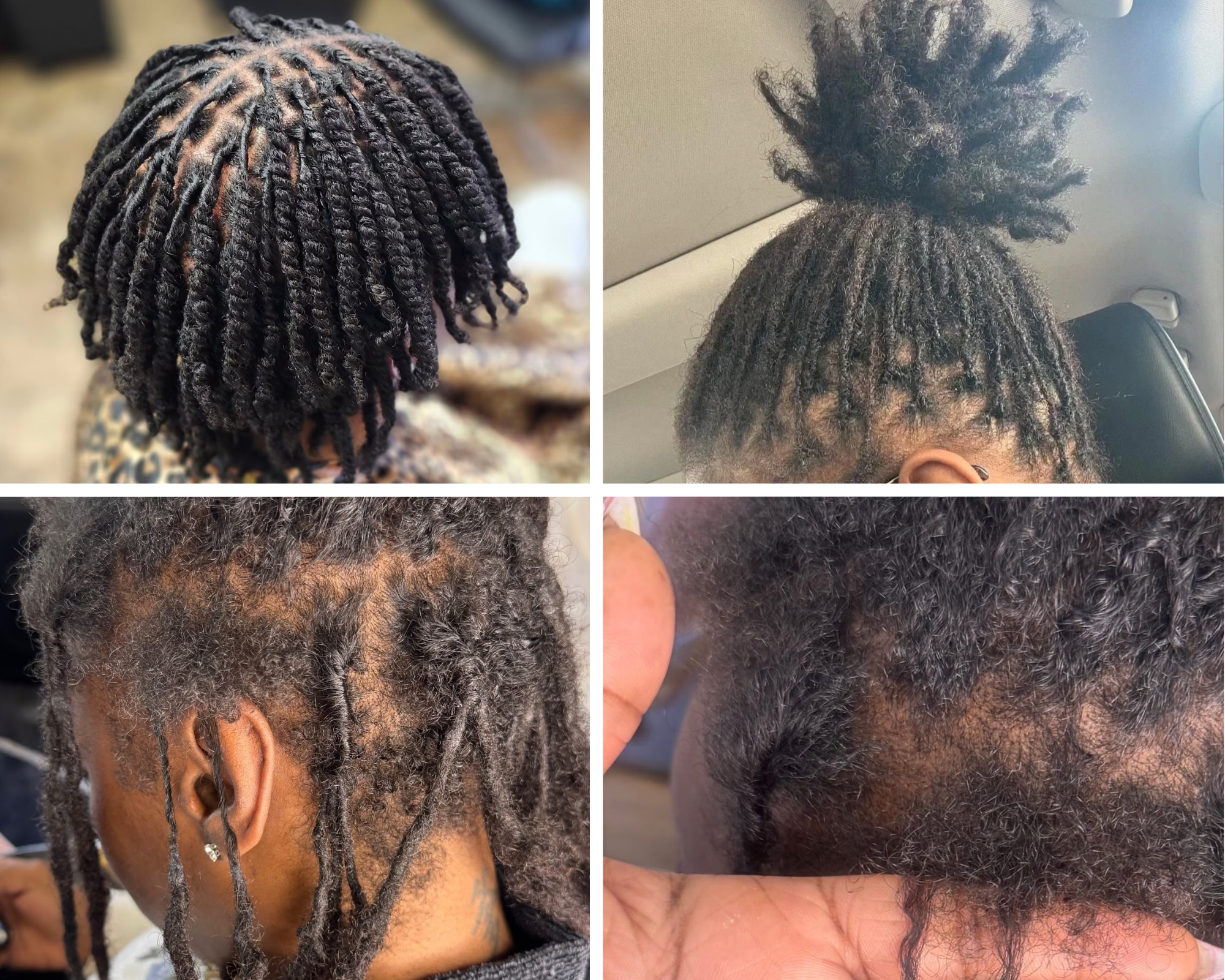
The real damage is specific. Retwisting more than every two weeks puts unnecessary tension on your roots and can cause thinning, according to Perfect Locks. When that tension builds up repeatedly in the same spot, it can lead to traction alopecia.
Traction alopecia is hair loss caused by too much force on your hair follicles. It is not cosmetic damage. It is the loss of follicle function, which means in serious cases, the hair stops growing entirely in that area.
The Fix: Retwist every 4 to 6 weeks. That is the general recommendation from OhYeaLocs, Loccessories, and TheFlavorExperts, all published in 2025 and 2026. Between retwists, take care of your roots with scalp oiling and hydration. Not manipulation. The frizz you see is progress. Leave it alone.
You may be interested in reading 25 Luxury Bridal Soft Locs That Feel Elegant and Timeless
Mistake 2: Using Wax or Heavy Products on Your Locs
Wax was everywhere in older loc tutorials. It is still marketed to beginners today. And it is one of the hardest mistakes to undo.
Beginners use wax because they want their locs to look defined and neat from day one. Wax holds the loc in shape immediately. It looks like progress. The problem does not show up right away. It shows up months later when you realize something is wrong with the inside of your locs.
Wax does not dissolve in water. According to Perfect Locks, wax builds up inside locs over time, attracts dirt, and is nearly impossible to fully remove. Once it is inside the body of your loc, it stays there.
The only way to fully remove it is to cut the loc. In the meantime, your locs feel heavy, look dull, attract lint constantly, and have discolored patches where the buildup has settled.
Heavy butters and thick creams cause the same problem. Lion Locs explains that too many products create buildup that does not wash out but remains in the middle of your locs. Hairobics All Natural is direct about it: heavy waxes and butters clog your locs and slow the locking process.
The Fix: Keep your product routine simple and lightweight.
- A gentle, sulfate-free, residue-free shampoo
- A lightweight hydration spray or rose water mist
- A scalp oil for growth and itch relief (jojoba, grapeseed, or almond oil)
- A light, water-based gel for retwisting only
- Satin protection at night
Jamaican Mango and Lime Locking Gel is a widely used water-based option. That is it. Nothing heavy. Nothing waxy.
Mistake 3: Not Washing Your Locs Because You Are Scared They Will Unravel
Fear of unraveling is real. But not washing is not the answer.
Beginners who are afraid of unraveling sometimes go weeks or months without washing. The logic makes sense at first: if washing disturbs the locs, just do not wash.
What they do not realize is that their scalp does not stop producing oil, sweat, and dead skin cells just because they are afraid of water. Those things build up regardless of whether you wash or not.
According to Silkie Locks, avoiding washing causes itchiness, flakes, and buildup. A dirty scalp is not a faster-locking scalp. It is an unhappy, unhealthy one.
Save this for later Loc Hairstyles for Black Women in 2026: 30 Styles, Tips, and Everything You Need to Know
In serious cases, buildup and trapped bacteria on the scalp can lead to scalp infections and odor that is very difficult to eliminate.
Boss Locs recommends washing every one to two weeks using a residue-free shampoo, with thorough rinsing and gentle drying. Dr Locs confirms that while over-washing can dry out your hair and lead to breakage, under-washing causes its own set of serious problems.
The Fix: Wash every one to two weeks. Use a sulfate-free, residue-free shampoo. Here is how to do it safely:
Wash Your Locs The Right Way
Healthy locs start with a clean scalp and gentle care.
Start With Warm Water
Wet your scalp and locs completely using warm water. This helps loosen buildup and prepares your hair for a deep clean.
Massage Gently
Apply a sulfate free residue free shampoo directly to your scalp. Massage softly with your fingertips instead of scratching with nails.
Squeeze Through Locs
Squeeze shampoo through your locs instead of rough scrubbing. Rinse carefully until the water runs completely clear.
Dry Before Covering
Always dry your locs fully before using scarves, bonnets, or hats. Damp locs can trap odor and moisture buildup.
- Wet your scalp and locs with warm water
- Apply a small amount of shampoo directly to your scalp
- Massage gently using your fingertips, not your nails
- Squeeze the shampoo through your locs instead of scrubbing
- Rinse thoroughly until the water runs clear
- Dry your locs completely before covering
Your locs will not unravel if you wash gently and rinse well. Starter locs can and should be washed. A clean scalp is one of the foundations of healthy loc growth.
Mistake 4: Not Drying Your Locs All the Way After Washing
This mistake is almost invisible until it is not. By the time you smell mildew in your locs, the damage has already been done.
Many beginners wash their locs and then cover them with a bonnet while they are still wet. They might be in a hurry. They might assume air drying under a bonnet is fine. It is not. Covering wet locs traps moisture inside and creates the exact conditions mildew needs to grow.
According to Aaliyah Beauty Bar, damp styling traps moisture and encourages mildew growth. Loc Your Locs is specific: sit under a hooded dryer until your locs are at least 85 percent dry. Roots and the majority of your length must be dry. Only the tips can be slightly wet.
Locs that develop mildew smell musty and the odor is extremely difficult to eliminate. Beyond the smell, repeated mildew exposure weakens the hair from the inside out, causing brittleness and breakage over time.
The Fix: After washing, sit under a hooded dryer on a low to medium heat setting until your locs are at least 85 percent dry. If you do not own a hooded dryer, air dry in a warm room with good air circulation.
Never put a bonnet over wet locs. Never go to sleep with wet locs. Completely dry locs before covering them. That one rule prevents mildew entirely.
You may enjoy reading Short Locs Styles for the Holidays: 10 Festive Looks for the Season
Mistake 5: Going to Sleep Without Protecting Your Locs
Every night you sleep on a cotton pillowcase without protection is one more night of friction, lint, and unraveling.
Beginners often skip nighttime protection because it feels like a small thing. It does not feel small after two months of cotton pillowcase friction has undone starter locs that were beginning to set nicely.
Cotton does two things to your starter locs. First, it creates friction. That friction pulls at your roots every time you move during the night.
For starter locs that have not fully set yet, that friction can unravel sections that took weeks to begin forming.
Second, cotton absorbs moisture. It pulls the water and oils right out of your locs while you sleep. According to Hairobics All Natural, cotton causes frizz and dryness. You wake up with locs that are drier than when you went to sleep, with visible disruption at the roots.
According to Perfect Locks, a satin or silk bonnet is non-negotiable. A satin pillowcase gives the same protection passively for people who move a lot during sleep and pull bonnets off.
The Fix: Put a satin bonnet on before bed every night. A satin bonnet costs $8 to $15. Your initial loc installation likely cost $100 to $400. That is the comparison. The bonnet protects an investment many times its own value.
If you pull your bonnet off in your sleep, switch to a satin pillowcase instead. Locsanity also makes a satin-lined beanie for daytime protection when you are outside in the cold.
Mistake 6: Touching and Playing with Your Locs Constantly
Your hands are your locs’ biggest threat in the first three months. And not for the reason you think.
Beginners touch their locs constantly. They check to see if they are forming. They twist individual sections that look loose. They pull at roots to see how tight they are.
This is a natural anxiety response to something new and unfamiliar. The problem is that every time you touch your locs, you are doing real damage. starter locs mistakes beginners
According to Dr Locs, your hands transfer oils and dirt that affect scalp health. Beyond that, constant pulling and twisting at roots that have not fully set yet loosens those sections and disrupts the locking process.
Locs that are touched repeatedly throughout the day take longer to lock. They also develop thinner roots over time because the constant tension and manipulation weaken the hair at the base.
Starter locs are fragile, says Dr Locs. They need patience, not constant checking. Just4Girls Salon agrees: over-manipulation disrupts the locking process and leads to breakage.
The Fix: Give yourself a scheduled check-in. Oil your scalp on a set schedule, two to three times a week. Use that oiling session to assess how your locs are doing. Then leave them completely alone until the next session.
That is your only planned interaction with your locs between appointments. The rest of the time, hands off.
Mistake 7: Reaching for a Comb or Brush on Your Starter Locs
The moment you reach for a comb on your starter locs, you are working against everything you just paid for or spent hours installing.
Beginners reach for a comb out of habit. If you had loose natural hair before starting your locs, you have years of muscle memory that says: frizz means detangle. Uneven sections mean comb. That instinct is wrong now.
Combing through starter locs physically undoes the locking process. Sections that took weeks to begin matting and knotting together will come apart. It is not just a cosmetic setback. It is a structural reversal of the actual locking that has happened inside your hair.
According to Loccessories, combing your starter locs will undo the locking process, cause your sections to unravel, and lead to uneven or patchy locs down the line.
The Fix: Put the comb down completely and do not pick it up again during the starter phase. Your replacement tools are your fingers and a lightweight hydration mist. If a section looks messy or a surface loc feels out of place, spritz lightly with hydration mist and smooth gently with your fingertips.
That is as far as you go. Surface frizz is not a problem that requires a comb. It is a normal part of the process that requires patience.
Mistake 8: Trying Heavy Hairstyles Before Your Locs Are Ready
Social media shows you year-three locs in beautiful high updos. It does not show you what those styles cost someone who tried them at month two.
The locs you see on Pinterest and Instagram are almost always mature locs. They are strong, fully formed, and have anchored roots that can handle tension.
Your starter locs do not have that yet. When beginners see those styles and try to recreate them immediately, they pull at roots that have not yet had time to anchor themselves properly.
According to Dr Locs, starter locs are not ready for heavy styling yet. Styles like tight ponytails, barrel twists, or heavy updos can do long-term damage if done too soon. Tresses Locs and Coils asks it directly: do you want traction alopecia just because you wanted a style?
Traction alopecia from repeated tight styles on new locs can cause permanent hair loss at the temples, edges, and crown.
The Fix: Keep your styles loose and low-tension for the first six months. Safe options include:
- Loose half-up styles using a satin scrunchie
- Headbands placed gently over your locs
- A silk or satin scarf wrapped loosely around your head
- A pineapple style at the top of your head with no tension at the roots
Leave the tight ponytails and high buns until your locs are in the budding phase and your roots are well established.
Mistake 9: Ignoring Scalp Moisture and Believing the Dry Hair Myth
The dry-locks-faster myth is one of the most damaging pieces of advice in the locs community. And it is completely false.
Some beginners are told that keeping their hair dry helps it lock faster. The idea behind it is that dry hair mats together more easily. The truth is the opposite. According to Dr Locs, dry hair struggles to lock properly.
A dry, dehydrated loc is brittle and fragile, not strong and locking. The myth causes real damage to the scalp and to the developing locs.
Neglecting your scalp health is equally serious. According to the Society for Pediatric Dermatology, if you experience itching, flaking, or other scalp issues, address them promptly.
A healthy scalp is essential for healthy loc growth. Leaving scalp problems unaddressed leads to discomfort, inflammation, and in serious cases, hair loss.
There is also a very common misunderstanding about oil. Many beginners apply oil directly to a dry scalp and dry locs and call it moisturizing. Oil is a sealant. It seals in whatever is already in your hair.
Applying oil to dry hair seals in the dryness. You need to add water first, then seal that water in with oil.
The Fix:
- Mist your scalp with water or an aloe vera spray two to three times per week
- Immediately follow with a lightweight oil, jojoba, grapeseed, or castor oil work well
- Massage gently into the scalp with your fingertips
- Never apply oil to a fully dry scalp
If you experience persistent itching, flaking, or redness that does not respond to regular cleansing and moisturizing, see a dermatologist or trichologist. Scalp issues do not resolve on their own.
Mistake 10: Losing Patience During the Budding Stage and Making It Worse
More locs are given up during the budding stage than at any other point. And almost all of them did not need to be.
The budding stage happens after the initial starter loc phase. Your locs start to swell. They look puffier and less defined than when they were first installed. Individual sections may feel bumpy or uneven.
First-time loc wearers often see this and believe something has gone wrong permanently.
Nothing has gone wrong. The swelling and puffiness is your hair physically locking itself from the inside. The knots are forming. The sections are starting to mesh together into real locs. This is progress. It looks and feels like chaos, but it is exactly what is supposed to happen.
According to Dr Locs, one of the biggest mistakes people make is treating starter locs like mature locs. Locs go through distinct stages. The starter phase lasts up to six months.
The budding phase follows. Both stages look nothing like the finished mature locs you see in your inspiration photos. That is normal.
What impatient beginners do at this stage often makes things much worse. Some cut their locs off because they assume the swelling is permanent.
Some bleach their locs trying to make them look more like mature locs faster. Tresses Locs and Coils is clear about bleaching: it loosens your curl type and delays loc maturity.
Some beginners cover wet locs and cause mildew. Some start the whole process over, which means starting from zero after months of work.
The Fix: Before you start your locs, learn the stages. Know that the budding stage is coming and that it is supposed to look the way it looks.
Then do one more thing from day one: take a photo of your locs every month. Same lighting, same angle, same position. These photos will show you real, measurable progress even on the days when it feels like nothing is changing.
Visual documentation is the most powerful tool against the impatience that causes beginners to quit right before their locs turn a corner.
What to Do Instead of Making These 10 Mistakes
The 10 mistakes above come from the same place. Not knowing what to expect from the starter loc process, and trying to control or speed up something that works best when you let it be.
Your locs do not need daily retwisting. They do not need wax. They do not need a comb. They do not need constant checking or heavy products or tight styles.
What they need is simple: a clean scalp, lightweight products, gentle handling, a satin bonnet at night, and consistent patience across the months it takes for them to form properly.
Save this guide and come back to it every time you feel the urge to retwist again, add more product, or reach for a comb. Your starter locs are already doing exactly what they should. Your only job is to not interrupt it.
Avoid these 10 mistakes beginners make when starting locs and your foundation will be stronger, healthier, and more beautiful than you expected.