Accessories turn locs from a hairstyle into a statement. The right cuff, the perfect beads, a silk wrap on the right day: these small finishing touches are what make people stop you to ask where you got them, and they make you feel like yourself at your best.
Ten accessory types are covered in this locs accessories guide, and each one gets the same five answers: what it is, who it suits, how to wear it, what to avoid, and what it should cost.
You will also get honest buying advice, including the material truths that listings leave out. Bookmark it and come back whenever you shop.
Building Your Collection
You do not need everything at once. Start with the foundations, then add personality as you go.
First, the daily wearers. A set of gold-tone cuffs in your loc size and a silk or satin scarf will cover most days. The cuffs bring polish, and the scarf brings protection and style.
Next, color. Pick up beads in tones you love and embroidery thread in a few shades. This is where your personality shows up, and it is inexpensive and easy to change, so experiment freely.
Then, the occasions. Pearl or crystal pins for formal events, a statement piece for celebrations, a headwrap in a print that makes you happy. These stay in the box until the moment calls for them.
Last, the experiments. Charms, chains, shells, anything you are curious about but have never tried. Buy one, wear it for a week, and see if it earns its place.
A collection built slowly reflects your actual taste. A collection bought all at once reflects a shopping cart.
The Scale Rule
Before anything else, match your accessories to your loc size. This one rule prevents the most common accessory mistake.
Fine locs (sisterlocks, microlocs) need small pieces: tiny cuffs, small beads, thin wraps. A large cuff on a fine loc looks out of proportion and pulls uncomfortably. Thick traditional locs can carry bigger, bolder pieces that would overwhelm fine hair.
When you shop, compare the accessory’s inner diameter to the width of your loc. If you are unsure, size up slightly rather than forcing a tight fit, because forcing stretches and weakens the loc over time.
Quick Picks
Most versatile: gold cuffs. They work with everything, every day.
Best for beginners: beads. Easy to put on, easy to remove, instant impact.
Best for formal occasions: pearl pins. Classic and photogenic.
Best for sisterlocks: small-scale cuffs and tiny beads. The scale rule matters most here.
Best budget pick: thread wraps. Pennies per style, endless colors.
The 10 Accessory Types You Should Try
1. Cuffs and Rings
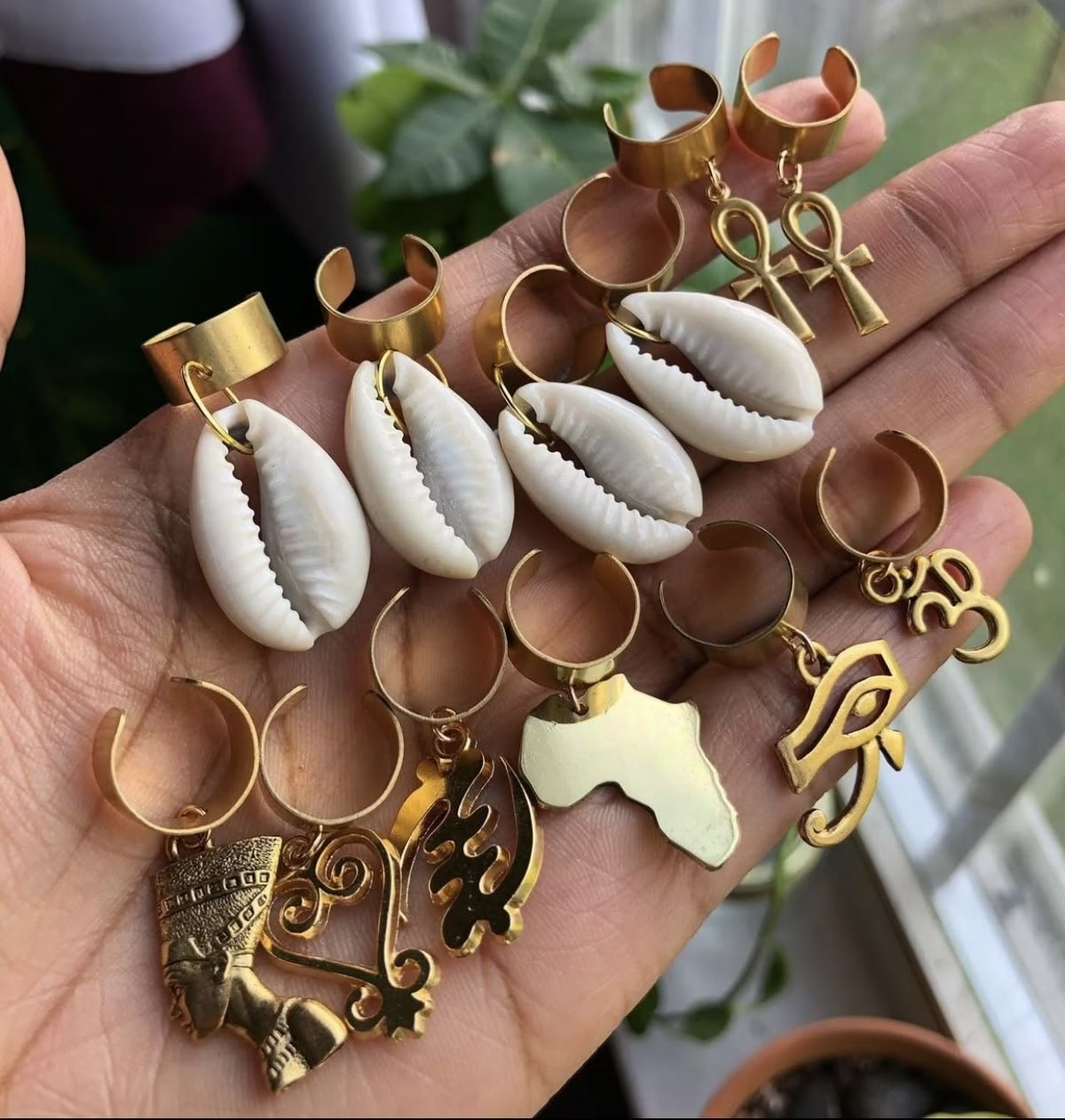
What it is: metal bands that wrap around individual locs. The most popular loc accessory in existence.
Who it suits: everyone, with the right size. Small cuffs for fine locs, larger ones for thick locs.
How to wear it: slide onto the loc and gently squeeze to secure. Place asymmetrically for a modern look, or in patterns for intention. Three to five cuffs is the sweet spot for daily wear.
What to avoid: squeezing too tight (dents the loc), wearing heavy cuffs daily (stress points), and cheap metals that turn skin green.
What to pay: a quality set of gold-tone cuffs costs very little. Gold-filled costs more and lasts years without tarnishing.
Read more How to Maintain Kids Locs at Home: A Simple Weekly Care Routine
2. Beads
What it is: beads threaded onto locs, from wood to glass to metal. The most versatile accessory.
Who it suits: everyone. Beads come in every size, so every loc type has options.
How to wear it: slide onto the loc end and secure with a small rubber band or crimp bead above it. Cluster at the ends for a finished look, or scatter throughout for texture.
What to avoid: beads that fit too tightly (they get stuck), heavy beads on fine locs (pulling), and plastic beads that look cheap in photos.
What to pay: affordable for most sets. Glass and metal cost more than plastic and look dramatically better.
3. Charms and Pendants
What it is: small decorative pieces that hang from locs: symbols, letters, miniature shapes.
Who it suits: anyone who wants personality in their hair. Especially good for expressing identity and beliefs.
How to wear it: attach to a cuff or small ring, then place on the loc. One or two charms is the elegant limit for most occasions.
What to avoid: charms that catch on clothing (snagging breaks locs), heavy pendants worn daily, and too many at once (costume, not style).
What to pay: varies widely. Simple metal charms are affordable. Sterling silver costs more and lasts.
4. Wraps and Thread
What it is: embroidery thread, yarn, or fabric wrapped around locs in patterns or solids.
Who it suits: everyone, especially those who love color. The cheapest way to transform your look.
How to wear it: anchor at the top with a knot, wrap tightly downward, secure at the end. Full wraps for drama, accent wraps on a few locs for subtlety.
What to avoid: wrapping too tightly (restricts the loc), leaving wraps on for months (trapped moisture), and non-colorfast thread that bleeds.
What to pay: almost nothing. A skein of embroidery thread costs pennies and wraps dozens of locs.
5. Scarves and Headwraps
What it is: silk or satin scarves worn as headbands, wraps, or full headwraps.
Who it suits: everyone. The most versatile accessory in this guide.
How to wear it: as a headband with locs flowing, wrapped at the base of an updo, or as a full headwrap. Silk for luxury, satin for daily protection.
What to avoid: cotton scarves (they absorb moisture from hair), tying too tightly (headaches and edge stress), and slippery fabrics that will not stay put.
What to pay: satin scarves are affordable. Real silk costs significantly more and feels worth it.
6. Decorative Pins
What it is: pearl pins, crystal pins, and decorative bobby pins that adorn updos.
Who it suits: anyone doing pinned styles. The formal-occasion must-have.
How to wear it: scatter through an updo like stars, or place deliberately for symmetry. Odd numbers look natural.
What to avoid: pins with rough edges (snagging), overloading (five is plenty), and pins that do not match the occasion’s formality.
What to pay: affordable for most sets. Real pearls and crystals cost more.
Check out Short Bob Locs Styles: 15 Chic Looks for Women Who Love Bold Hair
7. Shells and Natural Elements
What it is: cowrie shells, wooden pieces, seeds, and other natural adornments.
Who it suits: anyone drawn to earthy, cultural, bohemian aesthetics.
How to wear it: threaded onto locs like beads, or wired to cuffs. A few well-placed shells make a stronger statement than many.
What to avoid: sharp-edged shells (they catch and break hair), pieces that are too heavy, and anything that looks costume rather than intentional.
What to pay: affordable. Natural materials are generally inexpensive.
8. Chains and Hair Jewelry Sets
What it is: draped chains, connected cuffs, and coordinated jewelry sets for locs.
Who it suits: special occasions and bold personal style. Not daily wear.
How to wear it: drape across styled locs, connecting two or three anchor points. Best with updos where the chain has structure to hang from.
What to avoid: wearing daily (tangles and stress), cheap chains that tarnish green, and pieces that catch on everything.
What to pay: moderate. Quality chains cost more than basic cuffs but transform a look.
9. Clips and Claws
What it is: decorative clips, claw clips, and barrettes sized for locs.
Who it suits: anyone who wants quick styling with decoration built in.
How to wear it: use to secure half-up styles, pin back sections, or as pure decoration on finished styles.
What to avoid: clips with metal teeth that snag (look for smooth interiors), tiny clips on thick locs (they will not hold), and over-tightening.
What to pay: affordable. A good claw clip is one of the best value purchases in hair.
10. Seasonal and Statement Pieces
What it is: holiday-specific, event-specific, or bold artistic pieces.
Who it suits: the confident accessorize who dresses for the occasion.
How to wear it: one statement piece per look. Let it be the focus and keep everything else simple.
What to avoid: wearing statement pieces daily (they lose impact), pieces that are uncomfortable after an hour, and anything that reads as costume rather than style.
What to pay: varies. Statement pieces are worth investing in if you will wear them repeatedly.
See also The Complete Locs Journey Guide for Black Women: From Month 1 to Year 3
Material Honesty
The material matters as much as the design. Here is what the listings do not tell you.
Gold-tone vs gold-filled. Gold-tone is plated base metal. It looks good for months, then tarnishes. Gold-filled has a thick gold layer bonded to the core. It lasts years. If you wear cuffs daily, gold-filled is worth the upgrade.
Plastic vs glass beads. Plastic beads look fine in person and cheap in photos. Glass beads catch light beautifully and last indefinitely. The price difference is small. Choose glass.
Real vs synthetic shells. Real cowrie shells vary naturally, which is part of their beauty. Synthetic ones are uniform and lighter. Both work. Real ones carry cultural weight for many wearers.
What tarnishes. Anything plated will eventually tarnish with sweat, water, and air exposure. Remove accessories before swimming and heavy workouts. Wipe metal pieces dry after wash day.
What pulls. Weight is the enemy. A single heavy piece worn daily will thin the loc at its anchor point over months, and the damage is slow enough that you will not notice until it is visible.
Rotate placement so no single spot bears weight constantly, remove heavy pieces at night, and respect what your locs tell you. If a loc feels sore where a piece sits, the piece is too heavy or has been there too long.
What irritates skin. Nickel is the common culprit. If cuffs or charms leave green marks or cause itching, the metal contains nickel. Look for nickel-free listings, or upgrade to gold-filled and sterling silver. Your skin will tell you quickly.
Putting Them On and Taking Them Off
The mechanics that accessory listings never explain.
Cuffs: slide on, then squeeze gently with flat pliers (not your teeth) to secure. To remove, gently pry open. Never yank. If a cuff is stuck, a drop of oil loosens it.
Beads: thread onto the loc end. If the fit is loose, a tiny clear rubber band above the bead holds it. To remove, slide off. If stuck, oil and patience, never force.
Wraps: anchor with a small knot at the top, wrap firmly but not tightly downward, and secure the end by tucking it under the last few wraps. To remove, unwrap in reverse. Cut only as a last resort.
The nightly rule. Remove heavy accessories before bed. Sleep in light ones or none. Your locs recover overnight, and they cannot do that under weight.
For occasion-specific styling with these accessories, our holiday hairstyles guide and wedding guest guide show them in action. For color-coordinated looks, the holiday color guide pairs beautifully with wraps and beads.
Frequently Asked Questions
What accessories can you put on locs?
Cuffs, beads, charms, wraps, scarves, pins, shells, chains, and clips. Almost anything designed for braids works on locs with the right size.
How do you put beads on locs?
Slide them onto the loc and secure with a small rubber band or crimp bead above. Choose beads that fit snugly without forcing.
What size loc jewelry should I buy?
Match the jewelry to your loc size. Measure your loc diameter and compare to the product’s inner diameter. When in doubt, size up slightly.
Do accessories damage locs?
Heavy pieces worn constantly can cause thinning at stress points. Rotate placement, remove heavy pieces at night, and choose lightweight materials.
What are the best accessories for sisterlocks?
Small-scale everything: tiny cuffs, small beads, thin wraps. The scale rule matters most for fine locs.
Where should I avoid placing accessories?
Too close to the scalp, on weak or thinning locs, and in the same spot every day. Rotation prevents stress damage.