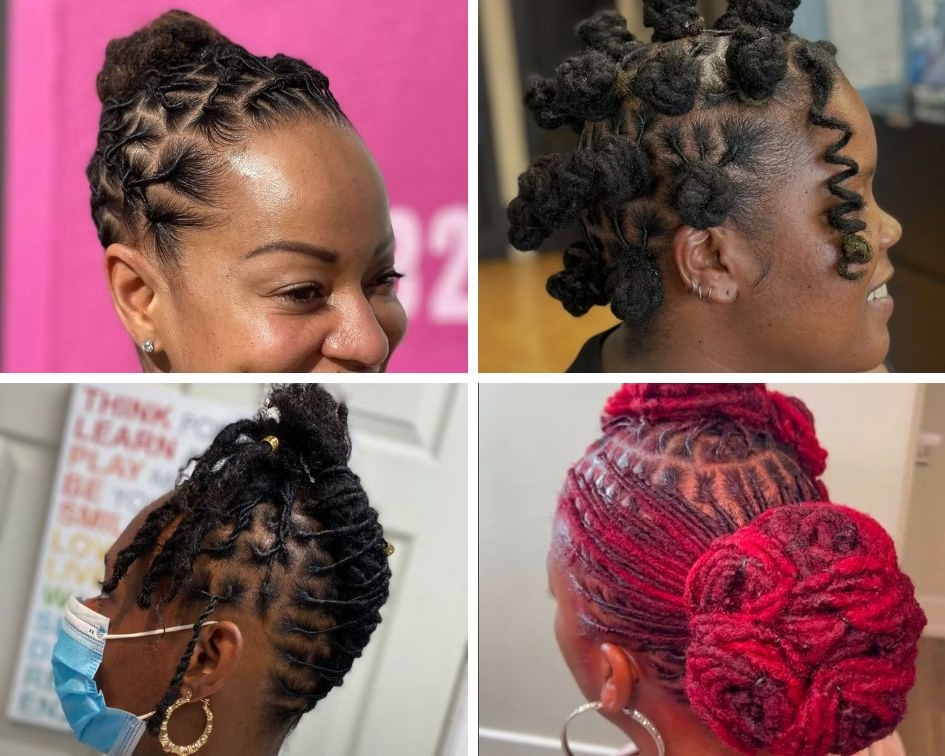
How you style your locs depends on the length of your locs, so one size never fits all. A pretty updo on short locs needs pins and smart sectioning, while long locs need weight control and support.
That mismatch is why so many updo tutorials online leave people feeling frustrated and a bit confused. Locs are not like loose hair, because every single strand is locked into a thick solid rope.
Each loc has its own weight, bend, and limit, and your length sets those limits. For simple everyday ideas that suit many lengths, start with 18 cute locs styles and then return here.
I have styled locs for years, and I see the same mistake with clients every single week. They copy a photo of long locs onto short hair, and then they feel upset when it falls apart.
The photo was never the problem, because the length was simply not ready for that style. In this guide, I will walk you through what short, medium, and long locs can really do.
You will also learn the prep steps, the tools, and the care habits that keep your locs healthy. So grab your favorite pins, find a mirror, and let us figure out the best updo for your length.
Locs Updo Styles by Hair Length: What You Can Do with Short, Medium, and Long Locs
Why Loc Length Changes Every Styling Choice
Have you ever pinned your locs up and felt the whole style slide down by lunch?
That usually happens because the style did not match the length, weight, or thickness of your locs.
Length decides how many twists you can gather, how much you can pin, and how secure the style feels. Short locs sit close to the head, so they need good grip and tiny anchors.
Long locs hang with real weight, so they need strong support and smart placement near the crown. Medium locs sit in the middle, and that gives you the most room to play around.
A tall bun looks gorgeous on twelve inch locs, but it will look strange on four inch locs. Thickness matters too, because thick locs hold more weight and often need stronger pins and bands.
If you are still early in your journey, check out 37 beautiful starter loc styles for ideas at every stage. Once you know your length, every choice about parting, pinning, and shaping gets much easier.
So let us start by measuring your locs properly, because guessing leads to a lot of wasted time.
How to Measure Your Loc Length the Right Way
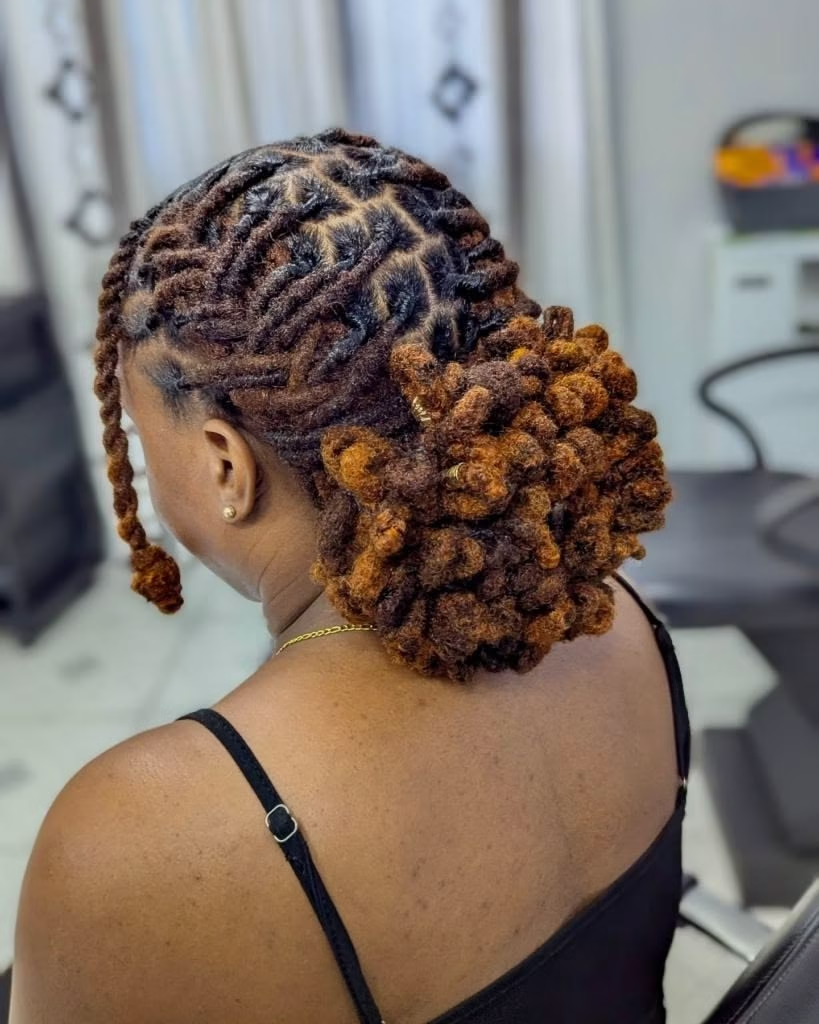
Measure your locs while they are dry, because wet locs stretch and can fool you. Hold a soft tape at the root and run it down to the very tip.
Do this on three spots, which are the front, the crown, and the nape area. Locs shrink a lot, so your true length is often much longer than it looks.
A simple rule is to call locs short when they sit above your chin or jaw. Medium locs usually fall between the chin and the mid back, depending on your height.
Long locs reach past the mid back, and they often need two hands to manage. These groups are not strict rules, but they give you a clear and helpful starting point.
Most locs grow around half an inch each month, so your length will shift over time. Check your length every few months, and adjust your favorite updos as the locs grow.
Also remember that thick locs feel heavier than thin locs of the same length, and that changes everything. Write your three numbers in a notes app, so you can compare them as months pass.
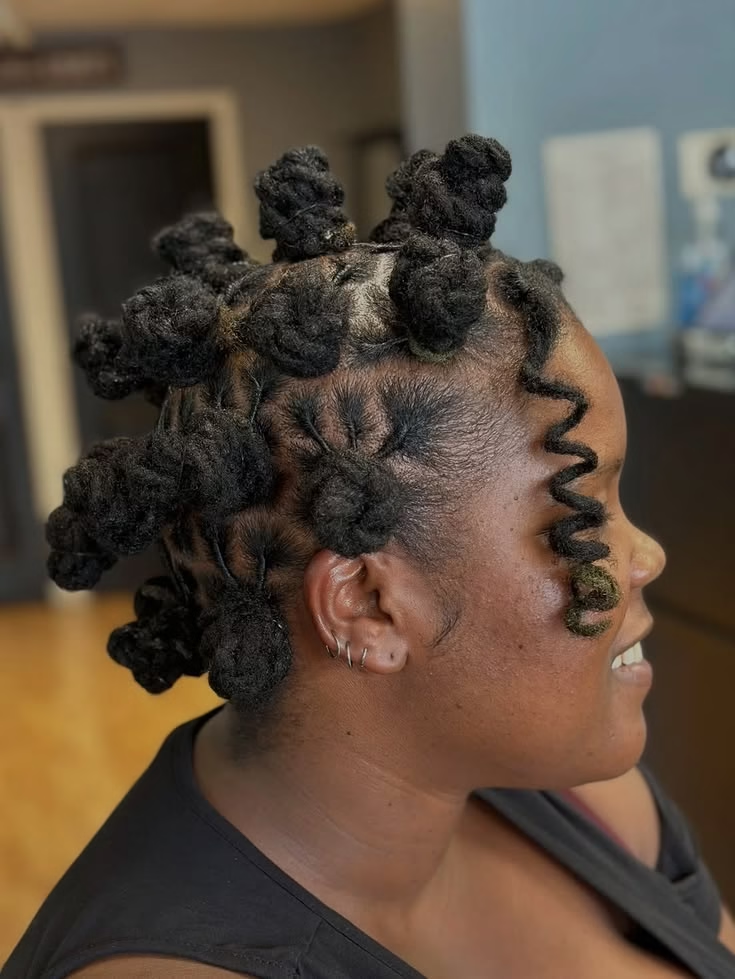
What Short Locs Can Do in an Updo
Picture a client named Danielle sitting in my chair with locs just below her ears. She asked me for a big updo, and she looked nervous because she thought it was impossible.
It was not impossible at all, and she left with a neat pinned crown she loved. Danielle’s locs were only four inches long, which proves that short does not mean stuck.
Short locs can do more than most people think, but you must work in small sections. You can pin them up, twist them into a top knot, or sweep them into a front roll.
A bun is harder, but a small puff or a half updo is very doable. If your locs are polished and neat, the style will look intentional even at a short length.
For more polished ideas, browse 22 styles that look polished and intentional for women in their 30s. Start by dividing your locs into front, crown, and back sections before you pick any style.
The limit with short locs is not creativity, because the limit is how much hair you can grab. So choose styles that use gentle pulling, small pins, and a light hold from soft bands.
Tight pulling on short locs can cause tension and thinning at the edges over time.
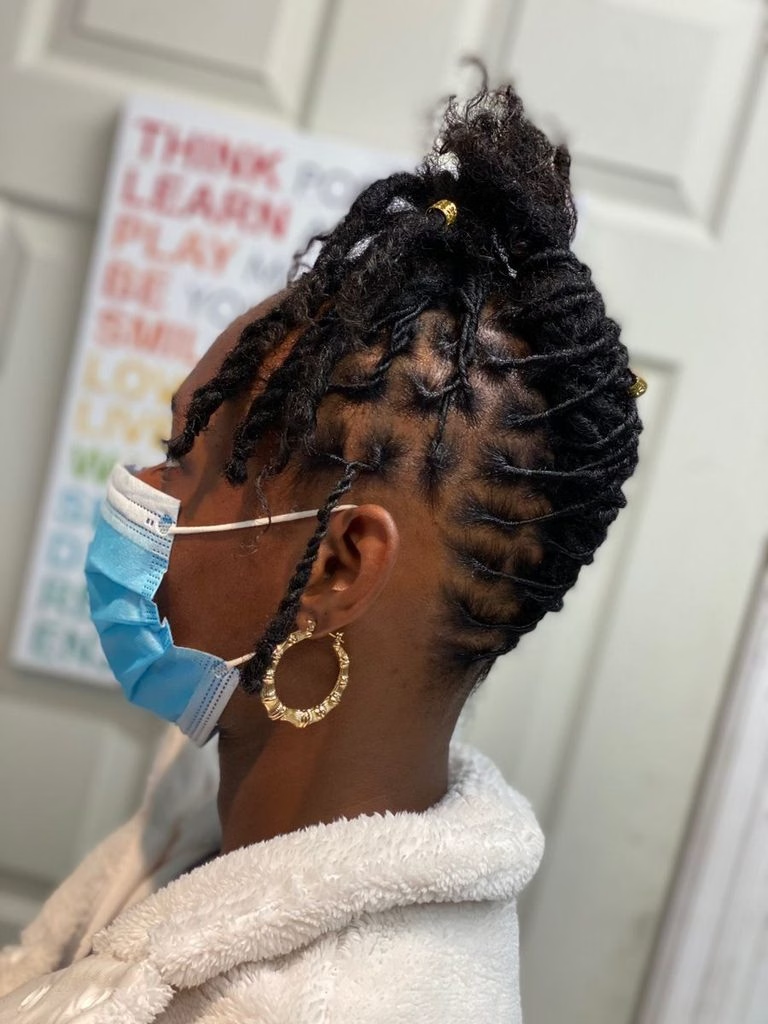
Easy Updo Ideas for Short Locs
What can you actually do with locs that barely reach your shoulders or even sit higher? Start with the top knot, because it is the easiest short locs updo you can try.
Gather the front and crown locs, twist them once, and secure them with a soft band. Leave the back and sides down for a relaxed shape that sits nicely on short hair.
Next, try a front sweep, where you lay the front locs to one side and pin them flat. A sweep is quick, and it frames the face without needing much length at all.
You can also make a pinned crown by looping short locs over each other across the front. For more inspiration, scroll through 25 cute short locs hairstyles and save the ones that match your length.
A half updo is another safe choice, since it needs fewer locs and less tension. Pull the top section back, secure it, and let the lower locs fall naturally around your neck.
Twist the ends under before you pin them, so the tips stay hidden and neat all day. Add a scarf or a thin headband if you want extra hold and a little style.
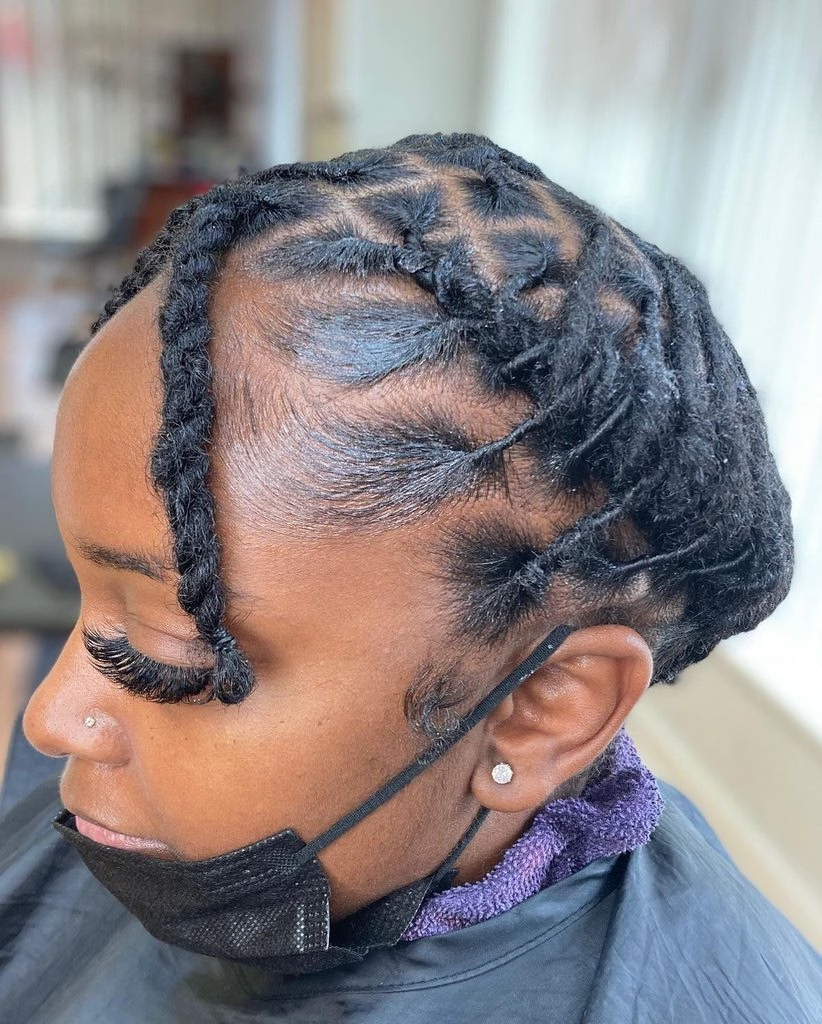
Pins, Bands, and Tools That Work on Short Locs
The right tools make short locs updos feel easy, and the wrong tools make them feel painful. Use small U shaped pins, because they grip locs well without poking into your scalp.
Bobby pins slip off thick locs, so save those for thin or very short sections. Soft elastic bands without metal pieces are safest, since metal can snag and break your locs.
Wrap the band loosely, because a tight band squeezes the roots and can cause pain. Satin scarves and wide stretchy headbands add hold without tugging on any single loc at all.
A small rat tail comb helps you part clean sections, and it keeps your lines sharp. If you love a bold shape, see 15 chic looks for women who love bold hair for short bob styles.
A light hold gel or loc butter also helps flyaway ends lie flat for a clean finish. Avoid heavy waxes, because they build up inside locs and are very hard to remove later.
Pick pins in a color close to your locs, so they blend in and disappear. Buy more pins than you think you need, because they love to vanish in bags and couches.
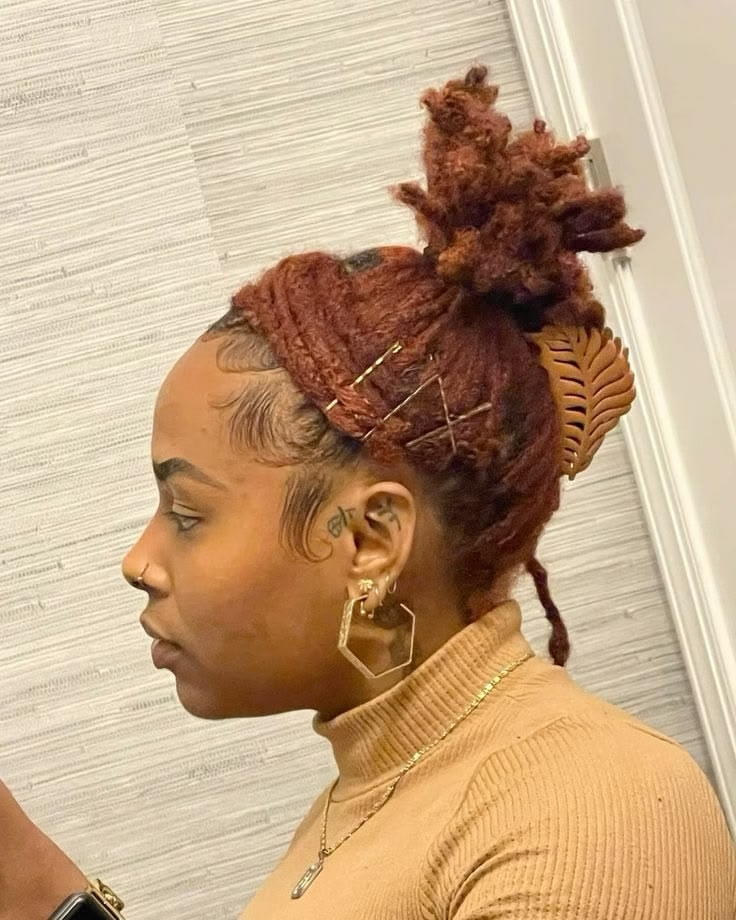
What Medium Locs Can Do in an Updo
My neighbor Carla has medium locs that hit her collarbone, and she changes her style daily. One morning she wore a high bun, and by evening she had a twisted low bun.
That is the beauty of medium locs, because they bend, wrap, and pin with ease. Carla told me she feels most like herself when her locs are pinned up and off her neck.
You can make buns, braided crowns, side twists, and even a sleek high ponytail on most days. The weight is manageable, so you get hold without the heavy strain of very long locs.
Medium locs also work well for the bob shape, which looks polished and soft on almost everyone. For the full idea, read bob locs for women in their 30s and pick a shape you like.
A bob updo means tucking the ends under and pinning them close to the nape. You can leave a few front locs out to soften the shape around your face.
Her secret is simple, because she always starts with neat parts and a firm but gentle base. With medium locs, you can mix styles, like a bun in front and a low ponytail behind.
This length gives you room to experiment, so use it and enjoy the freedom it offers.
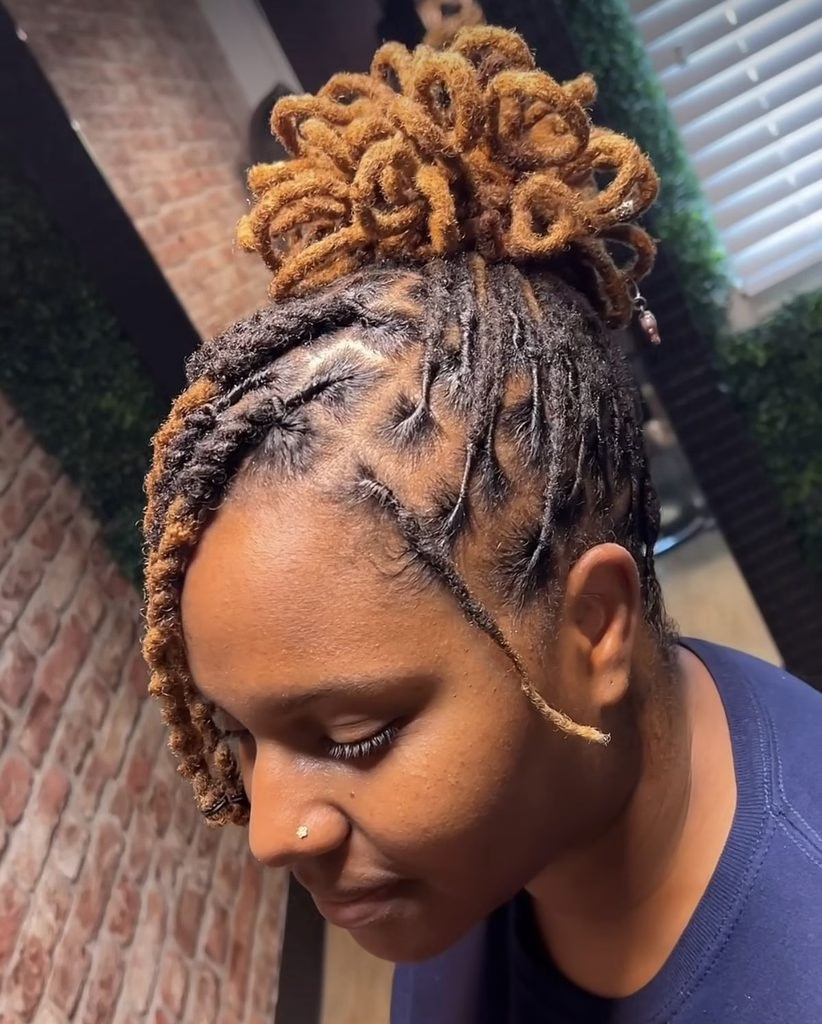
Medium Loc Updos for Everyday Wear
Most of my medium locs clients ask for a style they can finish in five minutes. That is fair, because busy mornings leave very little time for fancy pinning and long mirror sessions.
The half up half down style is my top pick, since it takes two minutes and looks neat. Gather the top half of your locs, tie them loosely, and let the rest fall.
To see how many ways this can go, browse 45 half up half down locs styles for fresh ideas. Another easy pick is the low bun at the nape, which sits flat under a hat.
Twist your locs around each other once, then wrap them into a loose circle and pin it. Pin the low bun with two or three pins, and keep the band loose around the base.
A side ponytail also works well, and it keeps the weight off one shoulder while you move. These simple styles work great for the gym, school runs, errands, and lazy weekends at home.
Rotate your styles during the week, so no single spot carries the tension every day. Your scalp needs rest, and your roots will thank you for switching up the placement.
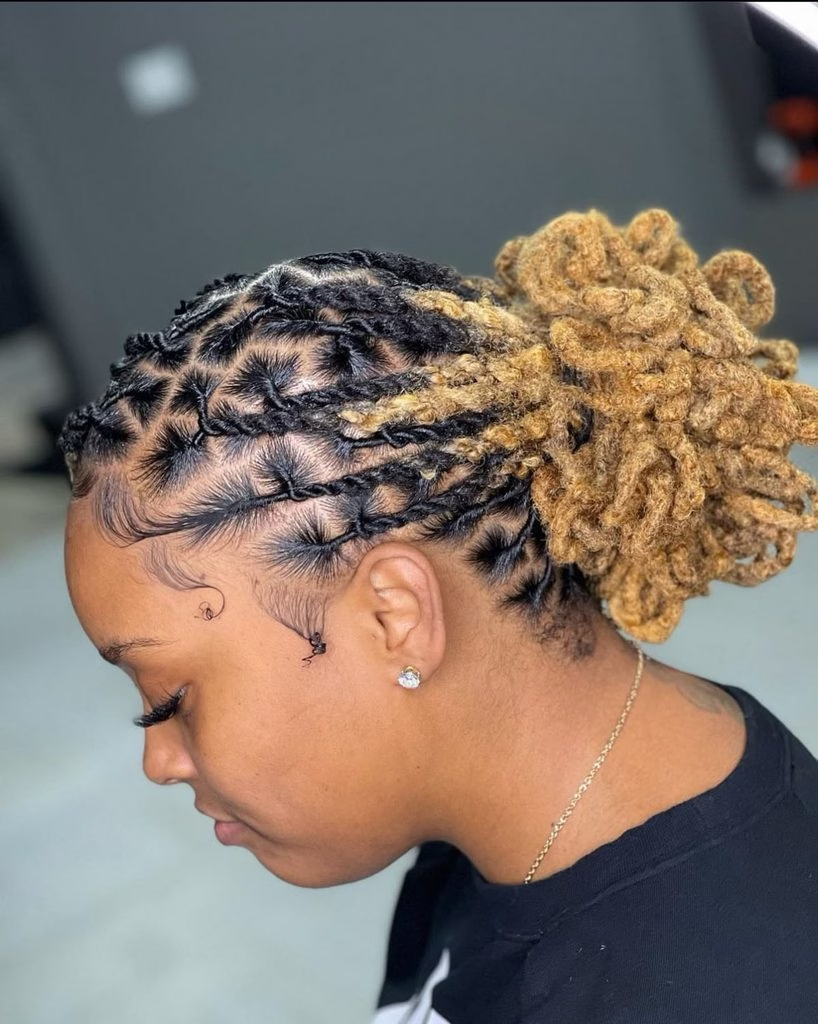
Medium Loc Updos for Work and Events
Can locs look sharp and professional in a boardroom and still feel like the real you? Yes, and medium locs make it simple, because you can shape them into clean, structured updos.
A French roll style updo is my favorite for events, and it holds for hours. Pull the locs back, fold them to one side, and pin the edges along the curve.
For daily office looks, see 12 professional styles to try before your next big meeting. A sleek top bun with neat parts also reads as polished, and it feels confident.
For events, add a gold pin, a silk wrap, or a small hair cuff for sparkle. My friend Monique wore a twisted updo to her cousin’s gala and got compliments all night.
She told me the best part was that nothing moved, even after hours of dancing. Practice your event updo a week before the big day, so there are no surprises.
Take photos from the back and sides, because that is how others will see it. Keep your parts crisp and your edges smooth, because those two details make any updo look expensive.
Finish with a light mist of oil spray for shine, but do not overdo it.
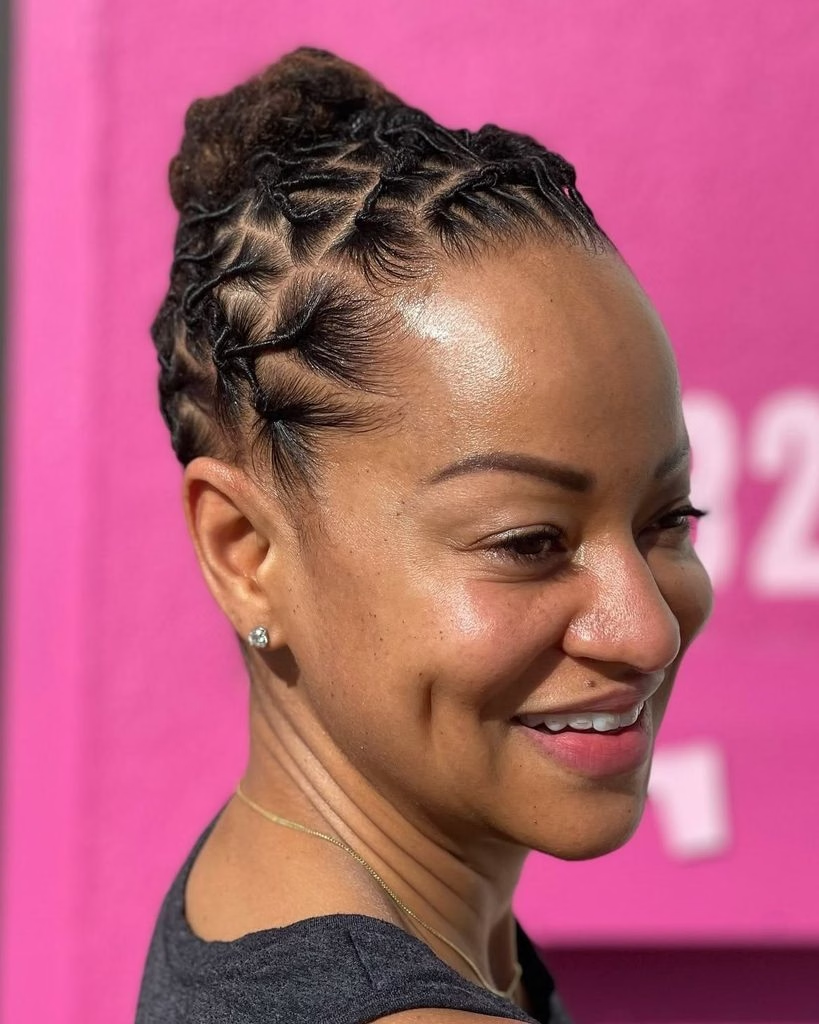
What Long Locs Can Do in an Updo
Long locs can weigh much more than people expect, and that weight changes how you style. Wet locs weigh even more, so never pin up long locs while they are damp.
The good news is that long locs can do almost anything once you plan the support. You can build tall buns, thick braided crowns, wraps, and layered knots with enough hair.
Long locs also let you create shapes that medium and short locs simply cannot form. The trick is to divide the weight across several points instead of pulling from one spot.
In colder months, long locs updos also protect your ends from rubbing against scarves and coats. For cozy ideas, check out 12 cozy protective looks for cold weather before winter arrives.
Use more than one band or pin point, so the weight spreads out evenly across your head. A good anchor point sits at the crown, where your head can support the most weight.
Dividing your locs into two or three groups makes the whole job feel much lighter and calmer. Ask a friend to hold the back section while you pin, because two hands are not always enough.
Take your time with long locs, because rushing leads to loose, uneven styles that slip.
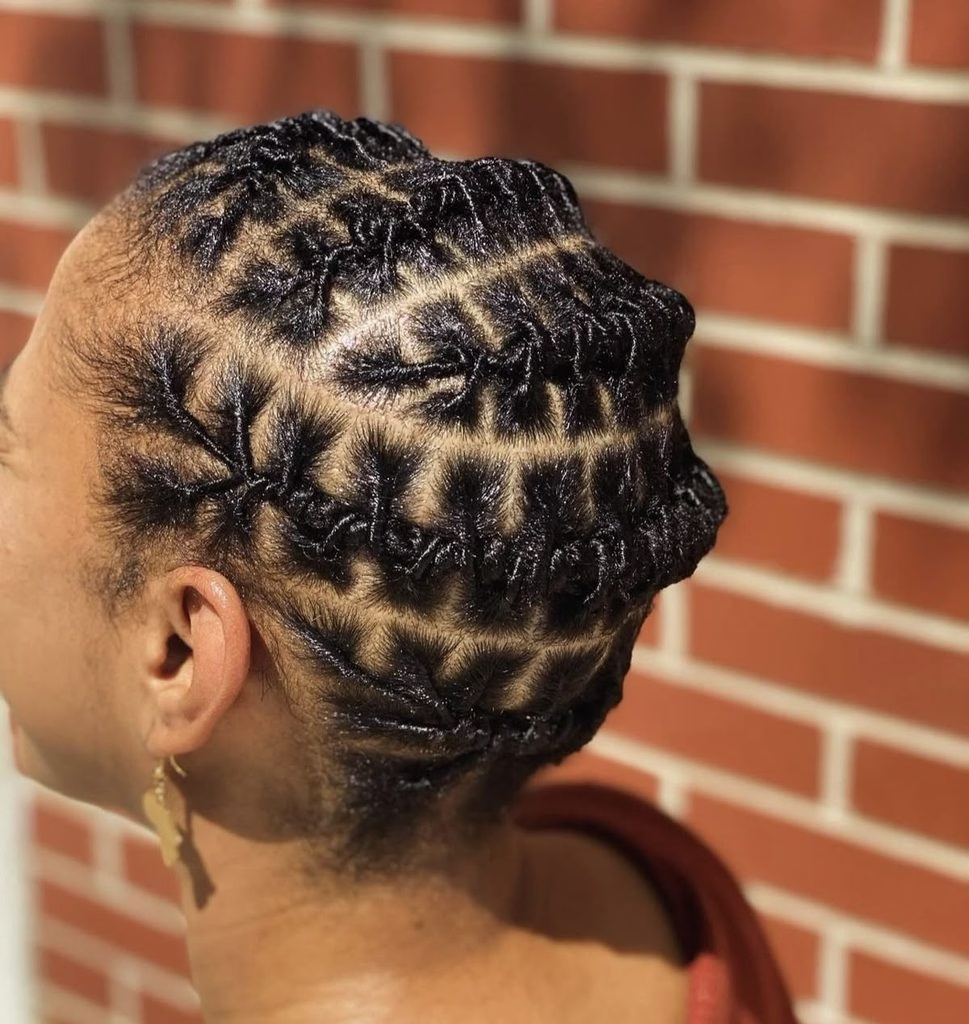
Long Loc Updos That Feel Bold and Dramatic
Imagine walking into a room with a tall crown of locs stacked high above your head. That is the power of long locs, and nothing else gives you the same drama.
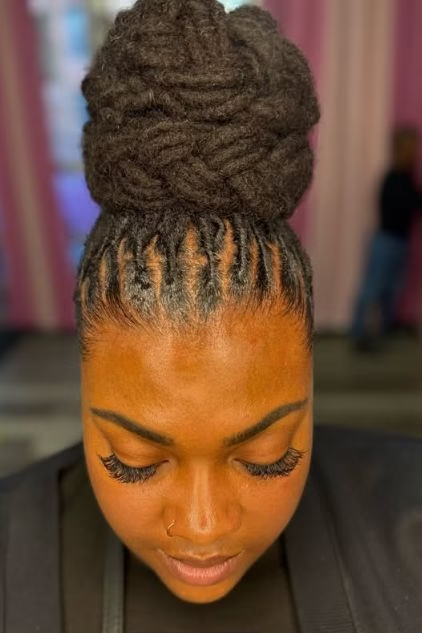
A tall bun is the classic choice, and it works for weddings, parties, and photo shoots. Gather your locs at the crown, twist them into a rope, and coil the rope around itself.
Secure the coil with several pins placed in a cross pattern for a strong hold. Brides love this shape too, and wedding loc updo styles shows many elegant and secure options.
A braided crown is another bold pick, and it frames the face like a soft halo. Braid a few thick locs together, then wrap the braid around your head and pin it down.
You can also stack two buns, one high and one low, for a layered look. A twisted rope updo is also striking, and it takes less skill than it looks.
Wrap a gold cuff or a bright scarf around the base to make the shape pop. Dramatic styles need clean parts and neat roots, because the eye goes straight to the details.
Still, comfort comes first, so never sacrifice your scalp health just for one great photo.
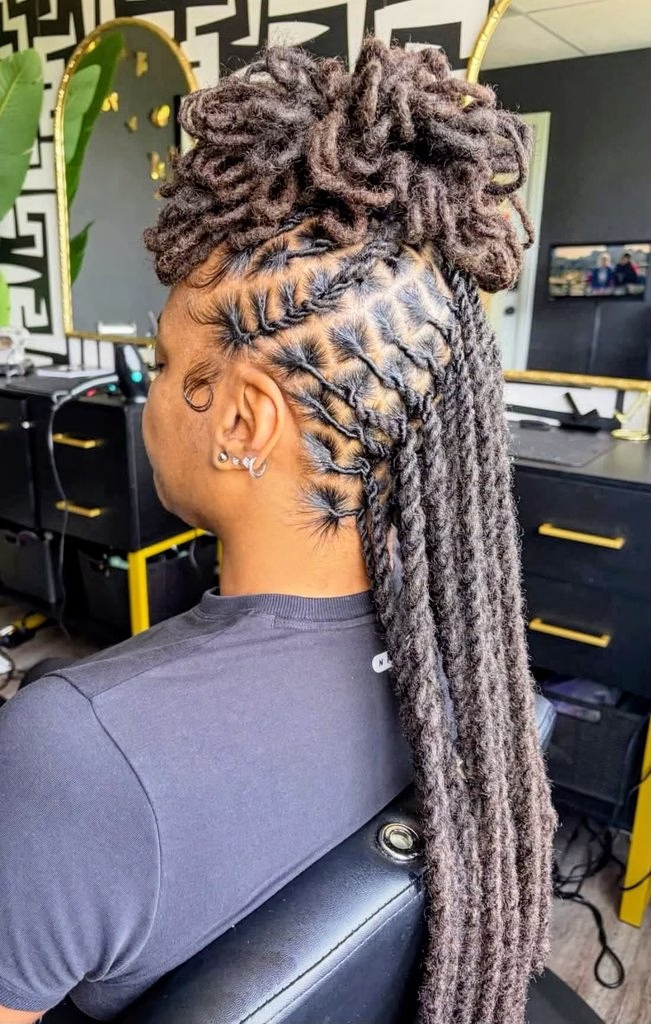
How to Keep Long Loc Updos Light on Your Scalp
Why does a long locs updo feel perfectly fine at noon and painful by night? The answer is usually weight, because heavy locs slowly pull on the same few roots.
Over time, that constant pulling can cause tension, soreness, and even thinning along the hairline. To prevent this, support the weight from below instead of hanging it from your roots.
A bun that rests on the back of your head feels far lighter than a high one. Many women over 40 want comfort first, and 15 mature locs styles for women over 40 leans that way.
You can also lighten the load by wearing only part of your locs up at a time. A half updo keeps the style fresh while the rest of the weight hangs down freely.
Choose a lower placement when you know you will wear the style for many hours. Take breaks, too, and let your locs hang loose for a few hours each day.
A soft cushion band under the base can spread pressure and make the style feel gentler. If your scalp feels sore, take the style down right away and rest your roots.
A gentle scalp massage with a light oil helps the blood flow and eases the strain.
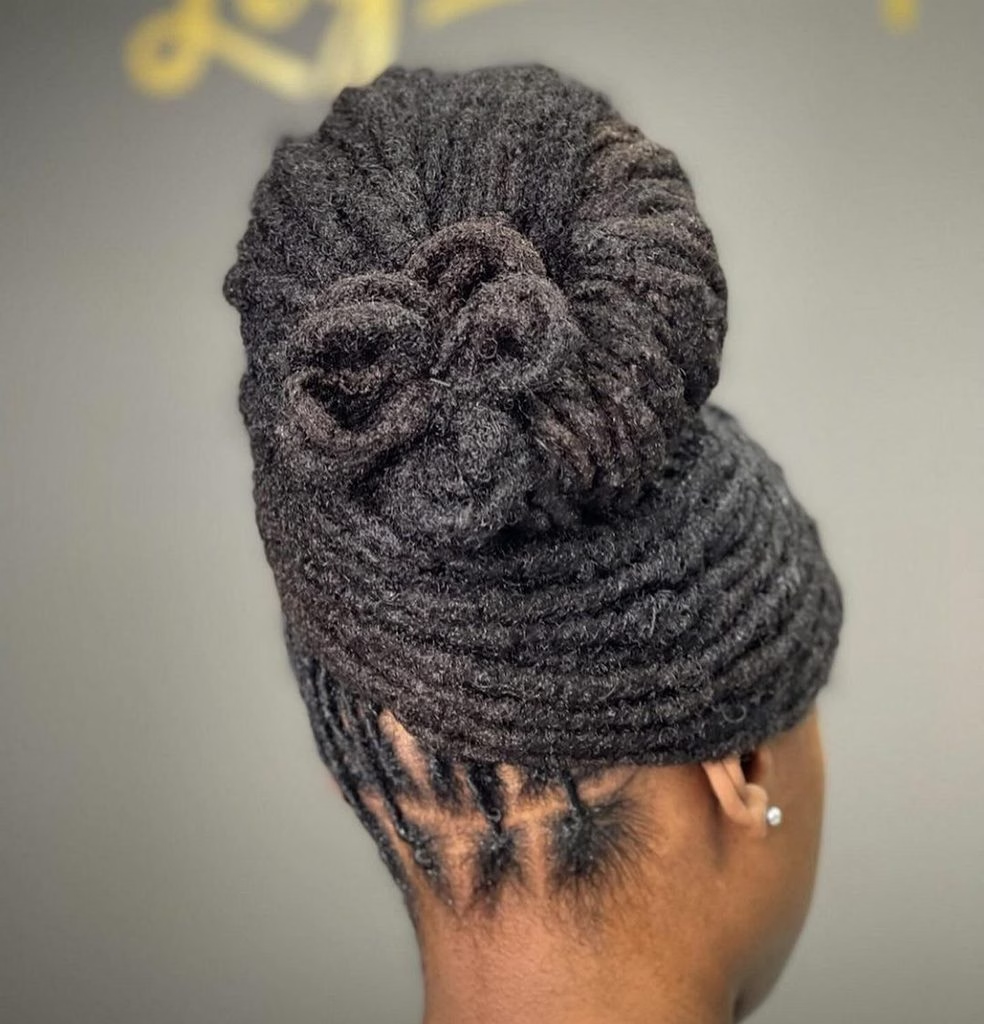
Prep Steps Before Any Locs Updo
Good prep makes every updo easier, and it protects your locs from breakage and frizz. Start with clean locs, because dirt and buildup make your hair slippery and hard to hold.
Dry them fully, since damp locs can stay wet inside and lead to a musty smell. Next, retwist or palm roll any loose roots so your parts and lines look neat.
Add a light oil to your scalp, but keep it away from the locs themselves. Heavy product makes locs slide around, and that ruins the grip you need for pinning.
Fine and thin locs need extra care, and 20 looks that celebrate every year covers sisterlocks beautifully. Because tiny locs break more easily, avoid heavy pins and use soft ties for better safety.
Section your hair before you start, using clips to keep the rest out of the way. Gather everything you need before you begin, so you are not hunting for pins mid style.
Work from the nape upward, because lower sections hold the weight of everything above them. A few extra minutes of prep can save you a full hour of fixing things later.
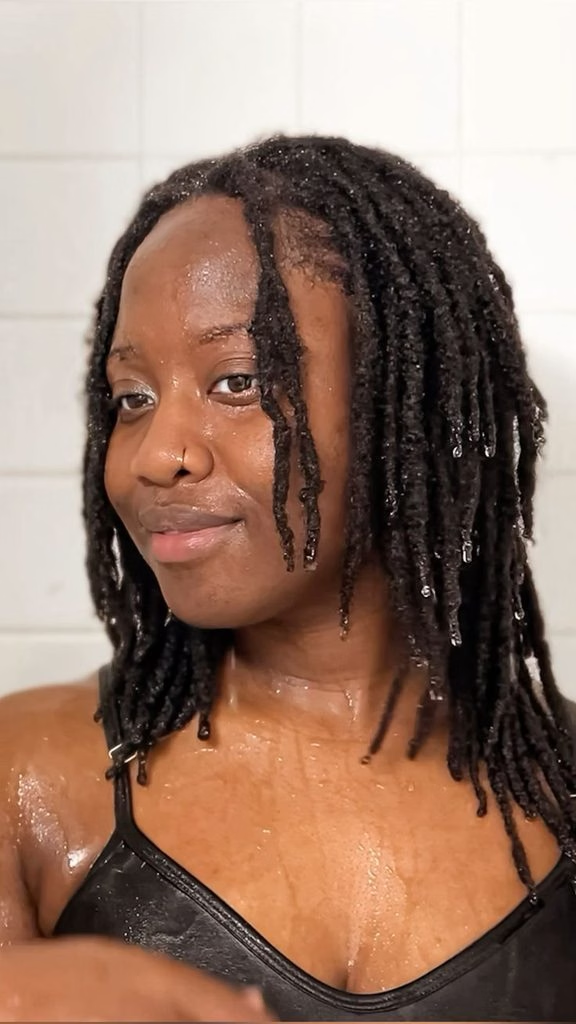
How to Make an Updo Last Through the Day
In my experience, most updos fail in the first two hours because of weak anchoring. So anchor first and decorate later, because a strong base carries the whole style for hours.
Place your first pins deep into the base of the bun, not just on the surface. Cross two pins into an X shape, so they lock against each other and resist sliding.
Wedding styles need this level of hold, and 20 stunning ideas for your wedding day shows how brides do it. Wrap the base with a soft band before pinning, because the band does most of the work.
Let the pins handle the shape, and let the band handle most of the heavy weight. A satin scarf tied around the base also adds hold and protects your locs from friction.
Avoid heavy hairspray, because it dries stiff and makes your locs rough and brittle over time. Before you leave home, do a quick shake test by moving your head from side to side.
If anything shifts, add one more pin right now instead of fixing a disaster later on. Pack a few spare pins in your bag, in case one slips out at the event.
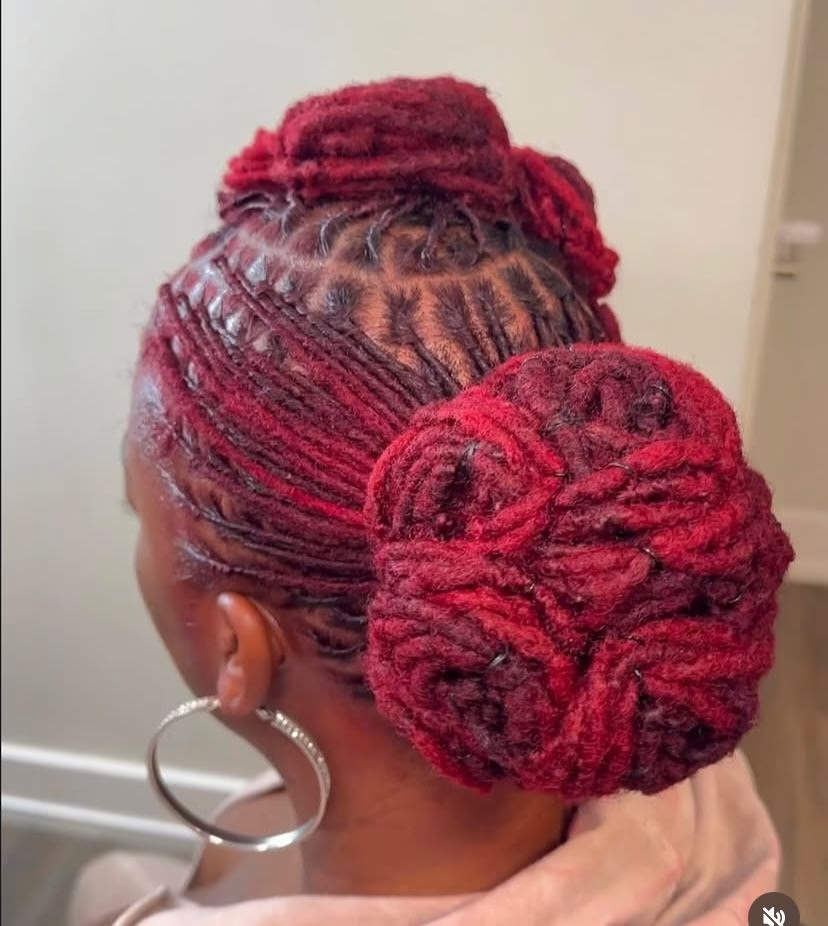
Mistakes That Damage Locs in Updos
Some updo habits quietly damage your locs, and many people repeat them for years without noticing.
The biggest mistake is pulling too tight, because tight styles strain the roots and hairline.
If a style hurts, it is too tight, and you should loosen it immediately, without waiting. Another common mistake is using rubber bands, which snag and snap locs when you remove them.
Wearing the same updo every day is a third mistake, since it hits the same roots repeatedly. Sleeping in a tight updo also strains your scalp and flattens the style by morning.
Parents should be extra careful with kids, and 6 mistakes parents make when starting their child’s locs covers this well. Do not pull wet locs into a style, because wet hair stretches and can snap.
Never skip the takedown, since leaving an updo in for weeks invites buildup and matting. Take pins out one at a time, and never yank a band out in a hurry.
Using too many pins in one spot also creates pressure points that can hurt your scalp. Spread the pins out evenly, and choose different sections to hold the weight each day.
Small habits like these protect your length, and length is what you worked so hard to grow.
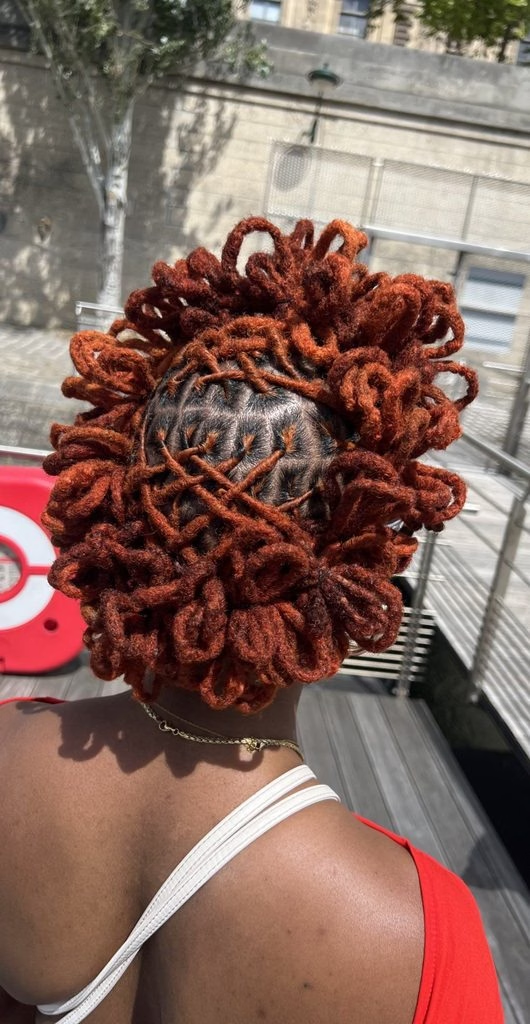
How to Care for Your Locs After an Updo
After you take down an updo, your locs deserve a little extra attention and rest. First, let them hang loose and shake them out gently with your fingers, not a comb.
Check the roots and edges for soreness, and press lightly to feel any tender spots. Massage your scalp with a few drops of light oil to bring comfort back to the roots.
Moisturize the locs with a water based spray, then seal with a thin layer of oil. Save this for later: 14 cozy and chic looks for the season gives ideas for your next style.
Sleep on a satin pillowcase or inside a satin bonnet to cut friction and frizz. Wash your locs on your normal schedule, and rinse well so no residue stays behind.
Let your locs rest for a day or two before you pin them up again. Drink enough water and eat well too, because healthy locs start from inside the body.
Trim any loose or frayed ends gently, but only when they are clearly damaged or weak. Healthy locs hold styles better, so steady and consistent care is part of every good updo.
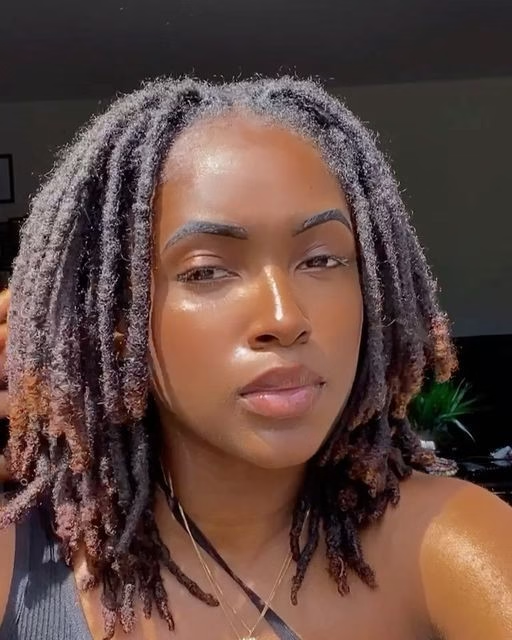
Final Thoughts on Picking an Updo for Your Length
The best locs updo is the one that fits your length, your lifestyle, and your comfort. Short locs love small pins, top knots, and front sweeps that stay close to the head.
Medium locs give you the most freedom, with buns, bobs, half updos, and polished French rolls. Long locs bring real drama, but they ask for strong anchors and smart weight control.
No matter your length, prep well, pin smart, and give your scalp regular rest between styles. Your locs will keep growing, and your favorite styles will change right along with them.
So keep experimenting, keep measuring, and keep your hair healthy at every stage of the journey. Pick one updo from this guide, try it this week, and see how your locs respond.
You have the length you need, and now you have the plan to style it. Share this guide with a friend who loves locs, and tell her which updo you tried first.