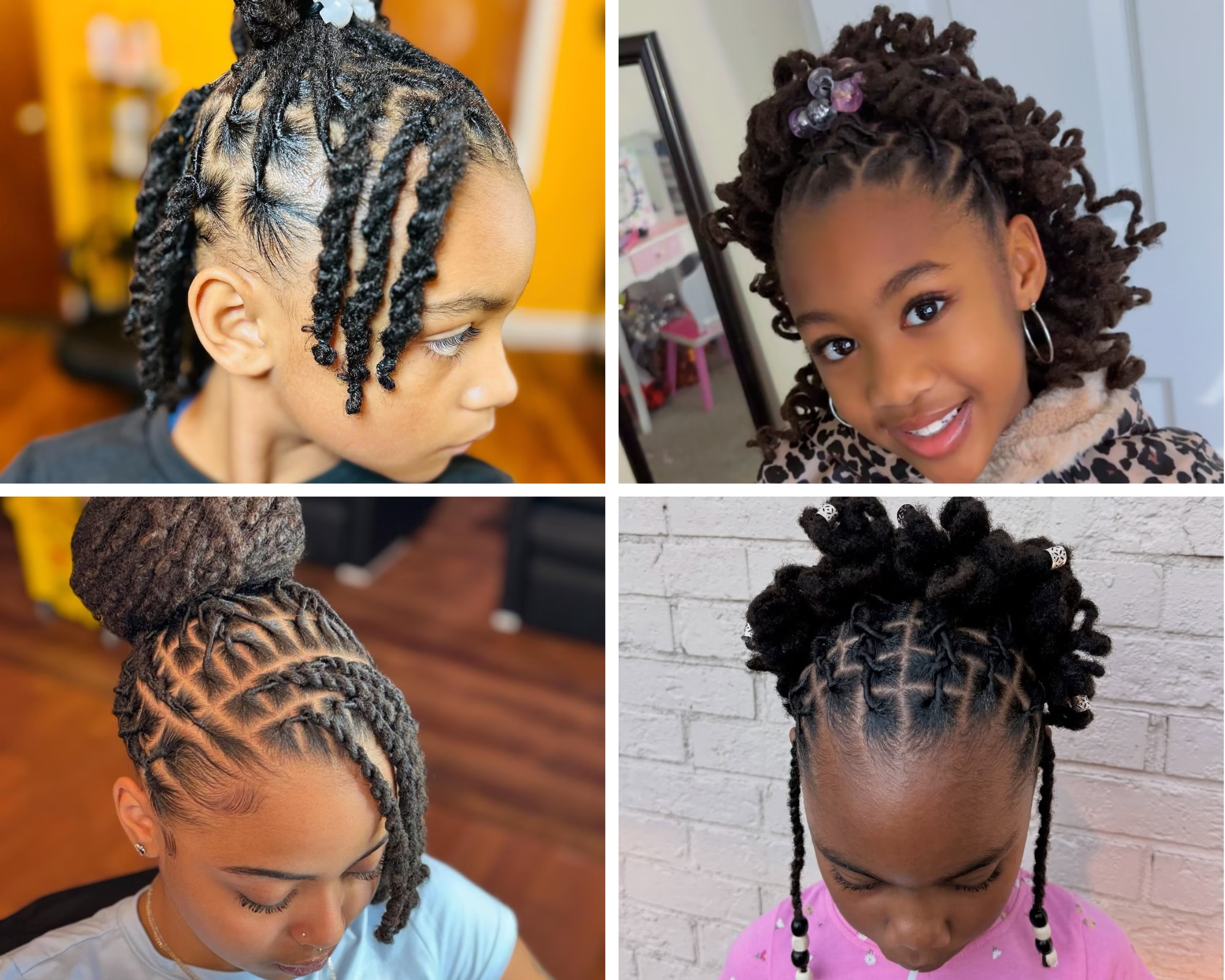
So here’s the part most guides skip. Product choice isn’t the biggest risk to a child’s locs. Tension is. Root tension, applied too early and too often, wears down a scalp that hasn’t finished forming.
Most articles push wax and heavy oils as the villain. That advice misses the real damage happening at the root during every retwist. Parents get told to avoid buildup, and they do, while nobody asks how often this child’s hair gets pulled tight.
Six mistakes keep repeating in families who start locs young. Each one traces back to a choice made fast, without a plan for what comes next: puberty, a growth spurt, a school dress code, real cost over ten years, or a child who changes their mind.
None of this means locs are a bad choice. Done right, they can last a lifetime and carry real meaning. Right starts with the scalp, the calendar, and a conversation with your child before the first strand gets twisted.
Save this post How to Start Locs for Beginners Step by Step: A Simple Guide for Your First 90 Days
Mistake #1: Deciding For Your Child Instead of With Them
Ask a room full of parents why they started their child’s locs, and most point to convenience, culture, or a look they loved. Nobody mentions asking the child.
That gap matters more than most guides admit. A parent picks the method, the parlor, the timeline. The child inherits the result, for a decade or longer. Common advice treats this as pure styling: pick coils or twists, pick a loctician, done.
Where it falls short is obvious once you sit with a ten-year-old who hates their hair. Identity isn’t a technique. It’s a relationship the child builds with their own head, one appointment at a time.
Why “loose hair now, ask later” tends to backfire once a child is old enough to have an opinion
Kids notice control long before they can name it. Waiting until they’re “old enough” to ask usually means waiting until resentment has already set in.
By age eight or nine, most children have clear opinions about their bodies, including their hair. Silence up to that point doesn’t read as neutral to them.
Exclusion is what many children later describe feeling. Locs started this way sometimes get called “Mom’s idea” for years afterward, even by kids who genuinely love them.
Pin for later How to Style Long Locs in 15 Minutes: Quick Looks for Busy Mornings
What age-appropriate involvement actually looks like at 3, 7, and 12
Three-year-olds can’t consent to a decade-long commitment, and no one expects them to. Under two, decisions rest fully with the parent, since language and preference haven’t developed yet.
Letting them pick a bead color or a part pattern still gives them a stake in the process. Seven-year-olds can handle more. Show them photos of locs at different stages, and let them say what they like.
Twelve-year-olds deserve a real conversation, not a courtesy heads-up. Questions about school, sports, or friends’ reactions belong in this conversation. Their answers should shape decisions like length, parting size, or whether to wait another year.
A simple way to open the conversation before day one, even with a toddler
Even a toddler can answer one question: “Do you want your hair to look like this?” Point to a picture, not a paragraph. Toddlers understand images faster than explanations.
Older children need a follow-up: “This will take years to grow, are you ready for that?” Honest answers, even uncertain ones, are worth more than quiet compliance.
Revisit the question every year or two, since a child’s answer at five won’t match their answer at eleven, especially once school, friends, and their own sense of style start shaping what they want.
Consent isn’t a single conversation. Building it into a habit matters more than getting one conversation right.
Mistake #2: Choosing a Method for the Hair Your Child Has Now, Not the Hair They’ll Have at 13
Picture a curl pattern at two years old, then picture it at thirteen. They’re rarely the same. Most parents choose interlocking, coils, or twists based on the texture sitting in front of them that day.
Nothing tells them that texture is temporary. Puberty rewrites curl pattern for most kids, sometimes loosening it, sometimes tightening it, sometimes doing both in different sections of the same head.
A method chosen for toddler hair can fail completely once that shift happens, forcing a redo that costs money, time, and length the child spent years growing.
Continue reading Long Locs Styles for Fall and Winter: 12 Cozy, Protective Looks for Cold Weather
How hormonal changes during puberty can loosen, tighten, or change curl pattern entirely
Hormones shift more than mood and height. Oil production increases, follicle shape can change, and strand texture often follows. Some children’s curls loosen into looser coils; others tighten into a texture closer to true kinks.
Uneven shifts happen too, tighter at the crown, looser at the nape, or the reverse. None of this shows up on a schedule. It can start at ten, at fourteen, or gradually across several years, which is why a method built for one texture rarely fits a moving target.
Which starting methods tend to hold up through a texture shift, and which don’t
Interlocking works well on fine or looser textures early on, but tends to create weak points once puberty adds new texture and new growth patterns.
Coils, especially two-strand coils, tend to transition better, since they rely less on a single consistent curl pattern to hold their shape. Twists sit in the middle, durable, but often needing a retwist rhythm change once new texture starts pushing through the roots.
Loctician input matters more here than product choice. A stylist who has worked with children through puberty can often predict, by age nine or ten, which locs are likely to hold and which will need reworking.
Signs your child’s existing locs are starting to “outgrow” their original method
Frizz at the root that won’t smooth down, even right after a retwist, often signals a texture shift underway. Bumps or thin spots along the loc’s length can mean new growth doesn’t match the older, lower sections.
Slippage, locs that feel loose or start unraveling at the base is common when tighter new growth meets looser established hair. Watch retwist time, too.
If sessions that used to take an hour now stretch to two, something in the texture has changed enough to need a fresh look at the method itself.
Catching these signs early, ideally before age twelve, gives a family time to adjust gradually instead of starting over completely.
You may enjoy reading Best Silk Bonnets for Women with Locs: Protect Your Hair While You Sleep
Mistake #3: Obsessing Over Products While Ignoring the Real Risk at the Root
Wax gets blamed for almost everything that goes wrong with kids’ locs. Gel gets blamed too. Meanwhile the actual damage happens somewhere product warnings never mention: the root.
Tight parting, aggressive retwisting, and pulling styles do more harm to a child’s scalp than any product on a shelf.
Swap the wax for a lighter cream and the risk stays exactly where it was, because the problem was never the product.
Why tension, not product, is the leading cause of thinning in kids’ locs
Thinning around the hairline and temples shows up in kids with locs far more often than product buildup ever causes. Pull a section too tight during a retwist, and the follicle underneath takes the strain, not just the hair.
Repeat that pattern every few weeks for a year, and thinning becomes visible even to a parent who used only “clean” products the entire time.
Loose parting and gentle handling protect a child’s hairline more than any ingredient list could.
How a child’s scalp is more vulnerable than an adult’s in the first two years of locking
A young child’s scalp hasn’t finished developing. Follicles sit closer to the surface, and the skin itself is thinner than an adult’s. That means less padding between a retwist and the nerve endings underneath, and less resilience when tension gets applied repeatedly.
Adults can often tolerate a tight retwist style for years without lasting harm. Children, especially those under ten, build damage faster and heal slower, since a still-developing scalp doesn’t bounce back the way a grown one does.
Locticians who specialize in children usually adjust their grip and tension for exactly this reason.
Check out How to Create a Locs Bun That Stays Up All Day Without Falling Out
Warning signs of traction stress that get mistaken for “normal shedding”
Small bumps along the hairline, sometimes called traction bumps, often get dismissed as new growth. They’re not. Redness or tenderness after a retwist, lasting more than a day, points to tension, not sensitivity.
Flaking near the root sometimes gets treated as dryness, when it can be the scalp’s response to constant pulling. Bald patches near the temples get mistaken for a phase kids “grow out of.”
They rarely resolve on their own. Catch these signs early, and a stylist can adjust technique before the damage becomes permanent.
How often a growing child’s hair should actually be retwisted
Every four to six weeks tends to work for most children, though the right interval depends more on new growth speed than on a fixed calendar.
Faster growing hair pushes new texture through sooner, and waiting too long between sessions means more tension is needed to catch up on that new growth in one sitting.
Retwisting every two weeks, a schedule some parents follow to keep locs looking neat, applies far more cumulative stress than most scalps can handle at that age. Slower is safer here.
A child’s comfort during and after a session says more than any calendar ever could, and a stylist willing to listen to that feedback is worth more than one who sticks to a rigid schedule regardless of what the child’s scalp is telling them.
Here’s a guide on Back to School Locs Hairstyles for Kids: 15 Easy Styles to Start the Year
Mistake #4: Starting Locs Without Budgeting for the Next Decade
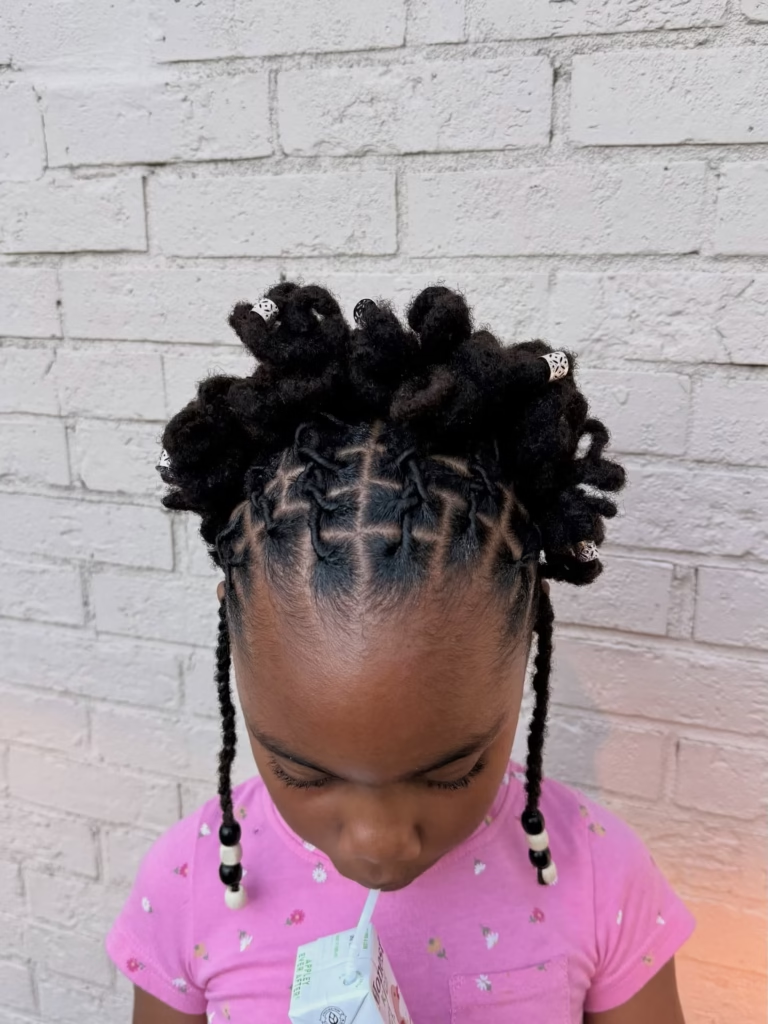
Locs cost more than most parents expect at the start, and the real expense shows up years later, not on day one. Ten years of retwists, product, and travel time add up fast, yet almost no article mentions this before a family commits.
Money talk feels awkward next to a conversation about identity and beauty. Skip it anyway. Families who don’t plan for cost often stretch appointments further apart than they should, and that gap is where damage creeps in.
The real cost curve: toddler retwists vs. teen retwists
Toddler retwists cost little, since sessions are quick and hair is short. Rates climb steadily as length and thickness increase across the years. Teen retwists often take twice as long as toddler sessions, and salons price sessions by time, not by age.
A five year old’s forty five minute retwist might run seventy dollars. By fifteen, that same child’s hair can take two hours and cost twice as much.
Product costs climb too, since longer locs need more oil and cream per application. Salons in different cities charge wildly different rates, so a family’s real ten year total depends heavily on location.
Multiply that gap by fifty two weeks a year, times ten years, and the total surprises most families.
What happens when appointments get pushed out to save money
Stretching appointments feels harmless in the moment, since locs don’t unravel overnight. Six weeks becomes ten, then twelve, and new growth builds up faster than a stylist can manage safely.
Neglect rarely announces itself, since a slightly overdue retwist looks almost identical to one done on schedule. Matting starts exactly here, at the root, where two sections of hair fuse together instead of staying separate.
Fixing a mat costs more than a missed retwist ever would have, in money and in lost length. Cutting out a matted section sometimes becomes the only option, undoing years of growth in a single appointment.
Parents who catch the stretch early, before matting sets in, can often correct course with one thorough session.
See also 18 Cute Locs Styles for Women Who Love Effortless Everyday Looks
What a parent can realistically learn to do at home vs. what needs a professional
Palm rolling small sections between appointments works well for many parents, once a stylist shows them the technique. Detangling with fingers, not a comb, protects loc structure and is safe for a parent to do daily.
Cleaning the scalp, moisturizing strands, and wrapping hair at night are tasks any parent can handle without training. Nighttime maintenance, like a satin bonnet or scarf, costs nothing beyond the item itself and prevents frizz between visits.
Interlocking tools exist for home use, though a heavy hand with them causes the tension damage covered earlier in this article. Reshaping a loc that has split, correcting uneven new growth, or fixing a mat calls for a professional’s hands, not a parent’s guess.
Trying to save money by handling those bigger repairs at home often costs more once a stylist has to undo the attempt. Knowing where that line sits, between home care and professional repair, saves both money and years of growth.
Budgeting for this now prevents a harder decision later, when a stretched schedule has already caused damage. That single conversation, before signing up for the first appointment, can save a family from bigger costs down the road.
Mistake #5: Not Preparing Your Child for the Questions, Rules, and Stares
Hair rules don’t stop at the salon door. School dress codes, sports teams, and even extended family carry their own opinions about locs, and most parents never prepare their child for that reality. Silence here isn’t neutral.
A child who walks into a classroom without warning, without language, and without backup handles that first hard question far worse than one who saw it coming.
Read more 40 Cute Short Starter Loc Styles for Every Stage of Your Loc Journey
What to know about school dress codes and CROWN Act protections before day one
Twenty seven states, plus Washington D.C., have passed a CROWN Act protecting students and employees from discrimination based on natural hair texture and protective styles, including locs.
No federal law covers this yet, which means protection depends entirely on where a family lives. Check your state’s law before the first day of school, not after a problem starts.
Even in states with protection, individual schools sometimes write dress codes that conflict with the law, whether from outdated policy or simple unfamiliarity.
Ask the school directly, in writing, what its policy says about natural hairstyles. A written answer, saved and dated, gives a parent something solid to point to if a teacher or coach questions the hairstyle later.
Giving your child simple language for teachers, coaches, and classmates
Children need short, calm answers ready before someone asks the question. “My hair grows this way, it’s called locs” works for a six-year-old facing a curious classmate.
Older kids can handle more: “This is a protective style, and it’s part of my culture.” Practicing these lines at home, before school starts, keeps a child from freezing when the question actually comes.
Role-play a few scenarios: a teacher asking about hats and headwear rules, a coach asking about swim caps, a classmate asking to touch their hair. Rehearsal matters here.
A child who has said the words once, out loud, at home, says them with far more confidence the first time it counts.
Handling pushback that sometimes comes from within the Black community itself
Not every hard comment about a child’s locs comes from outside the culture.
Grandparents, aunts, uncles, and family friends sometimes push back too, carrying opinions shaped by an older generation’s experience with respectability and workplace bias. “That’s not neat enough for church” or “Wait until they’re older to decide” are comments many families hear from people who love the child.
Dismissing those comments outright can create tension a parent doesn’t need. Address them directly instead: explain the choice, name the reasoning behind it, and hold the line without shaming the person raising the concern. Kids notice how a parent responds to that pushback.
A parent who defends the choice calmly, without anger, teaches the child that their hair doesn’t need defending through conflict, just through confidence.
Check out Wedding Loc Updo Styles for Black Brides That Look Elegant, Secure, and Beautiful
Mistake #6: Treating “Starting” as a One-Way Door
Somewhere along the way, locs got treated like a marriage vow instead of a hairstyle.
Most advice frames the decision as permanent, as if wanting them out later means something went wrong. It doesn’t. Kids change, texture changes, and interests shift over a decade of growing up.
Planning an exit now, before anyone needs one, protects both the hair and the relationship between parent and child.
Why some kids ask to take their locs out, and why that’s not a parenting failure
A teenager who wants loose hair isn’t rejecting their parent’s judgment. Identity shifts constantly during adolescence, and hair is one of the most visible places that shift shows up.
Sports sometimes drive the request, since certain helmets or headgear fit differently over locs. New schools, new friend groups, or a new interest in braids and twists can spark the same question. None of these reasons reflect badly on the parent who chose locs in the first place.
Reacting with guilt or defensiveness teaches a child that their hair belongs to someone else’s expectations, not their own changing sense of self.
What actually happens to the hair if locs are removed early
Removing locs takes time, and the method matters. Younger locs, still in early stages with less buildup, come apart more easily than mature ones that have locked tightly over years.
A stylist typically works through each loc by hand, saturating it with conditioner and separating the strands slowly to avoid breakage. Locs removed within the first year often unravel with minimal length loss.
Mature locs, five or more years in, sometimes require cutting sections that won’t separate cleanly, since the hair has fully bonded into a single strand.
Professional removal costs more than most parents expect, and sessions can stretch across several hours or multiple appointments depending on length and age of the locs.
Hair usually needs a recovery period afterward, since years of retwisting leave strands with a texture memory that takes months of regular care to loosen.
Read on Short Bob Locs Styles: 15 Chic Looks for Women Who Love Bold Hair
Building an off-ramp into the plan from the start, not just after a crisis hits
Ask about removal before the first loc ever forms, not after a child brings up wanting it gone. A loctician who explains removal at the consultation, alongside the start process, gives a family real information instead of a scramble later.
Save money for it too, the same way you’d budget for retwists, since removal isn’t free and rarely happens on short notice. Talk with your child periodically about how they feel, not just when they’re the one to bring it up first.
Checking in every year or two normalizes the idea that this style, like any style, can change when they’re ready for something different.
Treating removal as a normal, planned option rather than a last resort keeps the whole experience from feeling like failure on either side.
What Starting Locs Well Actually Looks Like
Put all six mistakes together, and one pattern shows up everywhere: rushing past the parts that don’t fit neatly into a single appointment.
Product choice and starting method get all the attention online. Consent, tension, texture change, cost, social prep, and an exit plan get almost none.
That gap is where most families run into trouble years after the first retwist, not during it.
Starting well doesn’t mean starting perfectly. It means starting with eyes open. A consent conversation, even a small one, tells a child their hair still belongs to them. A texture-aware method protects against a redo nobody wants at thirteen.
Root protection, prioritized over product panic, guards a child’s scalp during its most vulnerable years.
A real budget prevents the stretched appointments that lead to matting. Social prep gives a child language before they need it, not after a hard moment at school.
An honest exit plan removes the shame from a decision that was never permanent to begin with.
None of this requires perfection from a parent. Requires attention, yes. Awareness of what’s actually happening at the root, on the calendar, and in a child’s head as they grow, matters more than any product line ever could.
A one-page checklist a parent can use before the first appointment
Before you book:
- Have I asked my child, in age-appropriate language, how they feel about starting locs?
- Have I researched a starting method with their likely adult texture in mind, not just their current curl pattern?
- Have I found a loctician experienced with children’s scalps, not just adult clients?
Before the first retwist:
- Do I know the signs of traction stress, and have I asked the stylist about their tension technique?
- Have I set a retwist schedule based on my child’s growth rate, not a fixed calendar?
- Have I calculated a realistic ten-year cost estimate, including product and travel?
Before school starts:
- Do I know my state’s CROWN Act protections, or lack of them?
- Has my child practiced simple language for questions from teachers and classmates?
- Have I prepared for pushback from family members who may not understand the choice?
Built in from day one:
- Have I talked with my child about removal as a normal, judgment-free option?
- Have I budgeted for removal the same way I budgeted for starting?
- Will I check in with my child yearly about how they feel about their hair?