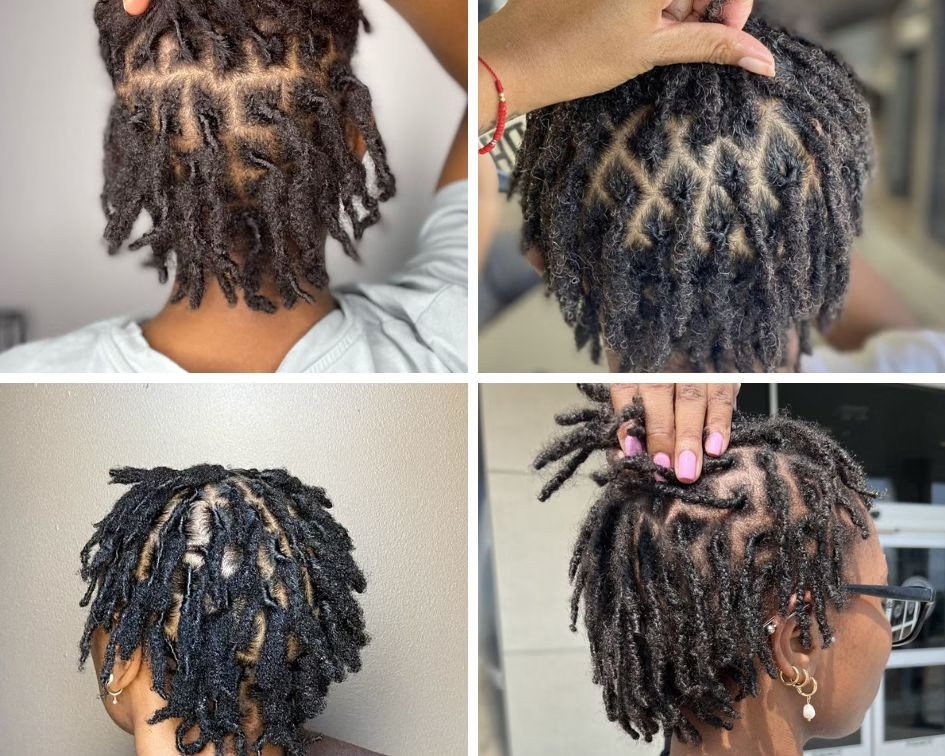
Your locs are a few months old. The holidays are around the corner. And there’s a small voice in your head asking whether your hair is “ready” for the photos, the parties, and the relatives who will definitely have opinions.
It is. Probably more than you think.
Your first holiday season with locs doesn’t have to be stressful. Young locs have a look of their own, fuzzy edges and uneven sections included, and plenty of people wear them proudly at every gathering from Thanksgiving dinner to the office party.
What matters is knowing what’s normal at your stage, which styles are safe, and what to say when Auntie asks when you’re “going to do something with that.”
This guide covers all of it: what young locs are supposed to look like right now, how to dress them up without hurting them, how to handle the commentary, and the handful of mistakes that really do set new locs back.
Think of it as the friend who has been through a first loc holiday season and is happy to tell you how it went.
Quick Answers
Short on time? Here are the five questions new loc wearers ask most before the holidays.
- Can you style starter locs for parties? Yes, gently. Accessories, headbands, scarves, and loose updos are all fine. Skip anything that pulls on the roots.
- What’s the safest holiday style for new locs? Accessory-only styling: cuffs, wraps, a silk scarf, a headband. It adds decoration without adding any tension.
- How do you handle critical relatives? Keep it brief, warm, and firm. Something like, “I love them, and they’re still forming.” Then change the subject to the food.
- What’s the one product worth buying? A satin or silk bonnet, if you don’t already own one. Holiday travel, shared beds, and late nights all mean more friction on your hair.
- What’s the biggest mistake? Over-styling. Putting your hair up tight for every event adds up, and young locs are the least able to handle that tension.
What’s normal (and what isn’t)
Let’s start with some reassurance, with specifics. If your locs are in their first year, everything below is completely normal.
Frizz
Young locs frizz. Loose hairs are still working their way into the body of each loc, and that’s how locs form in the first place. The frizz fades as your locs move through the budding phase and into the teen stage, usually over the first year.
It’s temporary, and no product will speed it up. Gels and heavy creams mostly just add buildup, so resist the urge to “fix” it before the party.
Some unraveling
A loc that loosens at the end, or comes undone after a wash, hasn’t failed. It’s just young. Your loctician can re-twist or re-crochet the stubborn ones at your next appointment.
If one lets go the week of a big event, tuck it under a scarf or wrap and deal with it afterward instead of trying to repair it yourself.
Uneven maturation
Some locs will look finished while their neighbors still look fuzzy. Different parts of your head mature at different speeds, and the back often locks first.
It evens out with time, and in photos it’s far less noticeable than it feels in the mirror.
What isn’t normal
Some things deserve attention instead of patience:
- Scalp pain or tenderness that hasn’t faded after a few days
- Heavy buildup that doesn’t wash out
- Locs falling apart again and again in the same spots
- Any scalp sores
If you notice any of these, talk to your loctician. Don’t push through them just because there’s a party on Saturday.
Save for later The Ultimate Locs Holiday Gift Guide: 25+ Gifts She’ll Actually Use
The First-Year Timeline
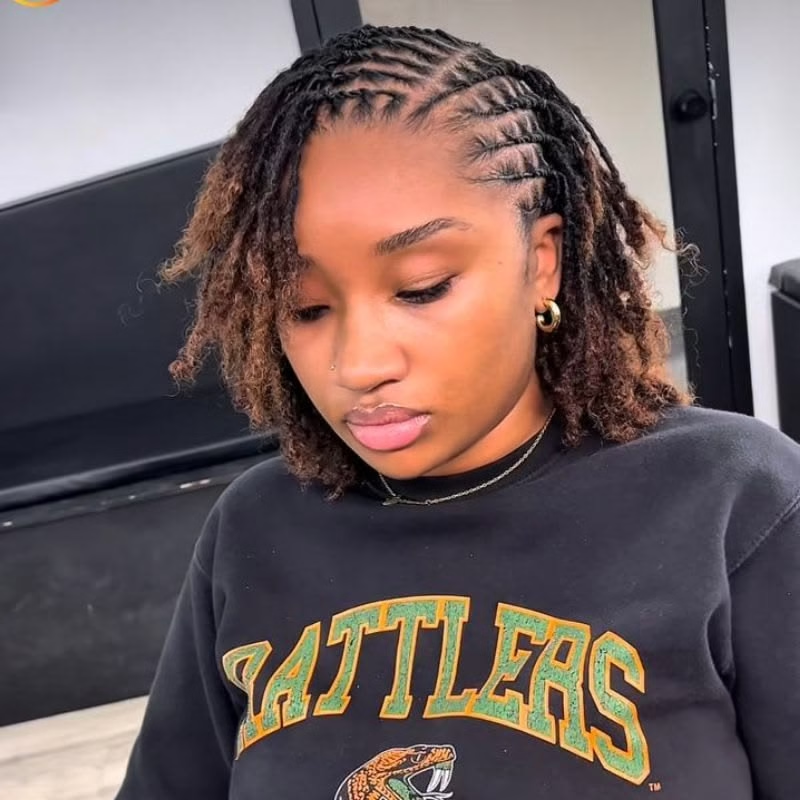
It helps to know where you are in the journey. The first three months are the starter phase: twists or coils holding, frizz at its peak, everything feeling uncertain.
Months three to eight bring budding: the locs swell in spots, which alarms every beginner and delights every loctician. It means progress.
Months eight to twelve are the teen stage: the shape settles, length starts showing, and your locs begin to feel like yours.
The holidays land wherever they land in your timeline. Someone three months in faces different challenges than someone ten months in, which is why the style sections below are organized by stage. Find your stage and start there.
See more How to Add Volume to Short Locs and Make Them Look Fuller
Holiday Styles Safe for Starter Locs
The rule is simple: the younger the locs, the gentler the styling. Work with your stage, not against it.
Very New Locs (First 3 Months)
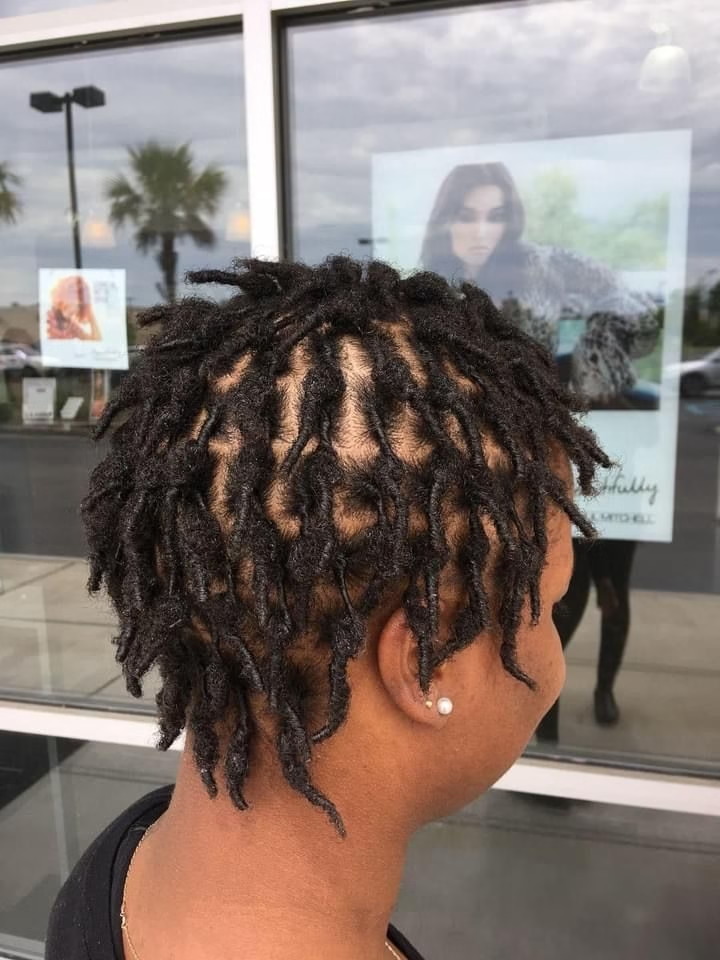
At this stage, your locs are still deciding to exist. The twists or coils are holding, but the internal matting that makes a loc a loc has barely begun.
Style with decoration, not manipulation. Thread gold or holiday-colored cuffs onto a few locs near your face where they catch the light. Add a velvet headband in deep green or burgundy.
Wrap a festive scarf around your hairline and tie it in a bow at the side. These add holiday spirit with zero stress on forming locs.
Avoid anything that pulls, twists tightly, or requires unravelling to take down. Tight ponytails, intricate braided styles, and anything involving backcombing are off the table for now.
Your locs will thank you by actually locking, which is the best holiday gift they can give you.
Budding Locs (3 to 8 Months)
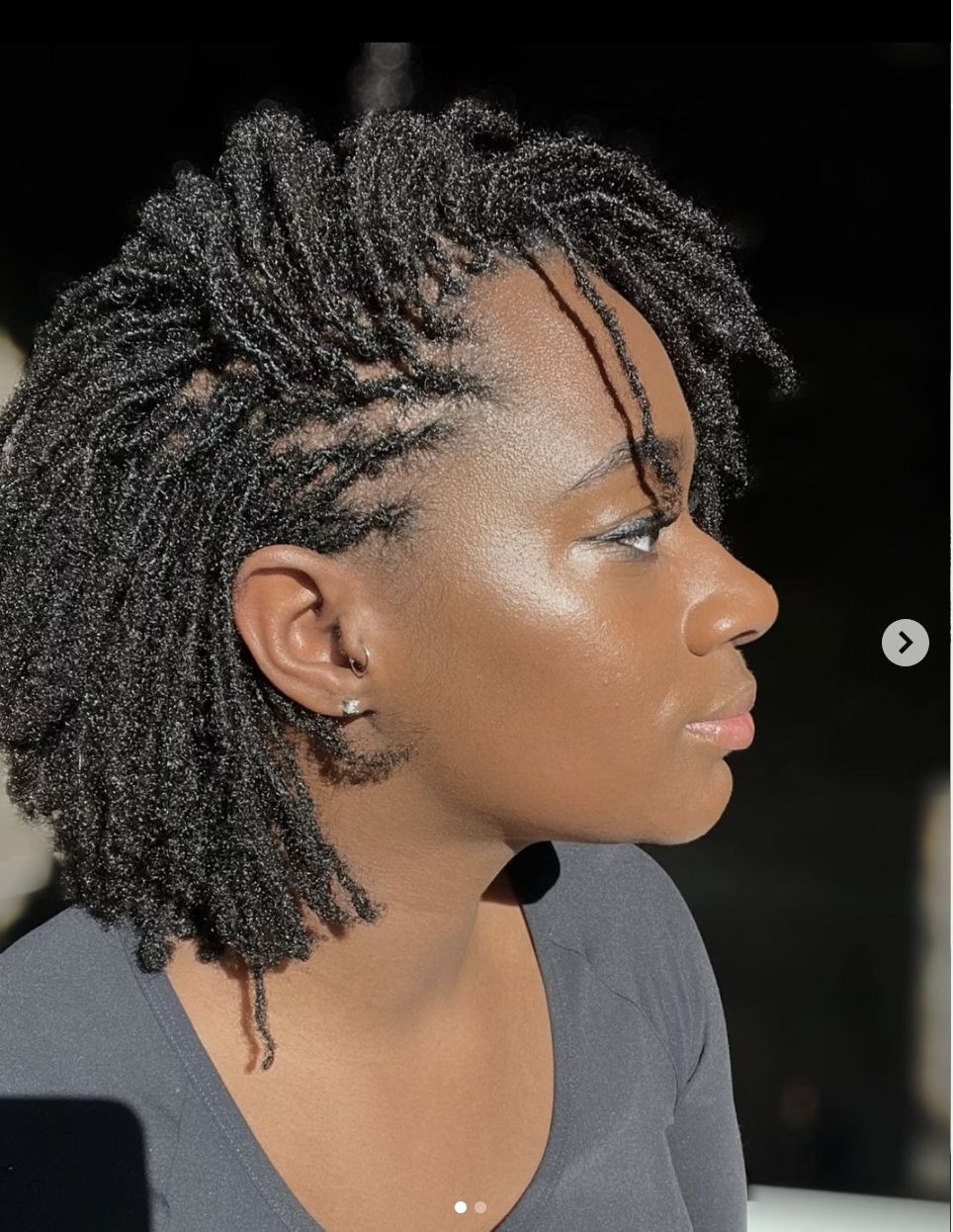
Your locs are holding now, which opens up gentle styling. The buds, those swollen sections along the loc, are a sign of progress, not a problem. Work with them.
A loose low bun secured with a satin scrunchie lets the texture show while looking polished.
A soft half-up style with the top gathered loosely keeps hair off your face for dinner. A side sweep held with decorative pins frames your face beautifully in photos.
Keep everything loose. If a style hurts, pulls, or gives you a headache within an hour, it is too much for this stage. Take it down and go simpler.
The goal is polished, not intricate. And resist the urge to constantly re-twist fuzzy roots before events. A little new growth is normal and healthy. Smoothing it aggressively every week causes more harm than the fuzz ever did.
Check out 25+ Bridal Locs Updo Ideas for Every Wedding Style
Teen Stage (8 to 12 Months)
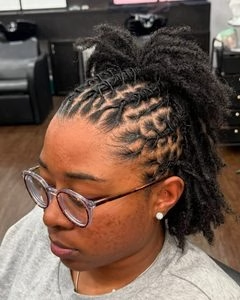
Your locs are substantially formed and can handle most gentle holiday styles. The shape is settling, the length is coming in, and they finally start to feel like yours.
Loose updos, wrapped styles, pinned looks, and fuller accessory styling all work now. Try the looks you have been saving on Pinterest all year, but keep the tension test: comfortable for hours, not just for the photo.
You still want to avoid extreme tension, tight ponytails worn for days on end, and anything a stylist describes as “snatched.”
Your locs are strong but not finished. Treat them like the teenagers they are: capable, but not invincible.
One honest note: the intricate updos you see on mature locs need to wait. They require length, density, and fully locked locs that can take manipulation. That is not a limitation. It is a preview of next year’s holidays.
The Holiday Care Routine for New Locs
Young locs need a simpler routine than mature ones, especially in winter. Less product, less manipulation, more patience.
Wash on schedule. New locs still need regular washing, every one to two weeks.
Skipping wash day for a month lets buildup settle into forming locs, which is much harder to fix than to prevent. Use a gentle shampoo and focus on the scalp.
Moisturize lightly. Young locs need less product than you think. A light leave-in on damp locs is enough.
Heavy products sit on forming locs and attract lint, and they can interfere with the locking process. When in doubt, use less.
Protect every night. If you do not have a satin bonnet yet, this is the moment.
New locs are fragile, winter air is dry, and cotton pillowcases create friction that unravels young locs overnight. A bonnet is the single highest-impact purchase a starter can make.
Time your retwist. If you have an event coming, do not get a retwist the day before. Fresh retwists need a few days to settle, and tight fresh retwists plus party styling is too much tension at once.
Schedule maintenance at least four to five days before any big event, and tell your loctician about the event so they can plan accordingly.
See now Starter Locs Inspiration: Real Women Showing Their Locs Journey from Day 1
Talking to Your Loctician
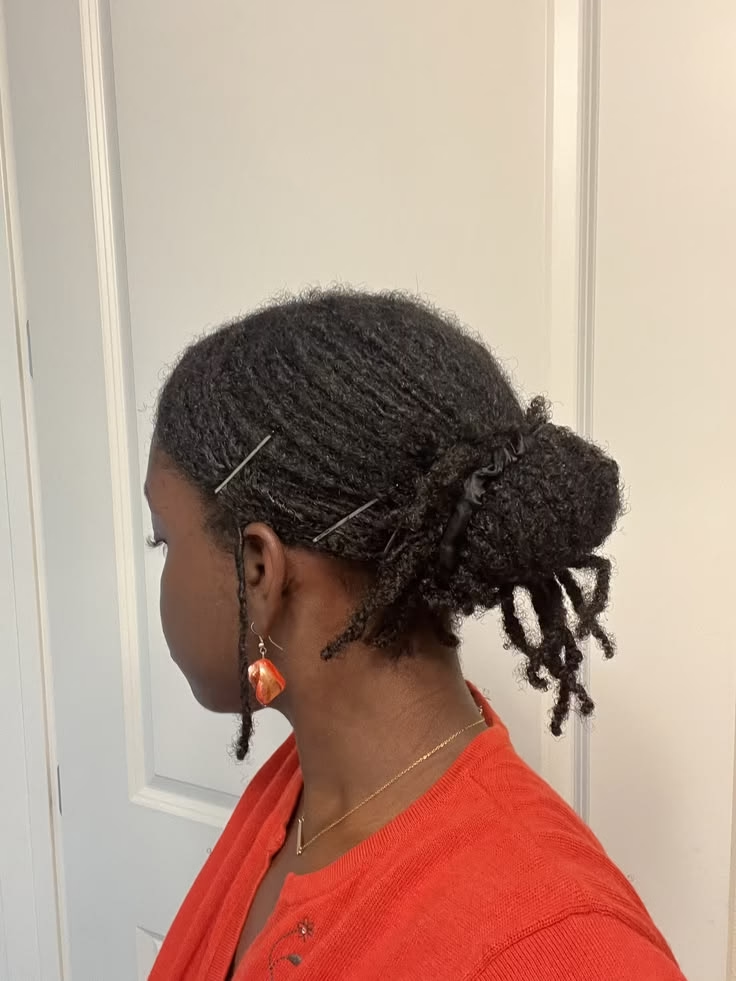
Your loctician is your most valuable holiday resource. Tell them about your event calendar.
A good loctician will time your maintenance around it, choose styles that suit your stage, and warn you off anything risky.
Bring reference photos, but listen when they say a style needs to wait. They are protecting your progress.
If you are traveling and cannot see your regular loctician, resist the urge to book a stranger for a full maintenance session. A simple wash and style from someone unfamiliar is fine.
A complete retwist with unknown technique and products is a gamble. When in doubt, wait until you are home.
For the full cold-weather system, our winter loc care guide covers everything in depth.
Handling the Questions and Comments
Let us talk about the part no product can fix. Family members will comment on your locs. Some will be curious. Some will be critical. Almost all of them will touch without asking.
The classics you may hear: “When will it look done?” “Are you sure about this?” “It would look so nice if you just…” “Can I touch it?”
Every loc wearer has a collection of these stories. Here is your toolkit for handling them without ruining your holiday.
For the curious: answer briefly and warmly. Most people are genuinely interested and have simply never seen the early stages up close.
A short explanation, “they are about six months in and still forming,” satisfies them and the conversation moves on. Curiosity is not criticism.
For the critical: brief, warm, and firm. “I love them, and they are still forming.” Say it with a smile and change the subject. Repeat as needed. You do not owe anyone a debate about your hair.
You do not need to convince them. Your confidence is the entire argument, and confidence does not negotiate.
Read more How to Maintain Locs at Home Between Salon Visits Without Dryness, Buildup, or Thinning
For the touchers: set the boundary kindly and clearly the first time. “I would rather you did not touch them, they are still forming and it can unravel them.”
Most people do not realize it bothers you until you say so, and most stop immediately once you do. The few who push back are telling you about themselves, not about your hair.
For the well-meaning stylist in the family: “Thank you, but my loctician has a plan and I am sticking to it.” Family members who do hair often want to help. Redirect them firmly before they reach for the gel.
For yourself: the awkward phase is temporary and the holidays are one season. Next year your locs will be mature, gorgeous, and the same relatives will be asking how they can start their own. This season is the investment. The return comes later.
Mistakes That Set Back New Locs
Over-styling for events. A different elaborate style for every party piles tension on young locs. Pick one or two gentle holiday looks and repeat them across the season.
Repetition is not boring. It is protective. Your locs do not know it is a different party. They only feel the tension.
A tight retwist right before a party. Tight plus fresh plus styled equals stressed locs and a sore scalp in the photos. You will be thinking about your head instead of enjoying the evening.
Schedule maintenance at least four to five days before any big event, and ask for a comfortable, not tight, retwist. A good loctician knows the difference.
Using heavy products to “tame” frizz. Frizz on young locs is structural, not a product deficiency. It is the hair doing exactly what it needs to do to form locs. Heavy waxes and gels do not fix it.
They cause buildup that interferes with locking and makes everything worse by spring. Embrace the frizz, or cover it with accessories and move on.
Skipping wash day for a month. The holidays are busy, travel disrupts routines, and it is tempting to just keep retwisting over old buildup. But a month of skipped washes lets residue settle deep into forming locs, where it is much harder to remove later.
Keep your schedule even when life is hectic. One maintained wash day is worth more than a month of avoidance.
Letting an unfamiliar stylist experiment. Holiday season means visiting stylists near family who may not know locs, especially young locs.
Well-meaning experimentation, unfamiliar products, aggressive palm rolling, surprise color, can set back months of progress.
If your regular loctician is not available, opt for no maintenance over risky maintenance. Waiting is always safer than repairing.
Frequently Asked Questions
Can you style starter locs for the holidays?
Yes, gently. Accessory-only styling, headbands, scarves, and loose updos are safe. Avoid anything that pulls tightly or requires unravelling young locs.
How do I protect new locs in winter?
Light moisturizing, a satin bonnet every night, and less manipulation than you think you need. New locs are fragile, and winter dryness makes them more so.
When will my locs stop looking frizzy?
Frizz decreases as locs mature through budding into the teen stage, usually across the first year. It is normal and temporary.
How do I respond to negative comments about my locs?
Brief, warm, and firm. “I love them and they are still forming” ends most conversations. You do not owe anyone a debate about your hair.
Can someone with new locs get a holiday retwist?
Yes, but not tight and not the day before an event. Give your scalp a few days to settle, and tell your loctician about the event.
What is the biggest mistake new loc wearers make during the holidays?
Over-styling. Piling on styles, products, and tension for every event stresses young locs. Less is more in the first year.
Looking ahead to January? Our New Year loc reset guide is your next milestone. And for party-ready looks adapted to your stage, browse the holiday hairstyles guide.